
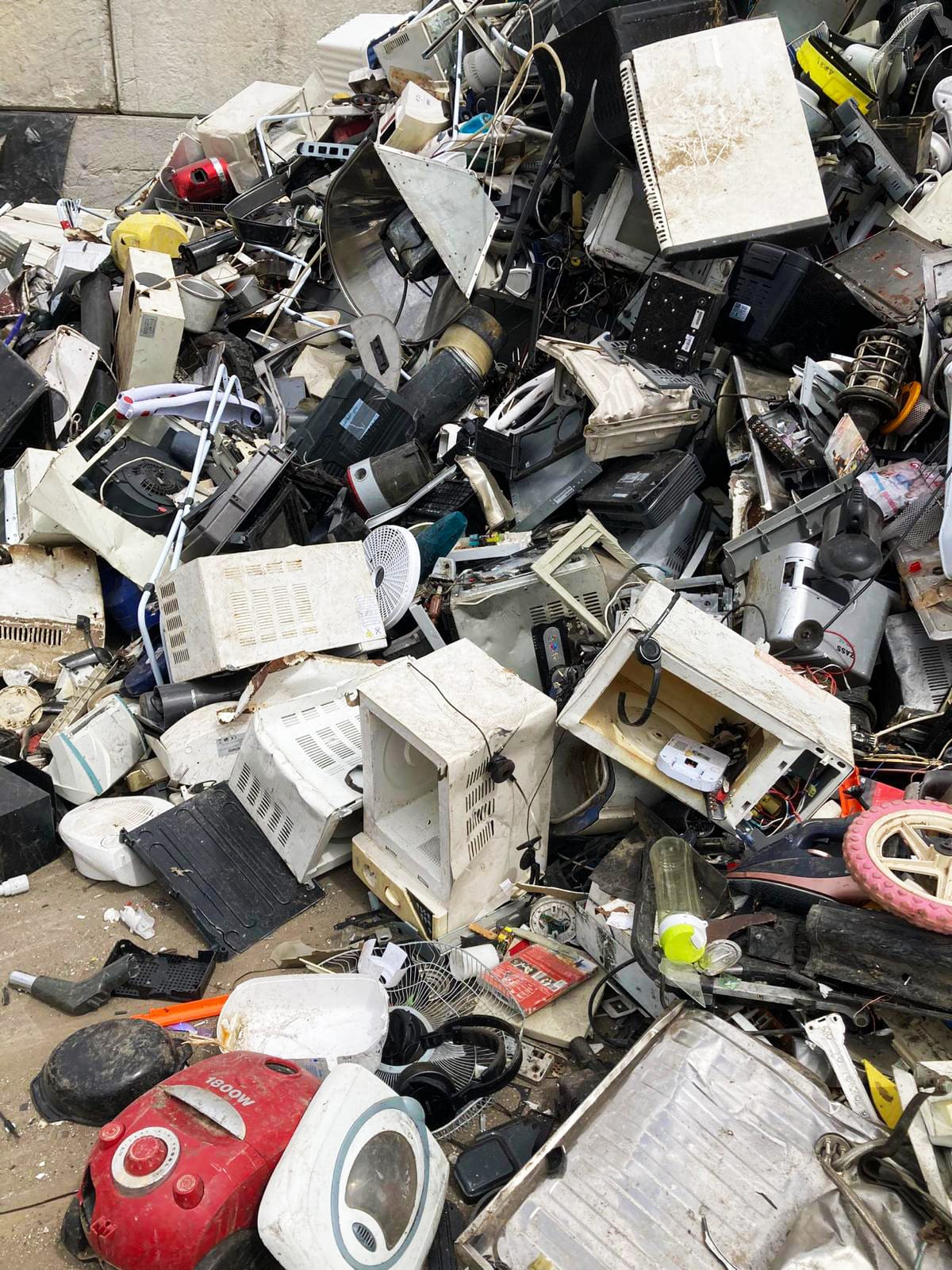
Discarded phones, laptops, servers, cables, appliances and other e-products in the EU27+4 (EU, UK, Switzerland, Iceland, and Norway) annually now contain roughly 1 million tonnes of critical raw materials (CRMs), the report says, essential metals and minerals for powering green technologies, digital infrastructure, and modern defence.
The Critical Raw Materials Outlook for Waste Electrical and Electronic Equipment report prepared by the European Union-funded FutuRaM consortium for International E-Waste Day, underlines that electrical and electronic equipment (EEE) is fundamental to Europe’s economy and daily life.
The analysis offers comprehensive datasets across the EU tracing EEE from first sale through end-of-life treatment and recovery, and outlines how Europe can recover more of these essential materials by improving collection, design, and recycling of waste electrical and electronic equipment (WEEE).
Most recent data at a glance (EU27+4 in 2022)
- 10.7 million tonnes of WEEE generated — about 20 kg per person
- 29 critical raw materials are present in e-waste
- 1 million tonnes of critical raw materials embedded in that stream
- 54% (5.7 million tonnes) managed compliantly in line with EU rules; 46% (5.0 million tonnes) outside compliant channels
From compliant treatment, approximately 400,000 tonnes of critical raw materials were recovered, including:
- 162,000 tonnes copper
- 207,000 tonnes aluminium
- 12,000 tonnes silicon
- 1,000 tonnes tungsten
- 2 tonnes palladium
Even within compliant systems, around 100,000 tonnes of critical raw materials were lost, largely rare earth elements in magnets and fluorescent powders.
Non-compliant routes led to major losses:
- 3.3 million tonnes mixed with metal scrap (partial recovery at best)
- 700,000 tonnes of e-waste landfilled or incinerated; 400,000 tonnes exported for reuse
- The remainder undocumented
By 2050, the total volume of waste electrical and electronic equipment (WEEE) in the EU27+4 is projected to rise from 10.7 million tonnes in 2022 to between 12.5 and 19 million tonnes annually. The exact trajectory depends on which of three scenarios Europe follows: business-as-usual, recovery, or circularity.
The amount of critical raw materials (CRMs) embedded in this stream is expected to grow from about 1.0 million tonnes in 2022 to between 1.2 and 1.9 million tonnes per year by 2050. In other words, even if overall e-waste stabilises under a circular economy pathway, the concentration of valuable materials in products like photovoltaic panels, EV chargers, and servers will continue to increase.
Depending on policy choices, collection rates, and recycling efficiency, Europe could recover between 0.9 and 1.5 million tonnes of CRMs annually by 2050. Under business-as-usual, recovery levels remain modest, leaving much of this resource untapped. In the recovery scenario, investment in infrastructure and processing technologies pushes yields higher, while the circularity scenario achieves similar recovery volumes despite generating less e-waste overall – proof that smarter design, repair, and reuse strategies can balance reduced waste with strong material returns.
The circularity pathway offers a double dividend: it keeps annual WEEE volumes close to today’s 10.7 million tonnes while still enabling recovery of over 1 million tonnes of CRMs each year. That stability reduces environmental pressure, cuts the risk of hazardous leakage, and ensures Europe has a resilient source of metals like copper, aluminium, and palladium. It also highlights the importance of focusing not only on how much e-waste is generated, but on how effectively Europe designs products for disassembly, collects them at end-of-life, and processes them through advanced recycling.
Knowing which products and components contain which critical raw materials is the first step to getting them back.
CRMs appear throughout common devices: copper in cables and boards, aluminium in casings and frames, and platinum group metals in circuit boards and displays.
Small but high-value amounts of palladium, neodymium, dysprosium, tantalum, gallium, and other rare earths used in such everyday products as laptops, touch screens, hairdryers, power drills, game controllers and medical devices.
How Europe improves recovery
- Collect more, lose less. The largest sink is at the collection stage. Expanding convenient take-back, retailer returns, and municipal points increases compliant flows.
- Design for dismantling. Standardised fasteners, accessible modules, and clear material identification help extract magnets, boards, cables, compressors, and displays where critical materials concentrate.
- Target the right components. Prioritise product parts rich in critical materials — for example, hard drives and motors for rare earth magnets, circuit boards for platinum group metals, and cabling for copper.
- Scale recycling capacity in Europe. Investments in advanced mechanical, hydrometallurgical, and pyrometallurgical processes increase yields and reduce losses.
- Align incentives. Policy tools such as eco-design requirements, repairability and durability provisions, and economic instruments can make recovery the rational choice across the value chain.