
The project also reflects forthcoming regulatory requirements in the European Union. Under the Packaging and Packaging Waste Regulation (PPWR), minimum recycled content targets are expected to apply to certain packaging types, including contact-sensitive applications. Against this background, the partners examined how PCR high-density polyethylene (PCR HDPE) performs under conditions relevant to cosmetic and personal care use.
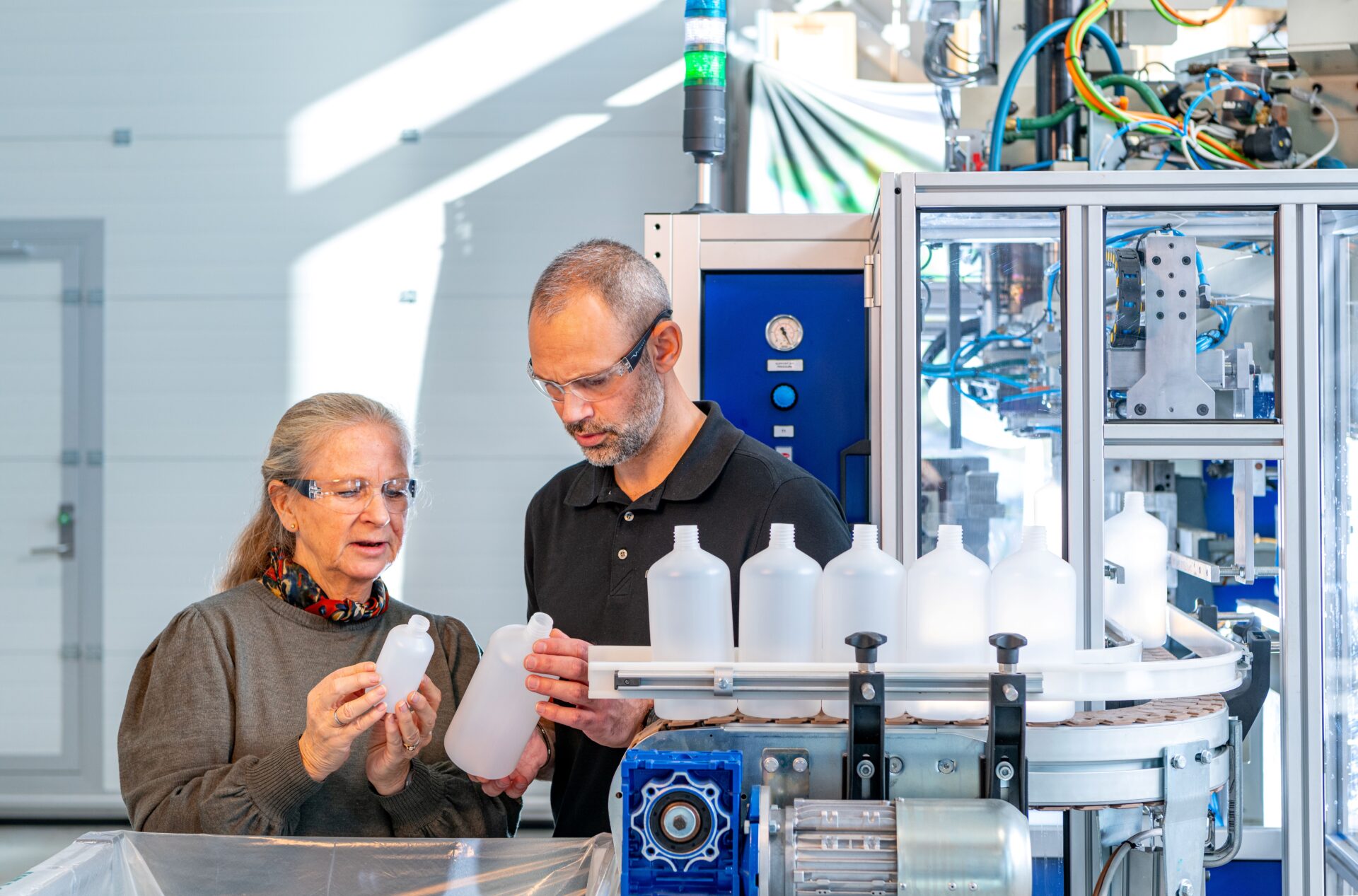
Funding for the initiative was provided by the Norwegian Retailer’s Environmental Fund (HMF). OHPC contributed application context and supplied packaging materials, while Norner carried out polymer analysis, migration testing and evaluation of PCR HDPE grades for contact-sensitive packaging.
Because quality criteria for PCR plastics in cosmetic packaging are not fully harmonised across the market, Norner applied a testing and assessment programme based on established food-contact and cosmetic packaging approaches. The migration testing was conducted in accordance with EU Regulation 10/2011 and the CosPaTox guideline for cosmetic packaging safety evaluation. Samples were exposed to a worst-case simulant of 95% ethanol for seven days at 60°C. Both targeted and non-targeted analytical methods were used to identify substances migrating from the plastic into the simulant. The analytical results were compared with applicable specific migration limits (SMLs) and assessed using toxicological criteria.
The results indicate that bottles produced from 100% PCR HDPE showed higher overall migration and a larger number of detectable trace substances than bottles made from virgin HDPE. Differences were also observed between PCR sources. Higher-quality PCR grades contained fewer detected substances and at lower concentrations. Substances including bisphenol A and the fragrance-related compound hexyl salicylate were detected in PCR samples but not in virgin HDPE, underlining the need for robust quality control and material qualification when using recycled polymers in contact-sensitive applications.
The project also evaluated mitigation strategies based on material formulation and packaging design. Blending 10% virgin HDPE into PCR resin reduced migrating substances by approximately 60% to 70% and lowered total migration concentrations by around 80% to 90%, compared to the use of 100% PCR. Multi-layer bottle concepts with a thin inner virgin layer were found to act as an effective functional barrier, limiting the transfer of PCR-derived substances to the product-contact surface.
Material selection for the barrier layer influenced performance. A higher-density virgin HDPE grade with a density of 0.961 g/cc reduced migration more effectively than a grade with 0.955 g/cc. This enabled similar barrier performance with a thinner inner layer, which is relevant for balancing recyclate content, barrier properties and mechanical requirements in personal care packaging.
For PCR grades where measured migration levels exceeded regulatory thresholds, OHPC conducted an additional toxicological review to determine suitability for different product applications. The partners conclude that PCR HDPE can be used in personal care packaging when material quality is controlled and risk mitigation measures are implemented through design and validation testing.