
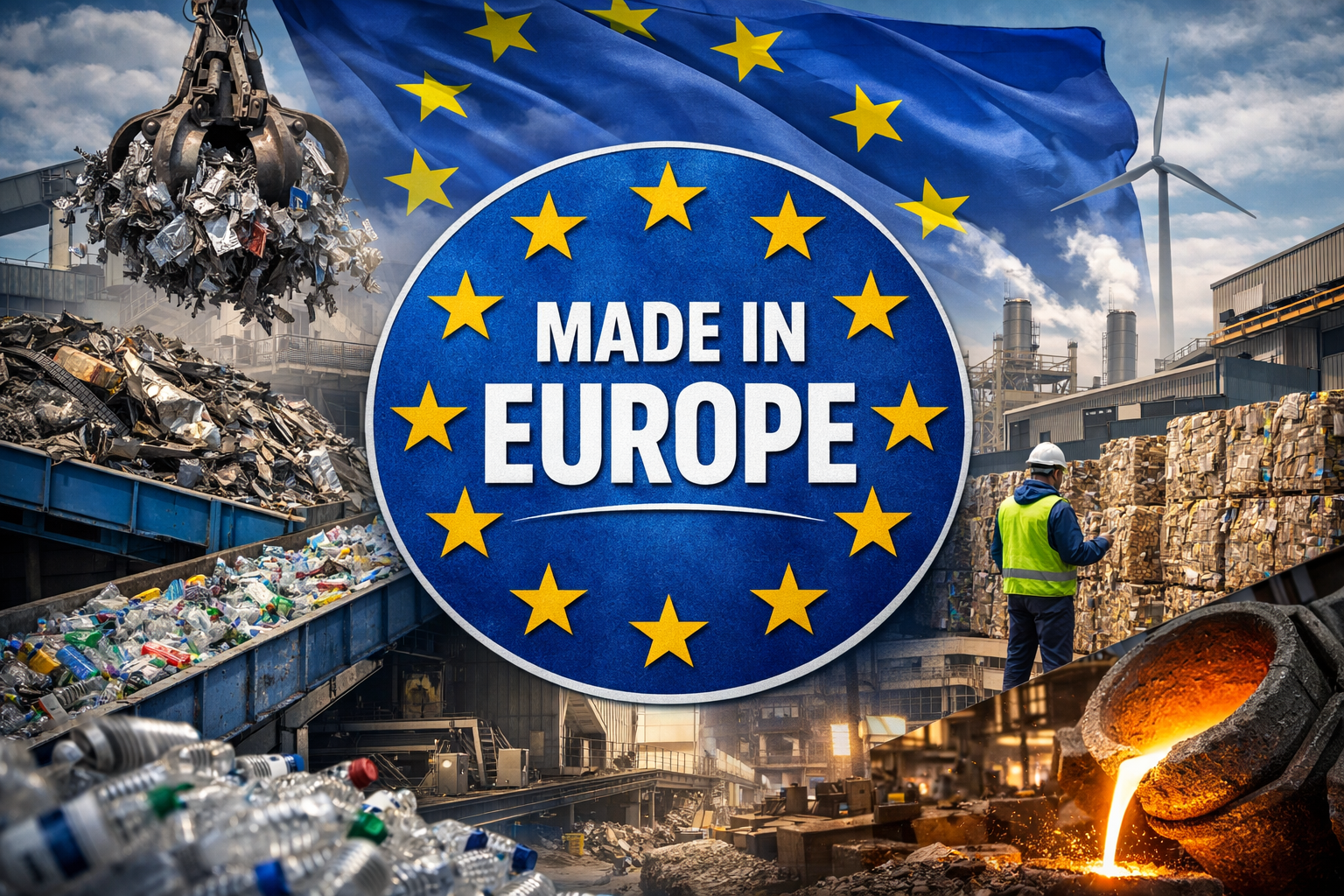
A “Made in Europe” approach is seen as a means to reinforce industrial capacity, secure strategic material supplies and contribute to the EU objective of achieving a 24 per cent Circular Material Use Rate, as outlined in the Clean Industrial Deal.
Recycled materials produced by European recyclers are already generated within the EU, as they originate from waste that is collected, sorted and reprocessed domestically. From the perspective of the recycling industry, formally recognising recycled materials as “Made in Europe” would reflect existing production realities and support industrial resilience across the EU.
The recycling sector emphasises that a European Preference should be accompanied by targeted economic incentives. These include measures under the planned Industrial Accelerator Act, revisions to EU public procurement rules and the forthcoming Circular Economy Act. Such instruments are intended to increase the use of recycled materials across products and value chains, strengthen security of supply through higher circularity and support the competitiveness of European manufacturing. Increased use of recycled materials is also associated with lower greenhouse gas emissions compared with primary raw material extraction.
The industry therefore calls for policy measures that promote the uptake of recycled materials through public procurement, product design requirements and industrial and circular economy legislation. Incentive-based approaches combined with regulatory simplification are viewed as key to improving market access and strengthening circular value chains within Europe.