

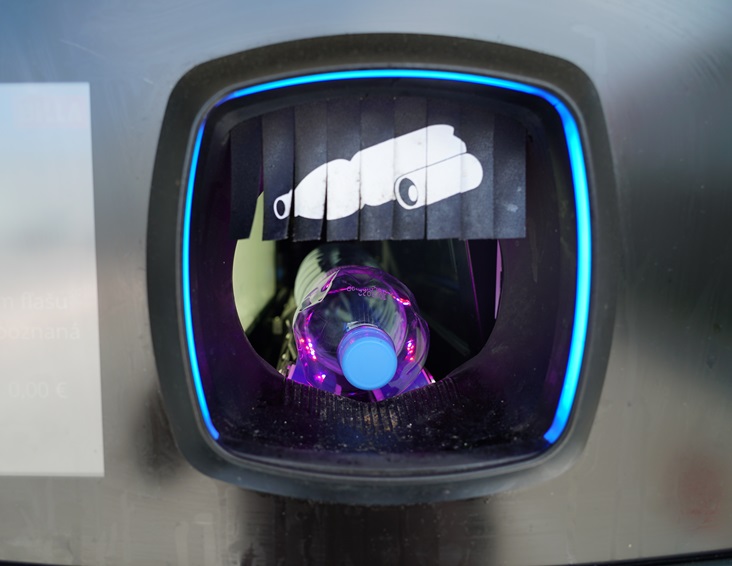
Ireland’s DRS was designed as a fully digital system from the outset. The end-to-end IT solution provided by Sensoneo supports scheme operator Re-turn by managing product registration, container validation, transaction processing and clearing. Centralised data management enables consistent system oversight, accurate deposit handling and scalability as participation increases.
In under two years, the scheme has expanded to 3,133 active collection points nationwide, including 2,798 reverse vending machines and 960 manual return points. A total of 12,197 PET plastic bottle and aluminium can products are registered. Reverse vending machines have processed more than 2.4 billion containers, bringing total returns close to the 2.5 billion mark. In addition, 330 voluntary return point operators enable organisations such as airports, offices and community locations to collect containers and pass deposit values on to charitable causes.
The scale of operation highlights the importance of a reliable IT backbone. The platform integrates retailers, producers, reverse vending machine operators, logistics partners and the scheme administrator within a single data environment. Core functions include real-time performance monitoring, automated clearing of deposits and handling fees, centralised barcode management, fraud detection and regulatory reporting. As the scheme scaled rapidly, this digital foundation supported operational stability and data integrity.
More recently, system adaptations have been introduced to improve accessibility, including the extension of the DRS to Ireland’s island communities. Collection models combining reverse vending machines and communal manual return solutions have been deployed, demonstrating the need for flexible IT architecture capable of supporting diverse return models and reliable data flows in remote environments.
As Ireland’s Deposit Return Scheme moves further into steady-state operation, data and digitalisation are expected to play an increasing role. System data supports optimisation of collection networks, logistics planning and transparent measurement of recycling performance, illustrating how digital design can support the long-term operation of a national deposit return system.