
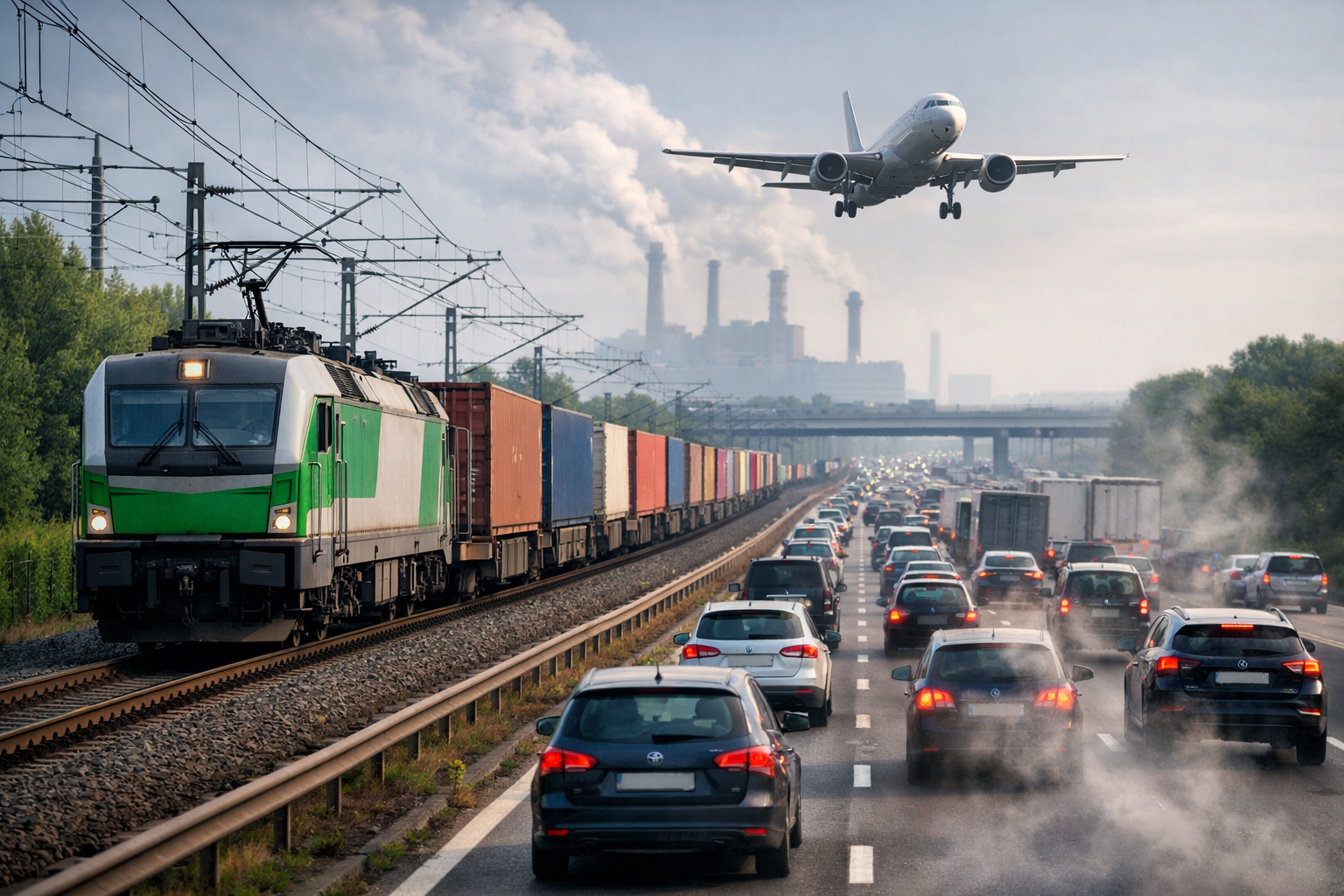
Transport plays a central role in the European economy, supporting more than 10 million jobs and contributing around five percent of the EU’s gross domestic product. It is, however, the only major sector in which greenhouse gas emissions have increased since 1990. In 2023, transport accounted for around one third of total EU greenhouse gas emissions, with road transport responsible for the majority, according to the report Sustainability of Europe’s mobility systems 2025.
Despite progress in reducing exhaust emissions, transport continues to place significant pressure on the environment and human health. Emissions of pollutants such as ammonia and nitrous oxide remain difficult to reduce, while transport-related noise affects millions of people across the EU.
Road transport remains the dominant mode for both passenger and freight movements. Passenger cars account for about 72 percent of transport activity, and the share of public transport has changed little in recent years. In 2023, road transport generated nearly three quarters of transport-related greenhouse gas emissions, reflecting its continued dependence on fossil fuels. Road traffic is also the main source of transport noise, with around 90 million people exposed to harmful levels.
Rail transport offers high energy efficiency and comparatively low greenhouse gas and air pollutant emissions, particularly for medium- and long-distance travel. However, limited cross-border integration and a fragmented network continue to restrict its competitiveness. In freight transport, rail activity declined between 1995 and 2023, although demand is expected to increase in the coming decade.
The report also notes that aviation and maritime transport are set to account for a growing share of emissions, with their combined contribution expected to rise significantly by 2050. Achieving a more sustainable transport system will therefore require sustained investment, continued innovation and the full implementation of existing legislation, including the revised Emissions Trading System and the new ETS2.