
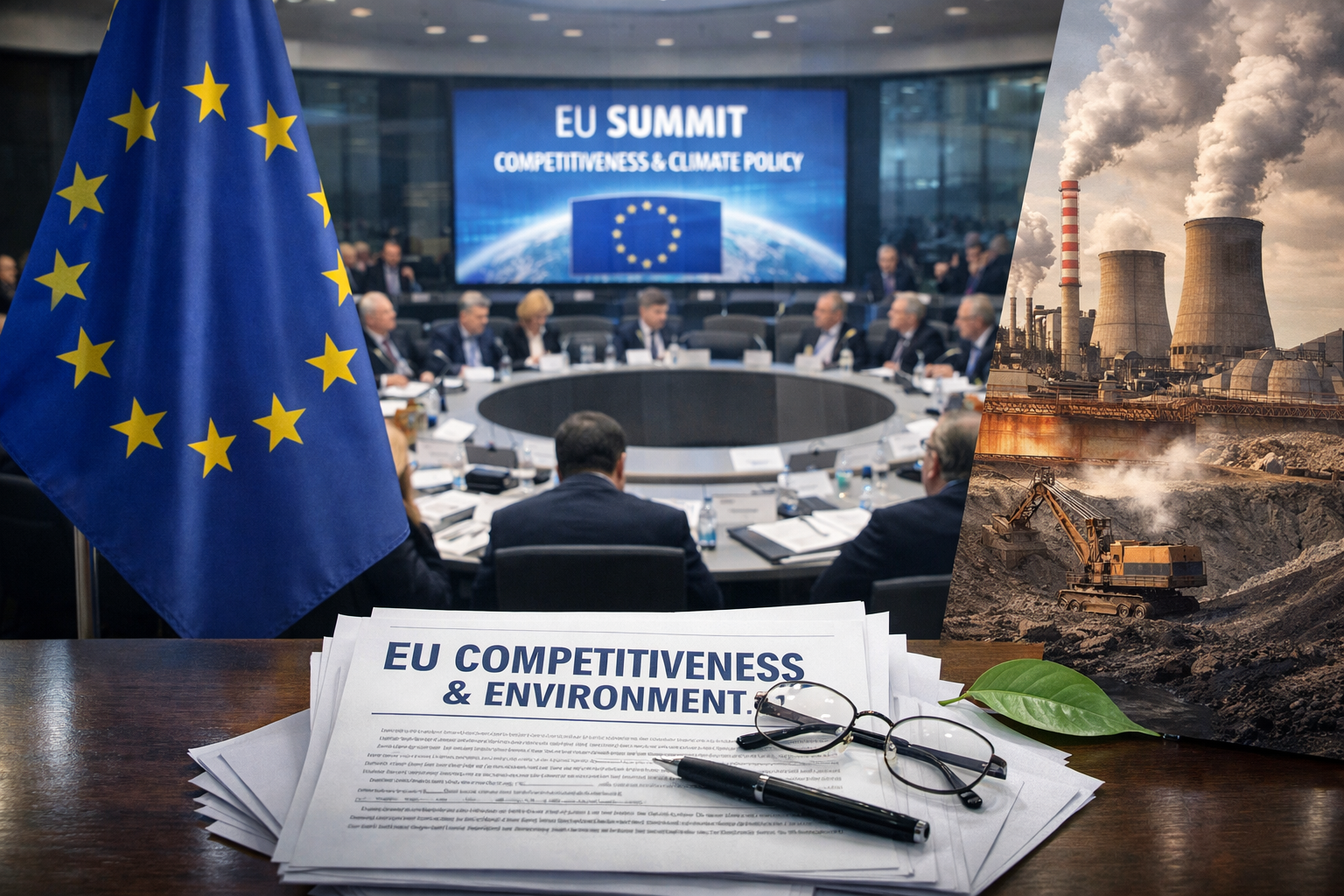
The European Environmental Bureau (EEB) has criticised elements of the EU’s competitiveness agenda and the planned regulatory packages referred to in Brussels as “Omnibus” proposals. According to the organisation, these initiatives are based on assumptions that reducing regulatory requirements will strengthen industrial performance, despite limited supporting evidence.
The European Commission has argued that easing certain environmental and social obligations would enhance industrial competitiveness. However, experience in several Member States indicates that clear and consistent environmental regulation can provide legal certainty and stimulate technological innovation. Sweden, for example, combines comparatively stringent environmental and labour standards with a technology sector whose productivity exceeds the EU average.
Industry stakeholders frequently cite high energy prices, reliance on fossil fuel imports and delayed investment in low-carbon technologies as key constraints. Policy instruments such as the Carbon Border Adjustment Mechanism and the EU Emissions Trading System are designed to address these structural issues. The gradual phase-out of free allowances under the trading system is intended to strengthen decarbonisation incentives and reduce dependence on imported fossil fuels.
In a letter to Member State leaders ahead of the summit, Commission President Ursula von der Leyen referred to potential annual administrative savings of €15 billion through simplification measures. Critics note that such estimates do not account for the broader economic impacts of weakened enforcement or regulatory gaps. Poor implementation of existing environmental legislation is estimated to cost the EU approximately €180 billion annually. In addition, a recent Commission study projected that health and environmental damage linked to per- and polyfluoroalkyl substances (PFAS) could amount to €1.7 trillion by 2050 if no further action is taken.
Environmental and health externalities remain significant. Air pollution is associated with approximately 182,000 premature deaths per year in Europe. At the same time, only 29 per cent of Europe’s surface waters achieve good chemical status under current assessments. Proposed adjustments to water legislation, including in relation to mining activities, have therefore prompted debate regarding environmental safeguards and long-term liability.
Concerns have also been raised about governance processes. Accelerated legislative procedures and reduced public consultation have attracted criticism from oversight bodies, including the European Ombudsman. Observers argue that transparency and stakeholder participation are essential to maintaining regulatory predictability and public trust.