
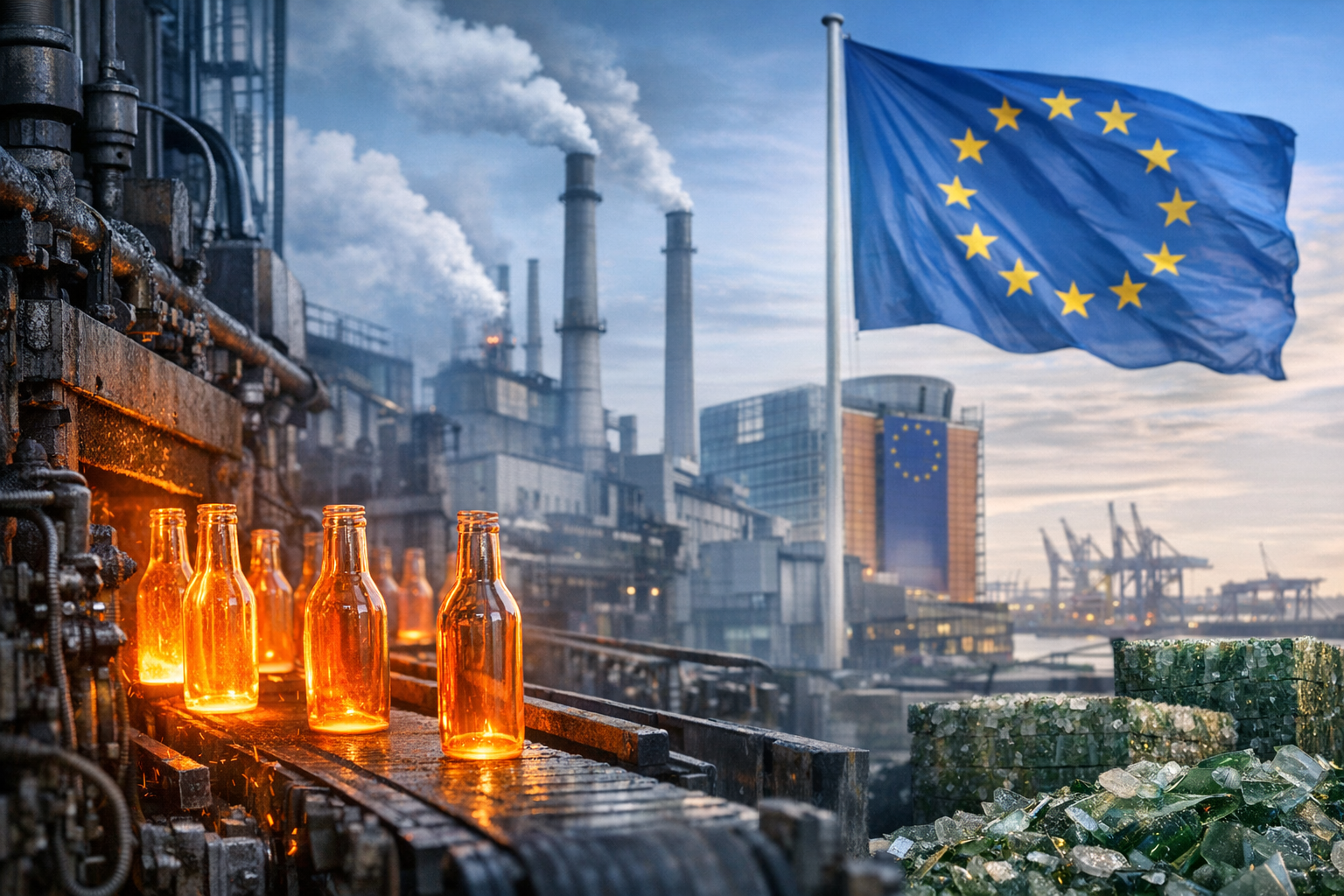
Container glass is a key material in the European circular economy and supports the EU’s industrial and climate objectives. With more than 140 production plants across 21 Member States, the sector supplies recyclable packaging for the food, beverage, perfumery, cosmetics and pharmaceutical industries. Glass packaging contributes significantly to European export performance, with products packed in glass accounting for an estimated €140 billion in annual EU exports.
The sector is currently facing sustained structural pressure. High energy prices, rising carbon costs and increasing global trade tensions have weakened investment conditions. Since its production peak in 2022, European container glass output has declined. Several plant and furnace closures have been announced across Member States, leading to a permanent reduction in industrial capacity and the loss of specialised skills and employment.
The federation acknowledged recent European Commission initiatives, including the Omnibus packages and the Clean Industrial Deal, but stated that implementation gaps remain. According to industry calculations, the 2026 revision of benchmarks under the EU Emissions Trading System could result in a substantial increase in CO₂-related costs between 2025 and 2026 for some operators. The industry warns that abrupt cost increases may affect investment planning and the pace of decarbonisation projects. It therefore calls for transitional measures to prevent sudden cost shocks while maintaining the EU’s climate targets.
In line with the Antwerp Declaration Community, the federation outlined four priority areas for emergency industrial policy measures. It called for action to reduce energy and carbon costs, including a review of regulatory charges that contribute to higher industrial electricity prices. It also emphasised the need to align circular economy policies with industrial competitiveness and to avoid regulatory provisions that may weaken domestic manufacturing. Furthermore, the federation stressed the importance of ensuring fair global trade conditions, including effective carbon leakage protection and enforcement against unfair competition. Finally, it underlined the role of market-based incentives to strengthen demand for circular products manufactured within the European Union.
The federation stated that stable framework conditions are necessary to maintain production capacity, support decarbonisation investment and preserve the competitiveness of the European container glass industry within global markets.