
The organisation argues that the European Union’s circular material use rate, which stood at 12.2 per cent in 2024 against a 2030 target of 22.4 per cent, requires a reallocation of existing EPR budgets to support waste prevention and reuse systems in addition to established waste management activities.
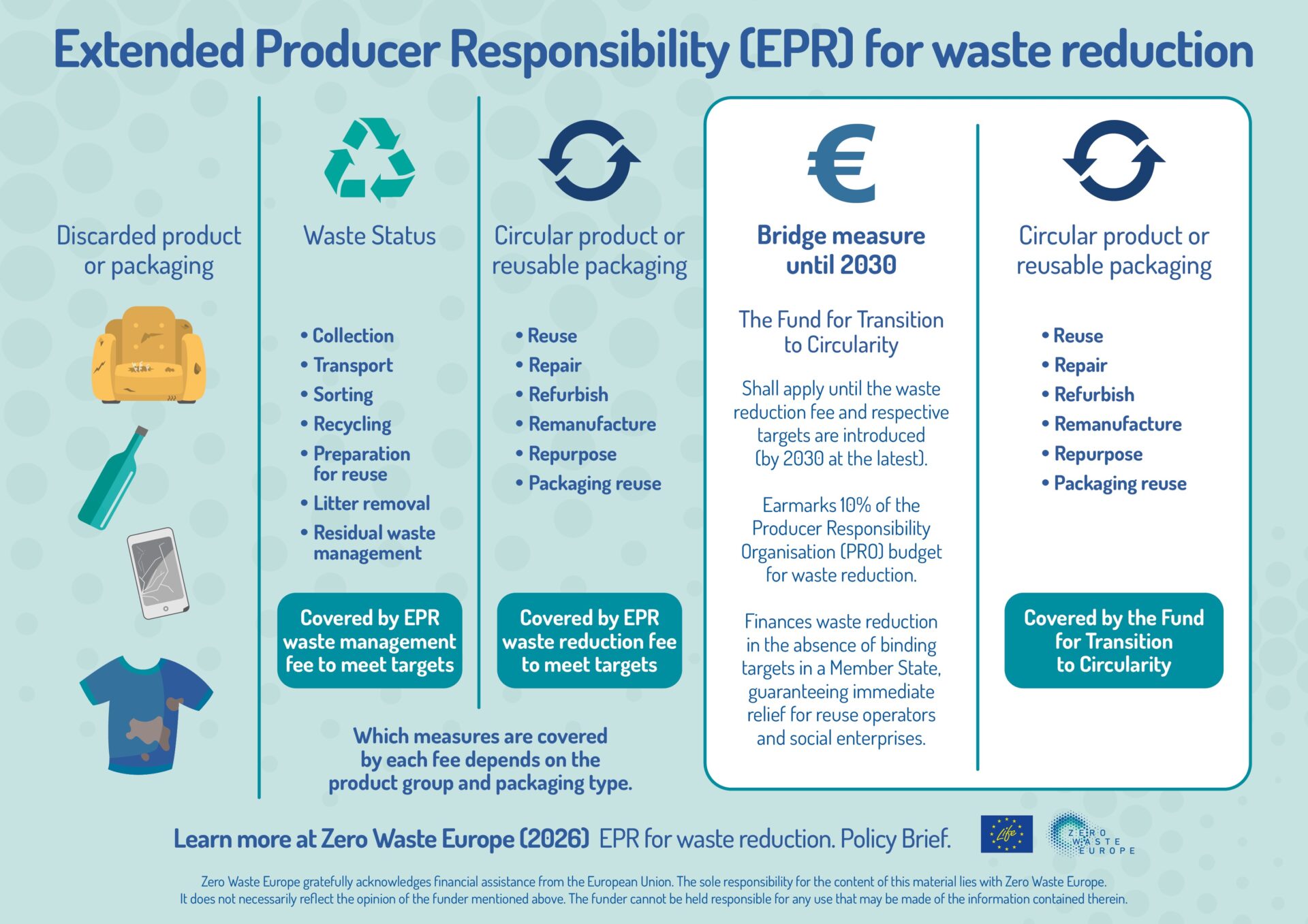
In its policy brief “Extended Producer Responsibility for waste reduction”, Zero Waste Europe outlines a model that separates EPR fees into two dedicated budget streams. The first would continue to finance collection, sorting and recycling systems necessary to meet statutory waste management targets. The second would be allocated to waste reduction measures, including repair, refurbishment and reuse systems, with the aim of supporting Member States in achieving waste prevention targets.
The proposed split acknowledges current data gaps in several Member States regarding the costs of reduction and reuse systems. As an interim measure until 2030, the organisation suggests establishing a temporary fund for the transition to circularity. This mechanism would earmark a defined minimum share of Producer Responsibility Organisation budgets for waste prevention and reuse activities, pending the development of more robust cost data and harmonised methodologies.
The proposal also addresses the financing structure of existing reuse and repair initiatives, which are currently largely supported by public budgets. Zero Waste Europe maintains that, in line with the Polluter Pays Principle, producers should assume a greater share of the financial responsibility for scaling circular business models across the EU. The organisation links this to broader market conditions that continue to favour linear production and consumption patterns.
To ensure effective implementation, the policy brief calls for strengthened governance frameworks, transparent reporting obligations and legally binding targets for Producer Responsibility Organisations. According to the organisation, without structural adjustments to EPR financing and clearer accountability mechanisms, the EU is unlikely to reach its 2030 circularity objectives.