
The figures indicate continued growth in aluminium can recycling across Europe and underline the material’s role in the circular economy.
In 2023, the volume of aluminium beverage cans placed on the market increased by 4% year on year, while recycling tonnages rose by 7%. The higher recycling volume corresponds to estimated greenhouse gas savings of 5.7 million tonnes of CO₂ equivalent, reflecting the lower energy demand of secondary aluminium production. Recycling aluminium requires approximately 95% less energy than primary production, resulting in substantially reduced emissions.
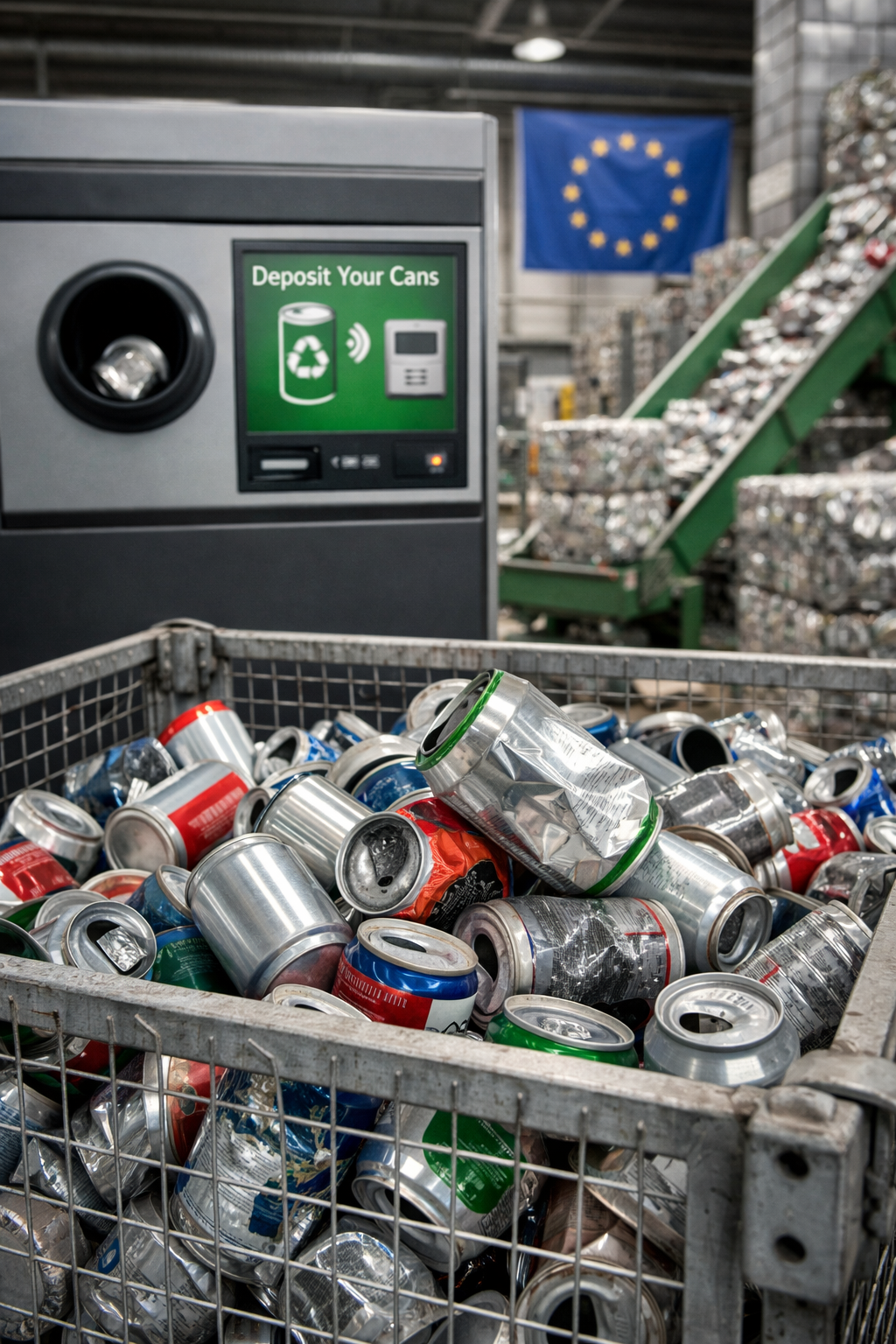
The data show that countries operating Deposit Return Schemes for beverage packaging recorded above-average improvements in aluminium can recycling rates. Malta introduced a Deposit Return Scheme in 2023 and increased its recycling rate for aluminium beverage cans from 50% to 80% within the reporting year. Latvia and the Slovak Republic, which implemented Deposit Return Schemes in 2022, reported double-digit growth in 2023. Latvia’s recycling rate rose from 60% to 74%, while the Slovak Republic recorded an increase from 58% to 91%.
According to the associations, 12 EU Member States had introduced Deposit Return Schemes for aluminium beverage cans by 2023, with further schemes planned. The organisations emphasise that harmonised implementation of the Packaging and Packaging Waste Regulation, including national requirements for Deposit Return Schemes, is considered essential to improve collection rates and support closed-loop can-to-can recycling within Europe.