

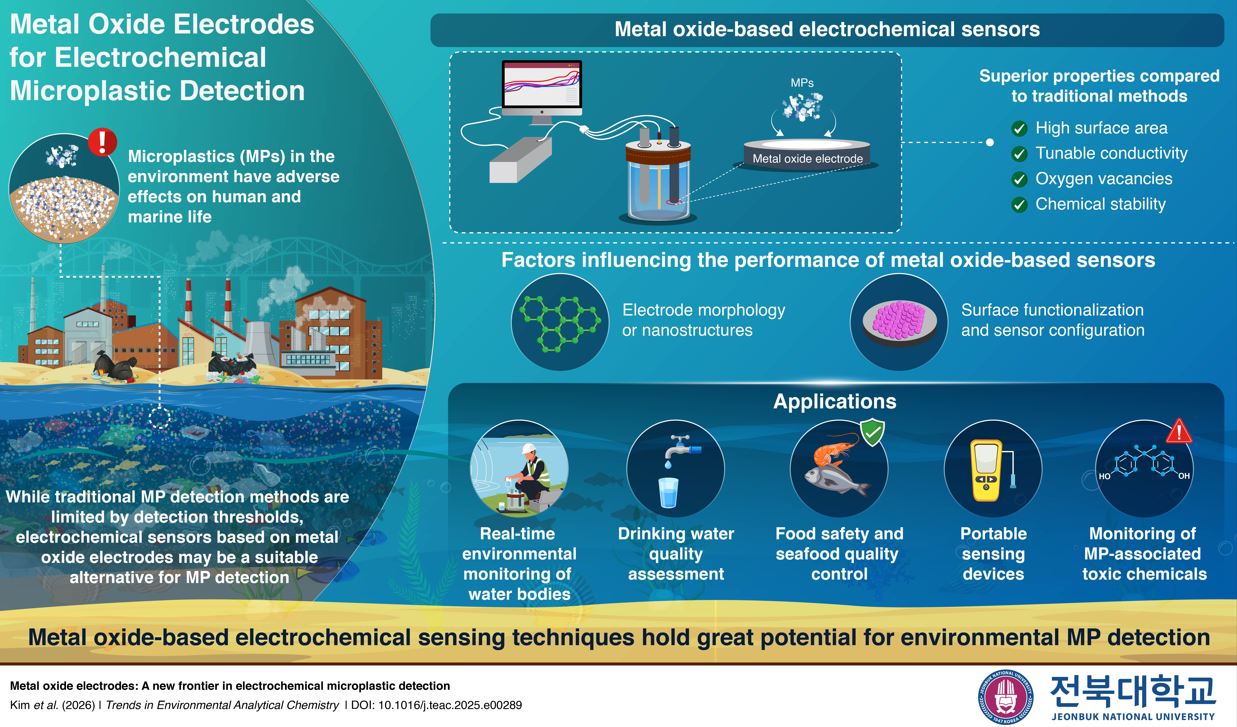
Microplastic pollution in rivers, lakes and marine ecosystems presents operational and regulatory challenges for water management and environmental protection. Established detection techniques, including Fourier transform infrared spectroscopy, require laboratory infrastructure and are often associated with extended analysis times and defined detection limits. These constraints restrict their use for real-time monitoring and routine field deployment.
The review, led by Professor Sadia Ameen from the Department of Bio-Convergence Science at Jeonbuk National University, evaluates the transition from laboratory-based spectroscopic analysis to electrochemical sensing platforms based on metal oxide nanostructures. The article was published online on 2 December 2025 and appeared in Volume 49 of Trends in Environmental Analytical Chemistry on 1 March 2026.
According to the authors, metal oxide electrodes enable electrochemical microplastic detection through measurable changes in impedance and current signals resulting from interactions between microplastic particles and the electrode surface. Materials such as zinc oxide, titanium dioxide and cerium dioxide are highlighted for their large specific surface area, adjustable conductivity and chemical stability. These properties support trace-level detection of microplastics in wastewater and marine samples.
The study further outlines how the morphology and surface chemistry of metal oxides influence sensor performance. Nanorods, nanowires and porous structures increase the active surface area and create localized regions of enhanced signal response. In addition, surface modification strategies, including the use of hydrophobic cerium dioxide nanoparticles, can promote selective interactions with hydrophobic polymers such as polyethylene and polypropylene in the presence of other environmental constituents.
Metal oxide-based electrochemical sensors are described as suitable for on-site and real-time microplastic monitoring in surface waters. Their compact design and comparatively low operational requirements allow integration into portable devices for field applications. Beyond environmental monitoring, the technology may support routine screening of drinking water supplies and contribute to food safety controls by enabling the detection of microplastics in seafood and processed products.
The authors also indicate that electrochemical sensing platforms could assist in assessing combined exposure to microplastics and adsorbed pollutants in environmental and biological samples. Future developments may include integration with digital monitoring systems, enabling data-driven environmental surveillance and compliance management.