
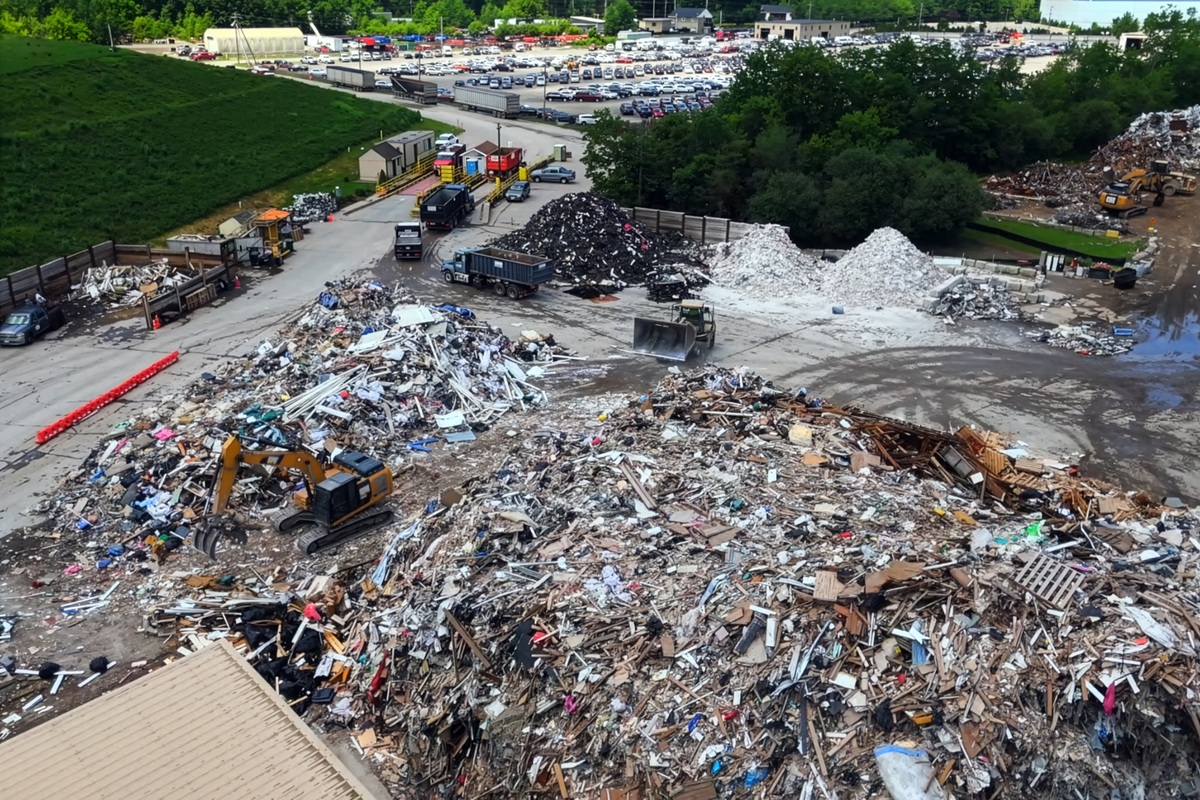
The US-based recycling company processes approximately 650,000 tons of construction and demolition waste annually at facilities in Maine, New Hampshire and Massachusetts. Founded around 30 years ago, the company has developed into a major regional operator in the C&D recycling sector. For several years, however, a considerable proportion of non-ferrous metals remained in the residual waste stream and were disposed of in landfill.
Prior to installing the current systems, ReSource Waste used other eddy current separators. According to the company, recovery rates did not meet operational targets, and unplanned downtime occurred repeatedly. In the event of system failures, the separation stage had to be bypassed, resulting in non-ferrous metals being directed into the residual waste fraction and incurring disposal costs instead of generating recycling revenues.
In 2018, ReSource Waste installed its first Steinert eddy current separator. Following integration into the processing line, the company recorded a measurable increase in non-ferrous recovery. Across all sites, the share of recovered non-ferrous metals relative to total input rose from 0.4 percent to more than 1.4 percent. Based on an annual throughput of 650,000 tons, this corresponds to a substantial increase in recovered secondary raw materials.
The investment reached its projected amortisation ahead of schedule. While the original payback period was calculated at 18 months, the company reports that the system paid for itself in approximately 15 months through higher recovery rates and increased revenues from metal sales.
Maintenance requirements have also decreased. According to ReSource Waste, one of the installed separators has operated for nine years without major servicing. In the C&D recycling sector, plant availability is directly linked to processing volumes and revenue. Small non-ferrous fragments are difficult to recover manually due to high belt speeds and fine particle sizes, making reliable mechanical separation essential. Each hour of downtime can result in reduced throughput and increased disposal costs.
Following the initial installation, ReSource Waste expanded its equipment base and now operates six Steinert eddy current separators across its five facilities, each configured to match site-specific throughput requirements.