
Drive package for shredding applications
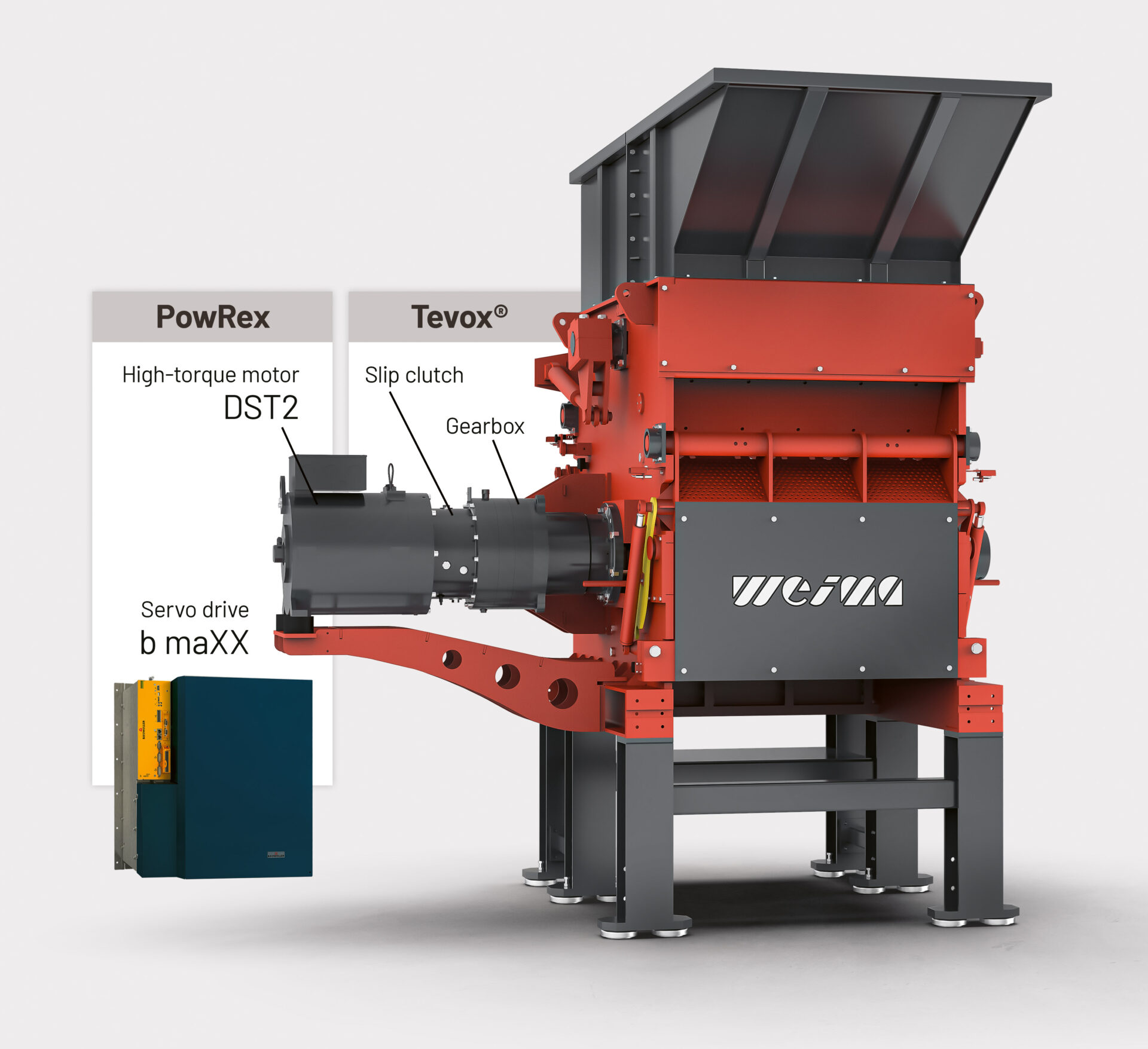
The solution is based on the PowRex drive package, which combines DST2 high-torque motors with b maXX servo drives. The coordinated system enables high torque at low speeds, supporting stable shredding processes with consistent power delivery. The electric high-torque drive is designed to deliver high dynamics while maintaining energy-efficient operation.
Reduced operating costs and maintenance
The electric high-torque drive eliminates hydraulic components and reduces the number of wear parts. Hydraulic hoses, pumps and oil circuits are no longer required, and regular oil changes are avoided. Compared to asynchronous motor systems, belt-driven components such as pulleys are also eliminated. This results in reduced maintenance requirements, longer service intervals and lower downtime. The reduction in service effort contributes to lower operating costs over the system lifecycle.
Integration and control architecture
Baumüller integrates control, regulation and analysis functions directly into the b maXX servo drives. The system supports integration into third-party control environments and common fieldbus systems. Connectivity options include ProfiNet, enabling straightforward integration into Siemens PLC architectures. Basic motion control functions can be implemented within external control systems.
Complete drive system in cooperation with WEIMA
The shredder manufacturer WEIMA will present a W8 series machine equipped with the electric high-torque drive at IFAT 2026 in Hall B6, Stand 239. The W8.15 PowerLine uses the PowRex system in combination with the Tevox gearbox and slip clutch from Nidec DESCH. The coordinated system integrates motor, servo drive, gearbox and clutch technology. This configuration supports efficient power transmission between the drive and rotor shaft and enables high torque at low rotational speeds.
Retrofit option for existing shredders
Existing shredders can be upgraded with an electric high-torque drive if the mechanical components remain serviceable. Retrofitting the drive system can reduce investment costs compared to purchasing new equipment and shorten implementation times. The approach enables operators to improve energy efficiency and reduce maintenance without replacing the entire machine.
Hall B5, Booth 409