
AI-based sorting and carbon storage
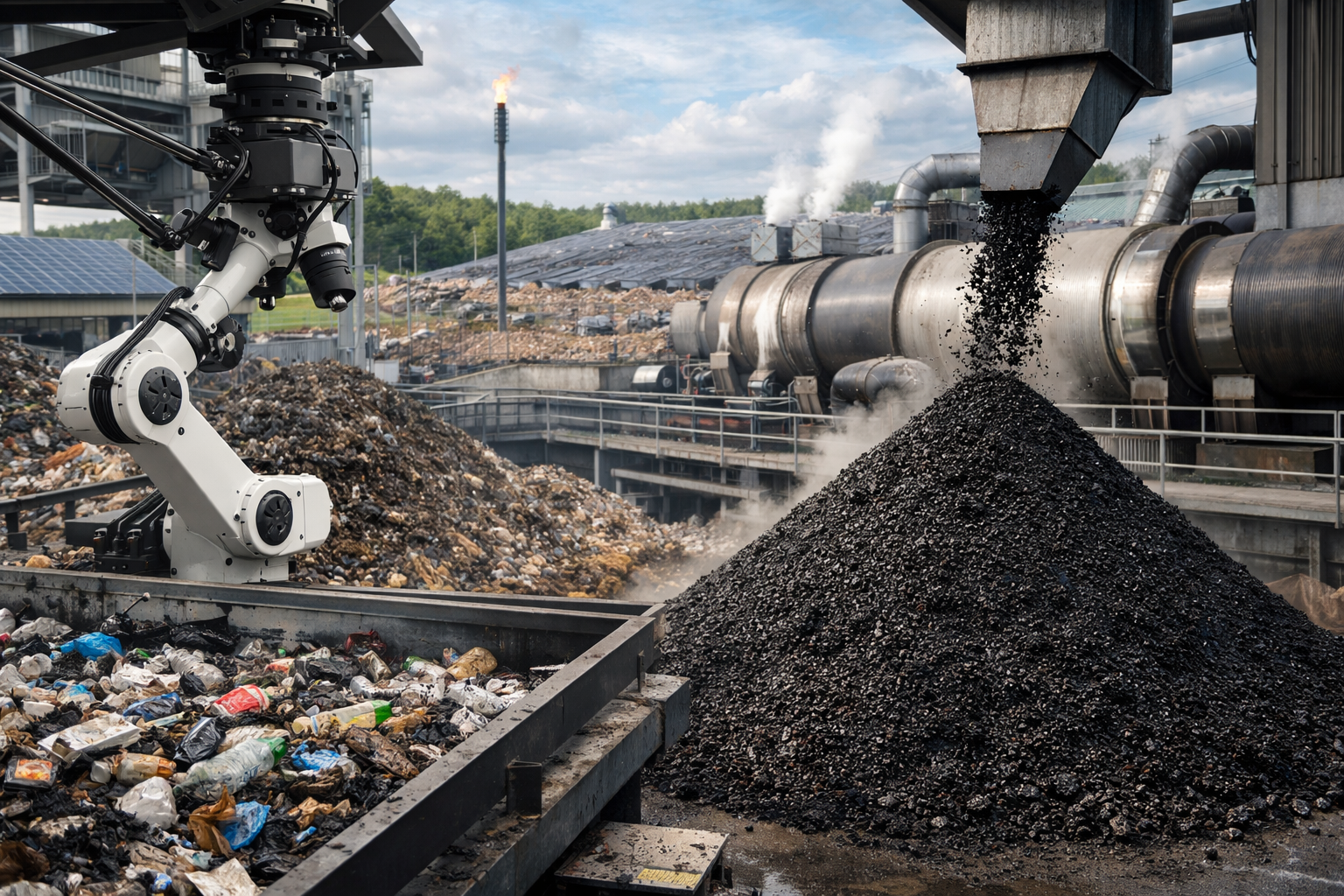
AMP applies AI-supported sorting technology to recover recyclable materials and organic fractions from municipal solid waste. Organic material is processed into biochar, a stable carbon carrier that stores carbon over long periods. This approach aims to prevent methane formation from landfill decomposition while enabling biochar carbon removal within existing waste management systems.
According to the U.S. Environmental Protection Agency, landfilled municipal waste represents a significant source of anthropogenic methane emissions in the United States. Diverting organic waste prior to decomposition contributes to emission reduction and supports long-term carbon storage.
The agreement is intended to expand biochar production capacity within a large-scale recycling facility in the United States. Over a period of 20 years, up to five million tonnes of organic waste could be converted into biochar.
Frameworks for methane and carbon accounting
Both partners plan to develop methodologies for quantifying the combined effects of waste diversion and biochar carbon removal on methane mitigation. The aim is to establish accounting frameworks that can be applied across municipal waste systems.
Infrastructure project in Virginia
In 2025, Commonwealth Sortation LLC signed a 20-year contract with the Southeastern Public Service Authority (SPSA), which serves approximately 1.2 million residents in South Hampton Roads.
The facility is designed to process around 540,000 tonnes of municipal solid waste annually. At least half of this volume is expected to be diverted from landfill disposal through material recovery and conversion processes. For each tonne treated, more than 0.7 tonnes of CO₂e could be avoided or removed, resulting in an estimated annual impact of over 378,000 tonnes of CO₂e.
Integration into circular material flows
In addition to carbon removal, the project contributes to circular economy approaches by recovering recyclables for use as secondary raw materials. Organic fractions are converted into biochar, which can initially be used as landfill cover material to manage leachate and emissions.
Further applications for biochar are under development, including use in construction materials such as cement. These pathways aim to integrate biochar carbon removal into broader industrial value chains while reducing emissions associated with primary raw material use.