
Policy framework and strategic direction
The Clean Industrial Deal defines circularity as a central instrument for reducing resource dependency and strengthening industrial resilience. It sets the target for Europe to lead the circular economy by 2030. In parallel, the updated EU Bioeconomy Strategy focuses on expanding bio-based materials as substitutes for fossil-based inputs, contributing to supply security and industrial sovereignty.
Recycling performance and market conditions
Europe demonstrates high levels of circular material use. According to Eurostat, paper packaging recycling rates reach approximately 87% across the EU. To translate this performance into economic competitiveness, a functioning Single Market for circular materials remains essential. This includes consistent separate collection systems for paper and board, as well as harmonised and digitally supported waste shipment procedures that enable efficient intra-EU material flows.
Biomass as complementary resource
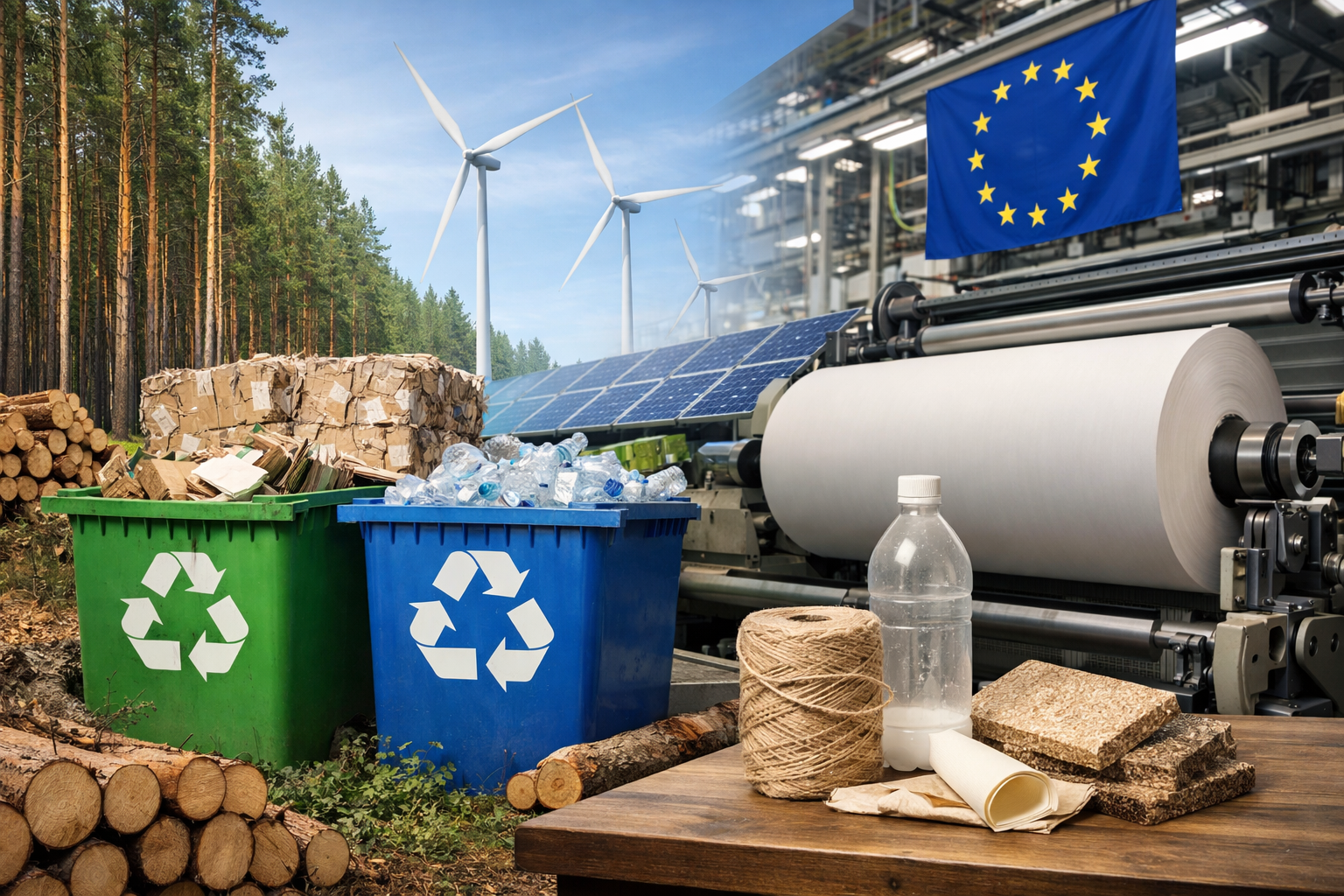
Circular systems require a continuous input of primary raw materials. Sustainably sourced biomass provides this input, particularly in fibre-based value chains. Fresh fibre remains necessary to maintain material quality and recycling cycles. Data from the FAO indicate that forest area and growing stock in Europe have increased since the 1990s, supporting long-term supply. Within the pulp and paper sector, around 90% of raw materials originate from European sources.
Technological leadership and industrial applications
Europe holds a leading position in machinery and equipment for the pulp and paper industry and related sectors. This technological base supports broader developments in the bioeconomy. The sector contributes to bio-based textiles, plastics, chemicals and construction materials, accounting for a measurable share of industrial added value. The proposed Industrial Accelerator Act aims to expand production and market uptake of materials derived from sustainable bio-based carbon.
Emerging applications of biomaterials
Bio-based materials are increasingly applied across industrial sectors. In automotive production, they contribute to weight reduction and lifecycle emissions. In the renewable energy sector, developments include wooden wind turbine components and bio-based mounting systems for photovoltaic installations. Lignin-based materials are also under investigation for use in battery technologies.
Industry perspective
The concept of Made in EU circular materials reflects existing industrial strengths in recycling systems, biomass sourcing and manufacturing technology. A regulatory framework that supports European content and production can contribute to investment stability and the further development of circular value chains within the EU.