
Recycled materials as industrial input
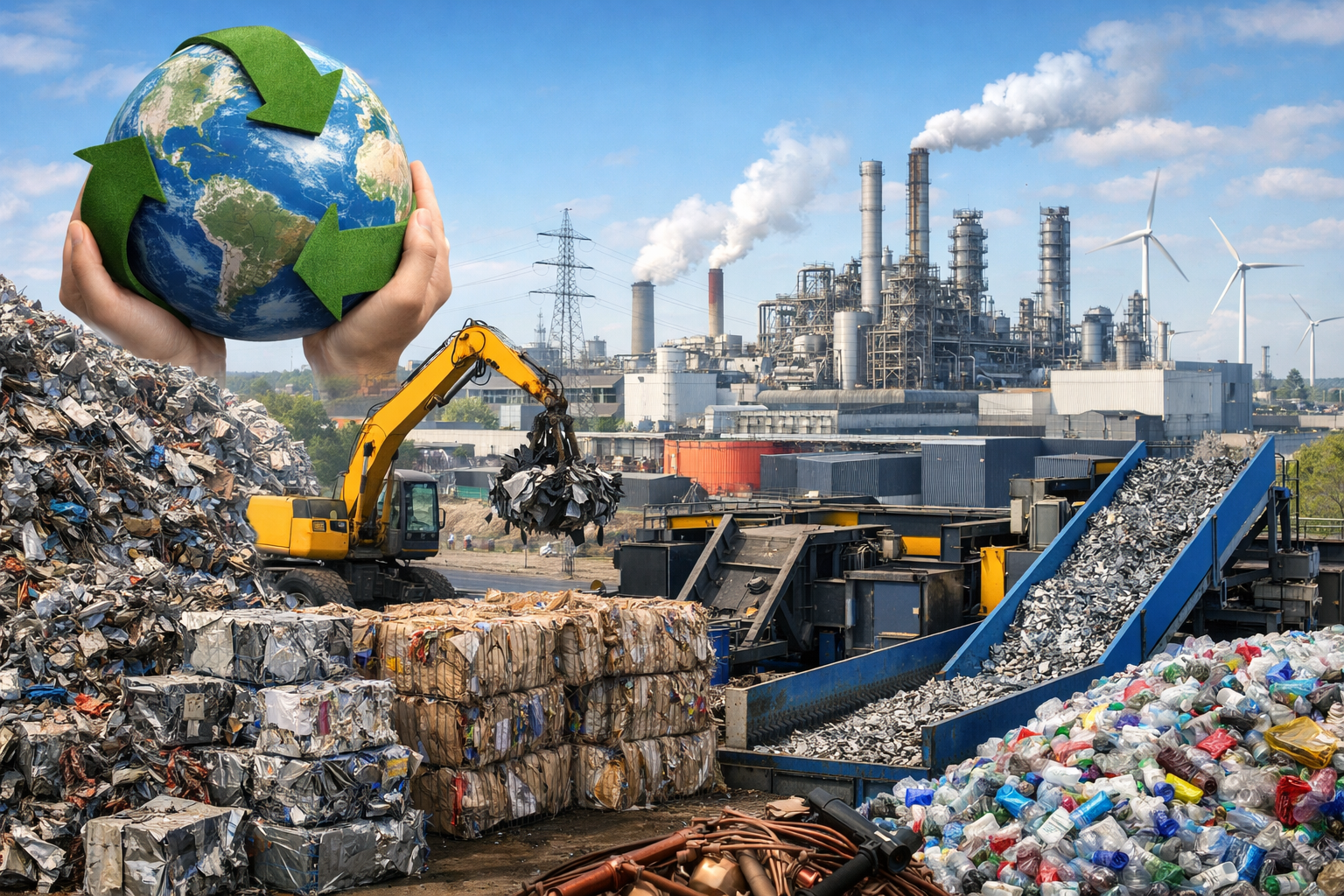
Recycled materials such as metals, plastics, paper, glass, textiles, rubber and electronic scrap are established input streams for manufacturing and infrastructure applications. Their use contributes to resource conservation and supports industrial production processes across multiple sectors.
Energy and emissions savings
The use of recycled feedstock can significantly reduce energy demand and emissions compared to primary production. Depending on the material, energy consumption can be reduced by up to 90%, while greenhouse gas emissions may decrease by up to 96%. These effects are particularly relevant in energy-intensive industries such as metals processing.
Economic contribution of recycling
The recycling sector represents a measurable economic factor. In the United States, the industry generates more than 183 billion US dollars in economic output and supports over 600,000 jobs. In the United Kingdom, the metals recycling sector employs more than 15,000 people and contributes approximately £9 billion in gross value added annually.
Metals recycling and circular material flows
Metals are characterised by their ability to be recycled repeatedly without significant loss of properties. This supports circular material flows, reduces landfill volumes and lowers demand for primary raw materials. At the same time, recycling processes generally require less energy than primary extraction and refining.
Technology and material recovery
Sorting and processing technologies, including sensor-based systems, contribute to improving material recovery rates and feedstock quality. Technology providers such as Tomra Recycling focus on enabling more efficient separation processes within recycling operations.
Growing demand for secondary raw materials
Rising material demand, driven by electrification, infrastructure development and advanced manufacturing, is increasing the relevance of secondary raw materials. Recycling is positioned as a component of supply security strategies, supporting access to raw materials and reducing dependence on primary resources.
Recycling in supply chain strategies
Industry organisations involved in Global Recycling Day emphasise the role of recycling in modern supply chains. Recycled materials in manufacturing are increasingly integrated into procurement and production strategies, reflecting both economic and environmental considerations.