
Quality requirements for recycled aggregates
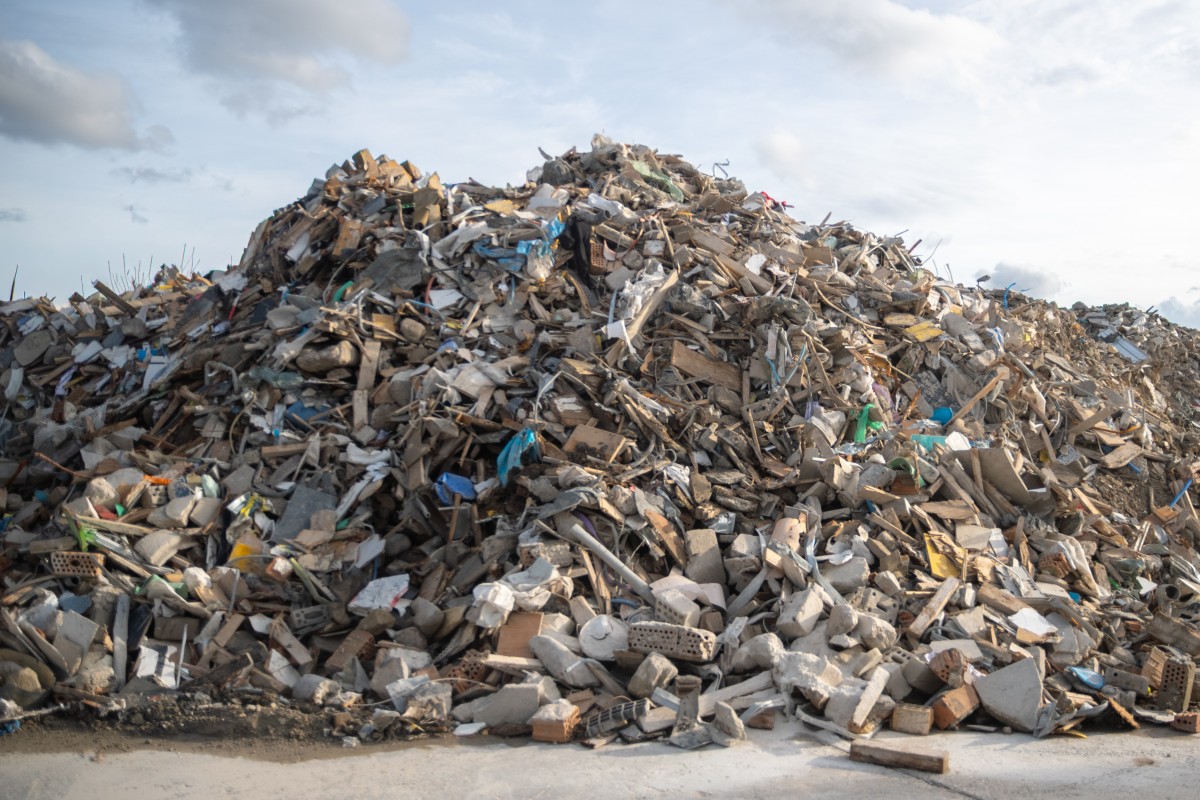
The facility in Rümlang processes between 35,000 and 40,000 tonnes of mixed demolition waste and bulky materials annually. Input streams include mineral components, wood, plastics, insulation materials, and metals. The objective is to achieve a mineral fraction with a purity of approximately 98 per cent.
A key challenge lies in removing gypsum-based materials. Plaster is widely present in demolition waste and has similar physical properties to concrete and brick. During crushing, it breaks down into fine particles that disperse within the mineral fraction. In recycled concrete, gypsum can trigger sulphate reactions that affect durability. Swiss regulations therefore limit impurity levels in concrete granulate to 0.3 per cent by mass.
Integrated sorting process
The sensor-based sorting recycled concrete process at SORTAG combines magnetic and sensor-based technologies in a continuous system. After pre-sorting and size classification, ferrous metals are removed using overhead magnets and magnetic pulleys, followed by separation of non-ferrous metals via eddy current systems.
Subsequently, near-infrared technology separates non-mineral components such as wood and plastics. Hyperspectral detection improves identification accuracy for heterogeneous materials. The final purification stage is carried out by combination sensor sorting systems integrating camera, laser, induction and X-ray technologies. This step enables the targeted removal of plaster and other remaining impurities.
Flexible adaptation to input materials
The composition of demolition waste varies depending on project type and seasonal factors. SORTAG operates with predefined sorting programmes that can be adapted to changing input streams. This flexibility allows consistent product quality without requiring extensive manual intervention or hardware modifications.
Regulatory framework and market relevance
Switzerland applies strict standards for recycled construction materials, defined by Swiss Society of Engineers and Architects guidelines and federal regulations. At the same time, demand for recycled concrete is increasing due to limited landfill capacity and declining natural aggregate resources.
The challenge of gypsum contamination is not limited to Switzerland. The European standard EN 206 specifies limits for sulphate content in recycled aggregates. Studies indicate that conventional mechanical processes often fail to meet these thresholds due to insufficient separation of plaster.
Sensor-based sorting therefore provides a technical approach for producing mineral fractions suitable for bonded applications. The decisive factor remains the consistent quality of the output material, particularly for use in structural concrete.