
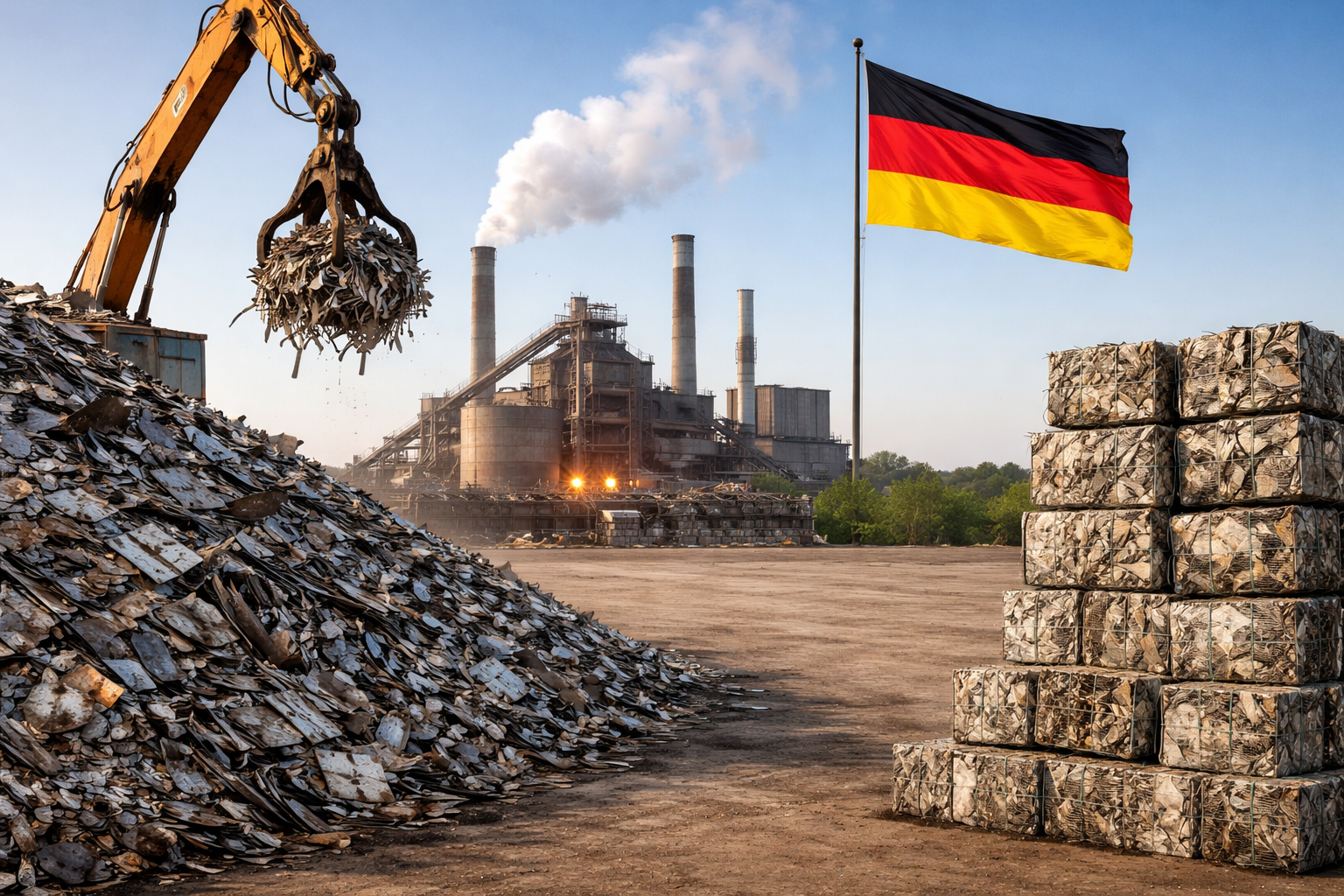
The analysis finds that the use of processed steel scrap in domestic production reduces raw material and environmental costs by approximately €6.2 billion per year. Across the European Union, the annual economic benefit is estimated at around €28 billion.
Employment and value creation effects
The study identifies the sector as a relevant industrial employer. In 2024, steel recycling companies in Germany generated revenues of approximately €5.7 billion and employed around 14,700 people directly. Including indirect effects, the total number of jobs supported by the sector is estimated at about 36,700. Overall value creation amounts to roughly €4.6 billion.
Steel recycling also contributes to industrial supply. In 2024, 46 percent of German steel production was based on processed scrap, compared with 59 percent in the European Union. The use of secondary raw materials reduces dependence on imports and supports supply chain stability.
Regulatory framework and market conditions
The study identifies several factors affecting further development. These include permitting procedures, energy costs and requirements for material quality. In addition, the authors assess potential export restrictions on steel scrap as economically counterproductive. According to the analysis, such measures would lead to welfare losses without addressing structural challenges in the market. Instead, the study points to the need for incentives to improve processing and material quality.