
Focus on PEM electrolysers and scarce materials
The project concentrates on proton exchange membrane water electrolysers, a central technology for green hydrogen production. Particular attention is given to materials such as iridium and fluorinated ionomers. They are essential for membrane performance and subject to supply risks. IRION aims to improve resource efficiency and reduce environmental impacts through recycling-oriented design and material recovery processes.
Integrated approach to sustainability and innovation
IRION combines technological development with environmental and economic assessment. The project framework aligns with European policy objectives. Those include the European Green Deal and the Critical Raw Materials Act, by supporting resilient and resource-efficient industrial systems.
Project launch and consortium structure
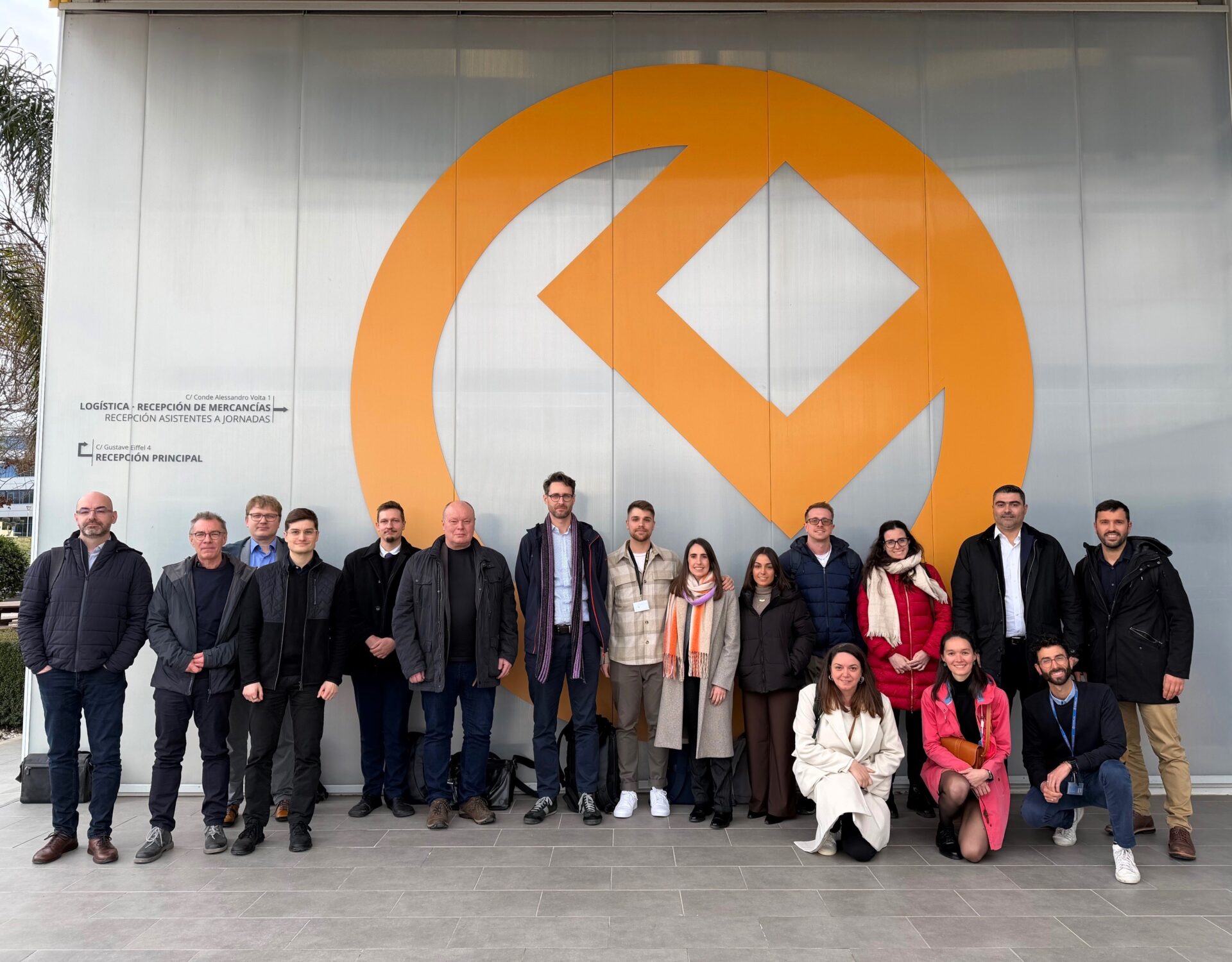
The project commenced with a kick-off meeting on 20 and 21 January 2026 at the Aimplas facilities in Valencia. The consortium consists of ten partners from seven European countries, covering expertise in polymer chemistry, materials science, engineering, modelling and environmental assessment. Participating organisations include the Fraunhofer Institute for Electronic Nano Systems, the University of Chemistry and Technology in Prague, Strategem Energy, Safina, Saint-Gobain Recherche, the National Institute of Chemistry, RINA Consulting and H2Greem
Recycling pathways for membrane materials
Aimplas contributes expertise in polymer materials, recycling technologies and process optimisation. The work includes developing and validating recycling routes for catalyst-coated membranes used in electrolysers, with the aim of enabling material circularity within hydrogen systems.
EU funding framework
IRION is funded by the Clean Hydrogen Joint Undertaking under the European Union’s Horizon Europe programme (Grant Agreement No. 101251635).