
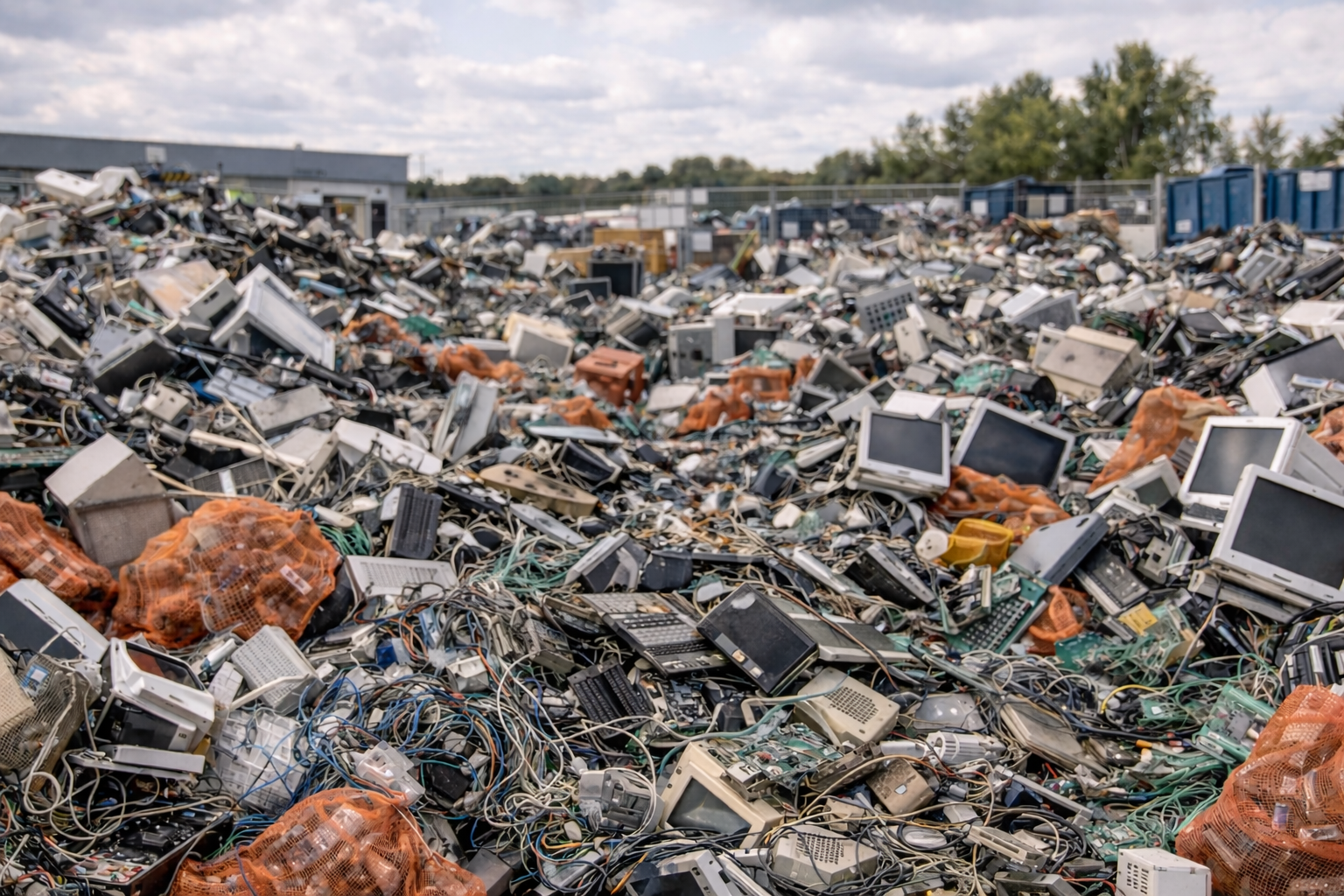
According to the organisation, e-waste recycling already contributes to climate protection and resource conservation. However, only around 40% of WEEE is currently reported as recycled. Recycling rates for plastics from WEEE are estimated at around 20%. Collection levels also remain below the EU collection target of 65%, resulting in the loss of secondary raw materials and limiting progress towards a circular economy.
Recycling Europe identifies further challenges for the WEEE recycling industry, including insufficient demand for recycled materials, delays in implementing ecodesign requirements, and safety and financial risks linked to lithium batteries. The roadmap also points to regulatory and trade barriers that restrict efficient recycling within the EU single market.
The publication outlines six priority actions intended to strengthen WEEE recycling. These include improved collection of e-waste, enabling intra-EU trade under fair conditions, strengthening ecodesign requirements and the Digital Product Passport, removing market and regulatory obstacles, ensuring effective and transparent extended producer responsibility (EPR) systems, and preparing the recycling sector for future technological and market developments.
Recycling Europe links the proposed measures to upcoming EU legislative processes, including the revision of the WEEE Directive and the planned Circular Economy Act. The organisation calls for regulatory conditions that support WEEE recycling capacities, the use of recycled materials and the recovery of critical and strategic raw materials.