
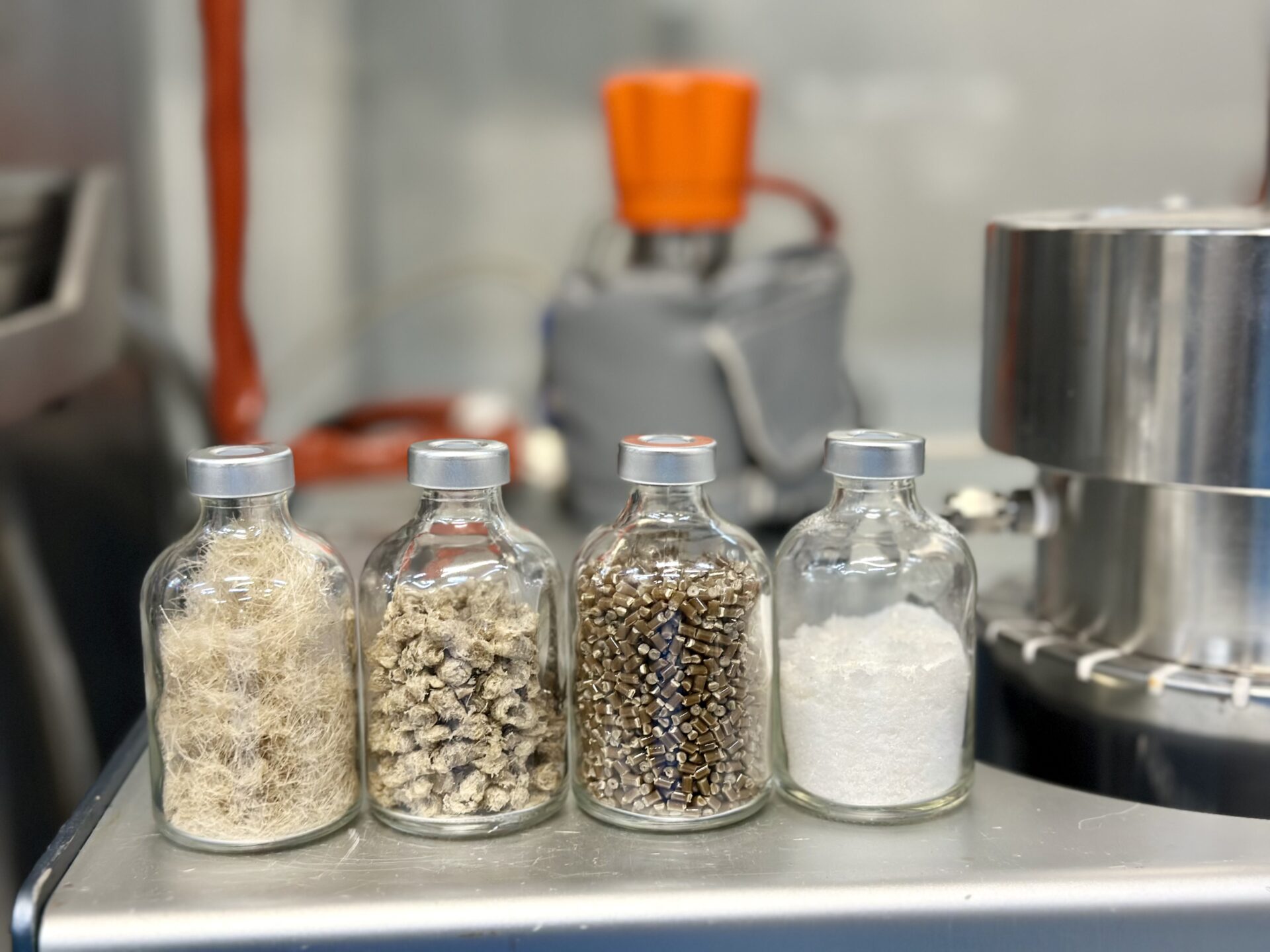
The project focuses on producing recycled nylon and further material streams that can be used for packaging and agricultural films, automotive components, and large-format parts manufactured via additive manufacturing.
REDES4VALUE is funded by the Valencian Institute of Competitiveness and Innovation (IVACE+i) and co-financed by the European Regional Development Fund (ERDF). The project consortium includes Aimpas, UBE, ZIKNES and the University of Valencia. The partners aim to close polyamide material loops and reduce marine litter by developing industry-oriented recycling solutions.
While many fishing nets are made from polyethylene or polypropylene, REDES4VALUE concentrates on polyamide-based nets due to their suitability for chemical recycling. Their molecular structure enables the recovery of monomers such as caprolactam, which can be repolymerised to produce new polyamides. This approach supports the production of recycled polyamide grades designed to match the performance characteristics required in industrial processing.
The project develops and evaluates several recycling routes, including hydrothermal depolymerisation, ionic liquid-assisted solvolysis, and reactive extrusion as part of an integrated process chain. In parallel, life cycle assessment and feasibility studies are being carried out to support process validation and scale-up considerations.
Recycled polyamides from REDES4VALUE are intended for use in packaging, agriculture, automotive applications and industrial 3D printing. Within the consortium, UBE is responsible for scaling and repolymerisation activities, while ZIKNES adapts and validates equipment for large-format additive manufacturing. The University of Valencia contributes solvolysis and kinetics studies to support process development.
A key technical challenge is the treatment of highly degraded nets with elevated levels of impurities. These feedstocks can affect process stability and product quality and require specific pre-treatment and optimisation steps. REDES4VALUE addresses this through laboratory and pilot-scale validation and by adjusting process parameters to improve monomer recovery and polymer quality.
To secure access to real input material, the project collaborates with the Sea2See brand, which provides fishing nets recovered in Ghana since 2019. This supply supports the validation of recycling processes under relevant conditions and helps structure the project’s circular value chain from waste collection to secondary material production.
REDES4VALUE is funded through the IVACE+i Strategic Cooperation Projects programme (2024 call) with co-financing from the European Regional Development Fund (ERDF).