
A study conducted by IVL Swedish Environmental Research Institute, TERRA and Swedish Plastic Recycling has been published in The International Journal of Life Cycle Assessment and analyses the climate impact of different plastic packaging waste treatment methods in a Swedish context. The findings highlight significant differences between recycling approaches currently applied in Europe and point to potential implications for EU climate and circular economy legislation.
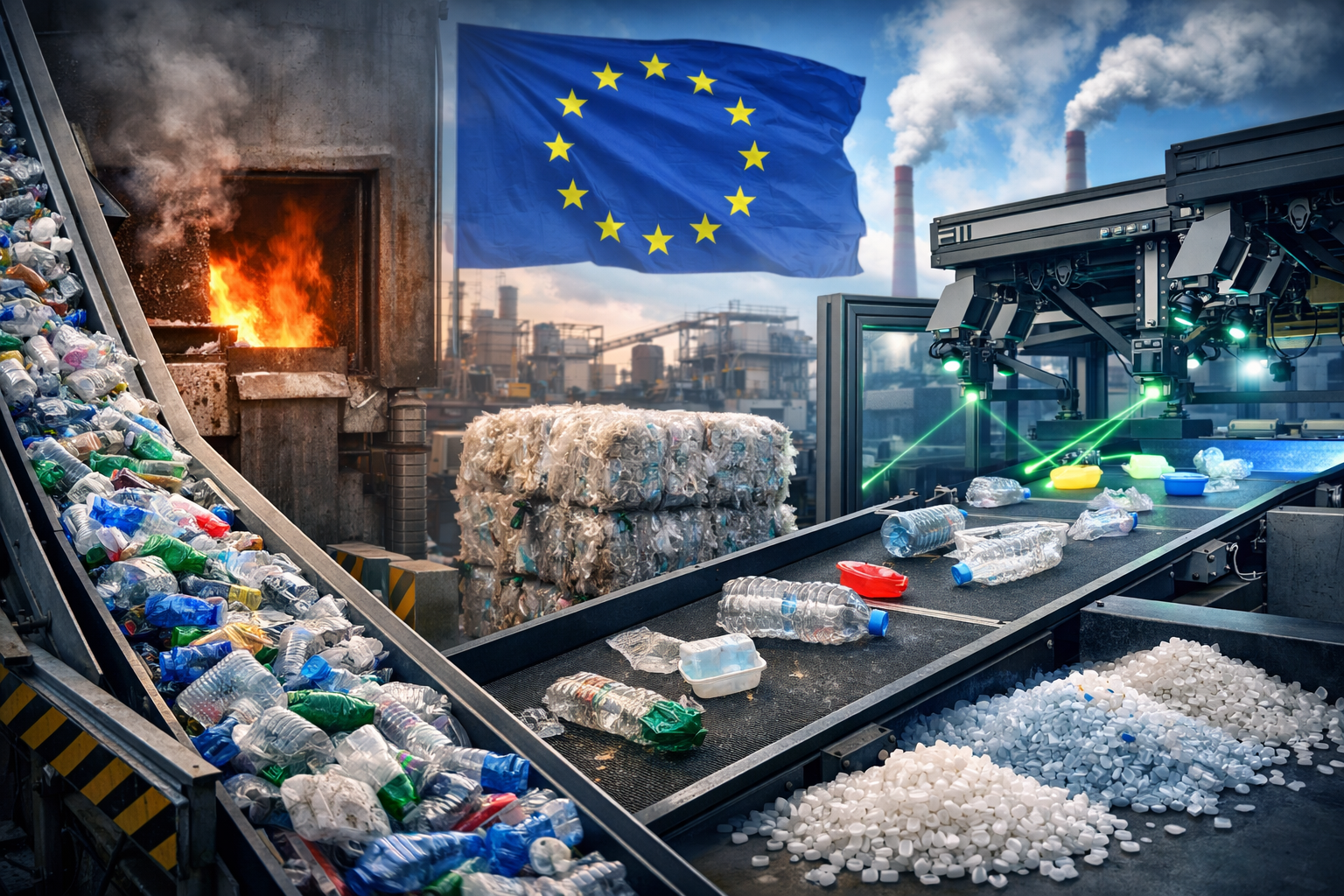
The study compares three treatment scenarios for plastic packaging waste: direct incineration with energy recovery, recycling with limited or no sorting, and high-quality recycling supported by advanced sorting technologies. The analysis shows that the choice of recycling method has a decisive influence on climate performance. High-quality recycling results in a 27 per cent reduction in climate impact compared with direct incineration within the modelled system. In contrast, recycling without advanced sorting achieves a reduction of only 4 per cent compared with incineration.
The limited climate benefit of low-quality recycling is linked to the type of material that recycled plastics replace. High-quality recycling enables recycled material to substitute primary fossil-based plastics, thereby reducing demand for new plastic production. Recycling without sufficient sorting often leads to the use of recycled plastic as a substitute for materials such as wood, which does not contribute to reducing overall plastic production.
The study also identifies infrastructure availability as a key limiting factor. Advanced sorting systems required for high-quality recycling are not yet widely available across Europe. According to the analysis, expanding sorting and recycling infrastructure is essential to achieve meaningful reductions in greenhouse gas emissions from plastic packaging and to improve material circularity.
The findings are particularly relevant in the context of the forthcoming EU Packaging and Packaging Waste Regulation. Increased requirements for recyclability and mandatory recycled content quotas could enhance the climate performance of plastic recycling, provided that sufficient sorting and processing capacity is in place. Scenarios examined in the study indicate that regulatory measures combined with advanced sorting enable a larger share of plastic packaging to be recycled at a quality level suitable for replacing primary plastics.
Beyond climate impacts, the study addresses broader implications for resource security. Incineration and downcycling reduce the availability of secondary raw materials and increase reliance on imported primary resources. Improving recycling quality can support greater material self-sufficiency within Europe by retaining plastics in closed material loops and increasing access to recycled raw materials for industrial use.
Overall, the research suggests that EU policy frameworks focusing solely on recycling rates may overlook critical differences in environmental performance. Incorporating requirements related to recycling quality, sorting infrastructure and climate outcomes could strengthen the effectiveness of circular economy measures and contribute to long-term resilience in the European plastics value chain.