
Stadler has carried out the comprehensive upgrade of the Bizkaiko Zabor Berziklategia facility. The modernized plant was inaugurated on 27 January 2026 in the presence of representatives from BZB, Ecoembes and regional institutions. The upgrade focuses on increased capacity, a higher degree of automation and enhanced digital process control, enabling more efficient sorting and improved material quality.
BZB is a public-private partnership between Garbiker, part of the Provincial Council of Bizkaia, and Trienekens País Vasco. The company operates one of the region’s central facilities for the sorting of light packaging waste from households and commercial sources. Its activities support regional recycling targets and the supply of secondary raw materials to downstream markets.
The original BZB plant was Stadler’s first turnkey sorting facility in Spain and formed the basis for the company’s subsequent expansion in the country. Almost 25 years later, Stadler was again selected to redesign and supply the plant. The project involved integrating modern sorting technology into the existing building structure, requiring compact layouts and detailed planning to make optimal use of the available space.
Rather than relocating the facility, BZB opted to modernize the existing site in order to extend the service life of the infrastructure while introducing current-generation sorting equipment. The definition of sorting specifications was developed in coordination with Ecoembes, which acted as a system partner during the planning and implementation phases.
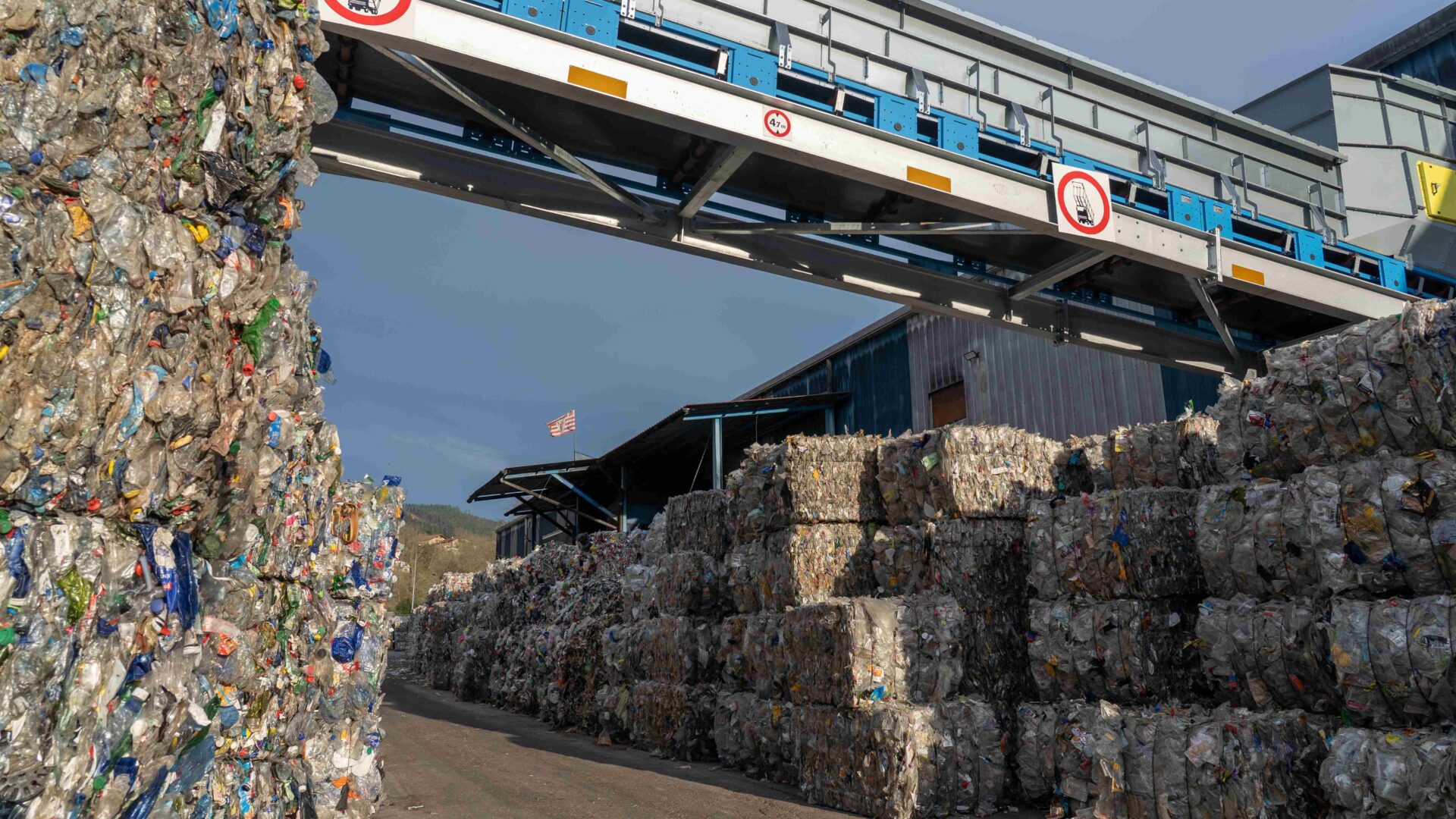
As a result of the modernization, plant capacity has increased from three to eight tonnes per hour. The facility processes a broad range of lightweight packaging waste and produces defined output fractions including PET, HDPE, PP, PS, two film fractions, as well as ferrous and non-ferrous metals.
Material is fed into the system via an automatic feeder and a pre-shredding stage for bag opening and stream conditioning. A trommel screen separates the input into three size fractions, which are treated independently using ballistic separators, magnetic and eddy current separators, and near-infrared optical sorting units. Sorted materials are conveyed to dedicated bunkers and baled for onward transport.
The installation includes reversible conveyors for flexible material routing, bunker level sensors and automated container change signals. A central control system monitors all process steps, providing operators with continuous oversight of plant performance.
Automation levels have been significantly increased compared with the original installation. More efficient use of space and reduced manual sorting requirements contribute to lower operating costs and improved working conditions. The plant is also the first Stadler installation in Spain to integrate the STADLERconnect digital platform with predictive maintenance functionality, allowing continuous monitoring of equipment condition and supporting preventive maintenance planning.
The technical upgrade supports circular economy objectives by improving sorting accuracy and recovery rates, thereby reducing residual waste and increasing the volume of materials returned to the recycling value chain. Improved energy efficiency per tonne processed further enhances the environmental performance of the facility.
Assembly of the modernized plant was completed within three and a half months. Commissioning was finalized at the end of October, approximately two months ahead of the original schedule, reflecting close coordination between the project partners.
With its upgraded capacity, automation and digital monitoring capabilities, the BZB plant is positioned for long-term operation under evolving regulatory and market conditions in the packaging waste recycling sector.