

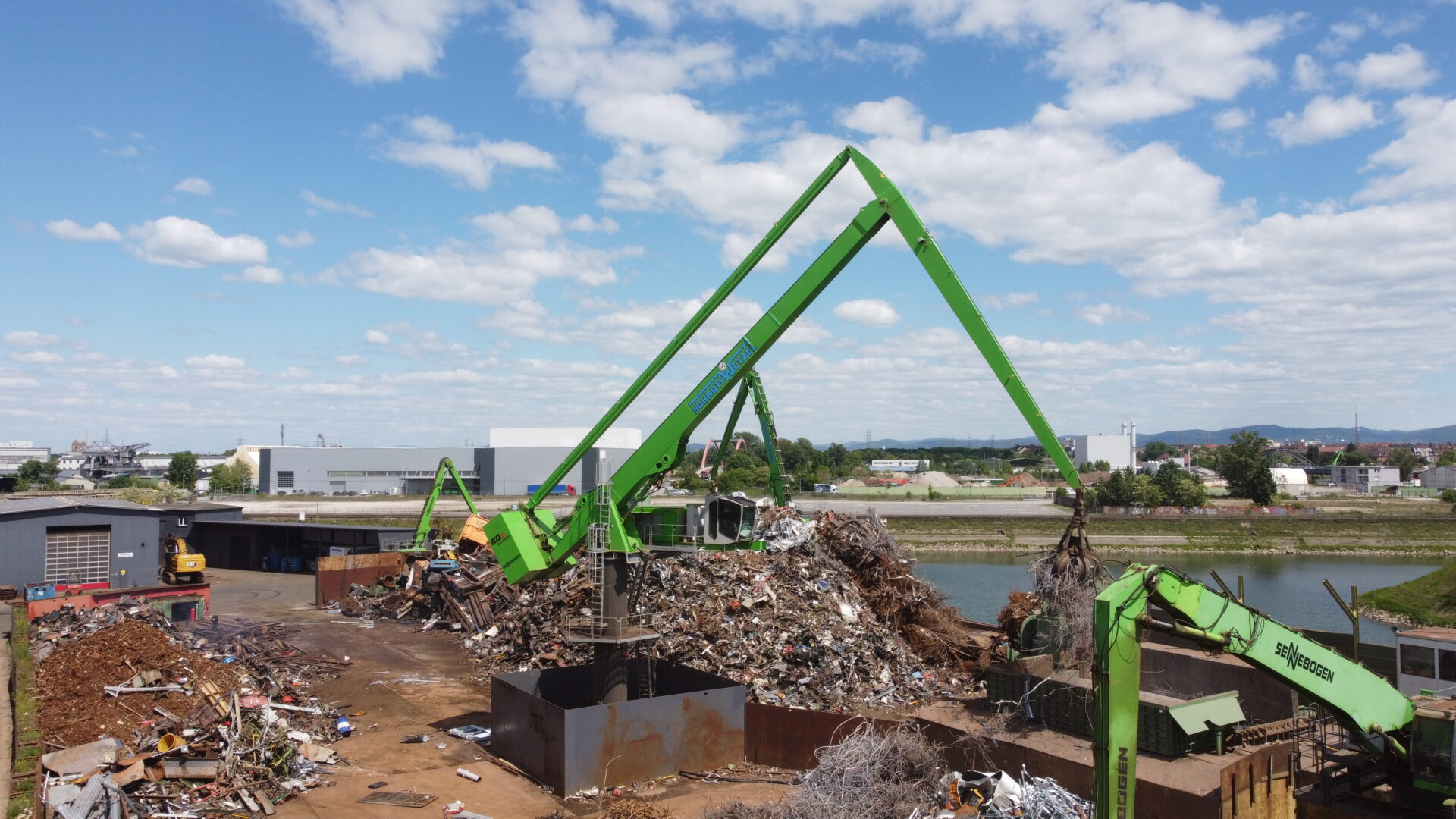
The location is operated on a carbon-neutral basis and is regarded as the first carbon-neutral scrap yard in Germany. An important component of this approach is the electrically powered Sennebogen EQ-Balancer, which has been in operation since May 2023.
Since the 1950s, Schrott Wetzel has specialised in large-scale metal recycling. The company operates several sites in Germany and Switzerland, all of which have trimodal access by rail, road and waterway. Scrap metal processed at these locations is supplied to steel producers and exported to international markets, including Turkey and countries in Asia. The Mannheim site, with direct access to the Rhine, plays a central role in the company’s logistics and material flows and has been a focal point for the implementation of climate-oriented measures.
A photovoltaic system with a capacity of 2.4 megawatts supplies approximately 80 percent of the site’s electricity demand. The remaining electricity is sourced from certified renewable energy. This energy concept enables emissions-free operation of stationary equipment at the site, including the EQ-Balancer.
The EQ-Balancer complements the existing Sennebogen material handling fleet, which comprises two 875 E machines, one 855 E and four 835 G models. After nearly two years of operation, the machine has accumulated around 4,700 operating hours. Its availability is supported by the service and maintenance activities of Schlüter Baumaschinen, Sennebogen’s regional sales and service partner.
Installed in a stationary configuration, the EQ-Balancer is used for rail wagon loading, feeding the scrap shear and handling incoming material. These tasks were previously carried out by two separate machines. With a reach of 32 metres, the machine also improves the use of available storage space by allowing higher stacking of scrap material.
The EQ-Balancer operates with a mechanically linked counterweight system that balances the movements of the working equipment. This design reduces the energy required for operation. Despite its long boom and continuous use in scrap handling, the machine records an average energy consumption of approximately 75 kilowatt-hours per operating hour.