
The report was commissioned by the European Container Glass Federation (FEVE) and carried out with operational support from members of the European Federation of Glass Recycling Companies (FERVER).
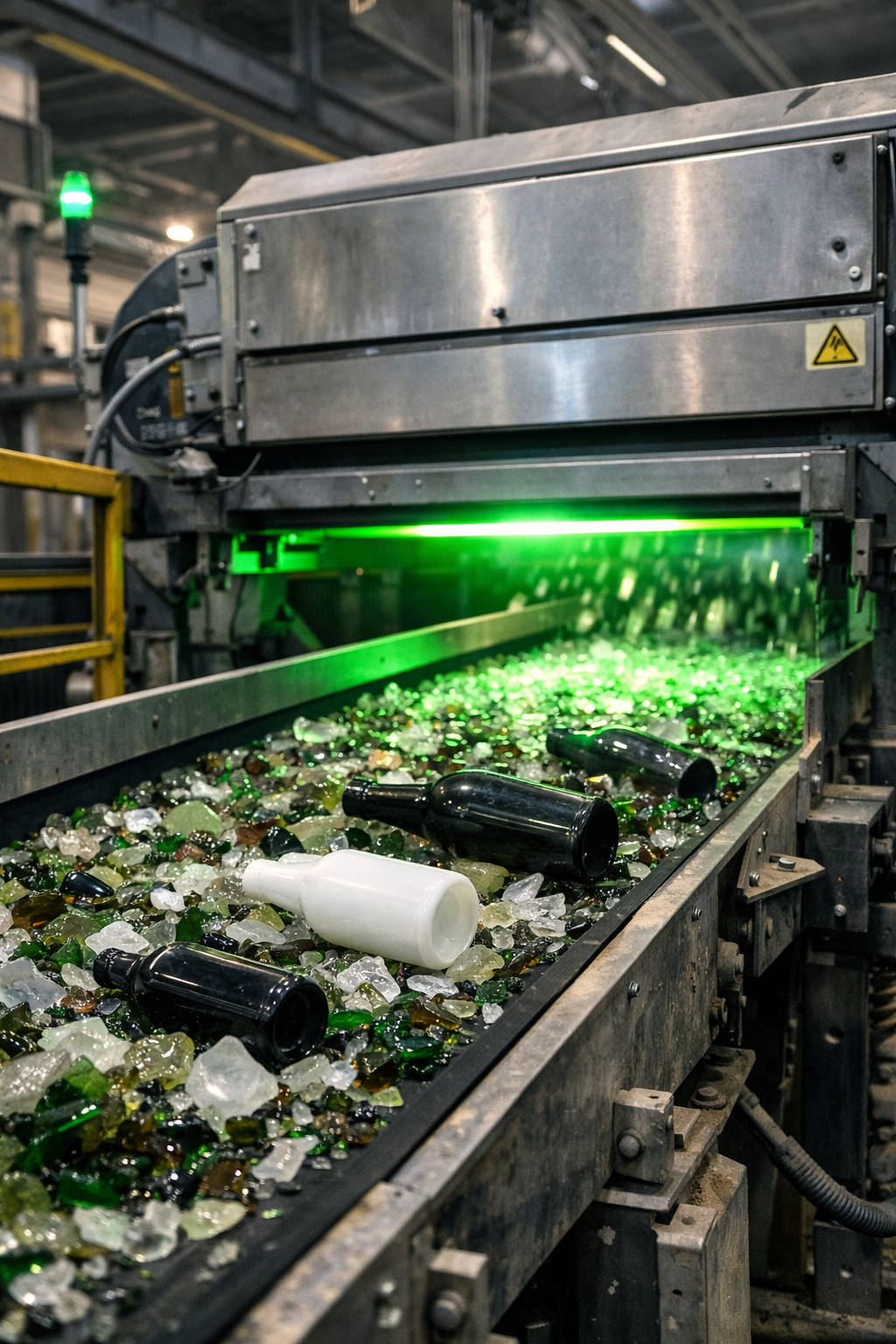
The study analyses the minimum visible light transmittance at which opaque glass fragments can still be identified as glass by optical sorting technologies used in European cullet treatment plants. Laboratory measurements were combined with industrial-scale trials to assess the performance of existing sorting infrastructure under real operating conditions.
According to the findings, optical sorting systems currently deployed in Europe are able to reliably recognise opaque glass fragments with an average visible light transmittance above 2.5 percent. Measurements were conducted in line with the opacity testing protocol that is currently under development within the European Committee for Standardisation, taking into account technical input from the International Technical Center for Bottling and Related Packaging. The results indicate that the operational capabilities of many cullet treatment plants exceed transmittance thresholds specified in some national packaging regulations.
To ensure statistical reliability, SSV carried out industrial trials at nine cullet treatment plants in different European countries. A total of 2,700 kilograms of standardised cullet from various types of opaque glass bottles was processed. The trials focused on measuring false rejection rates as ceramic, stone or porcelain across different optical sorting technologies.
The results are being considered in the ongoing development of design-for-recycling technical specifications for glass packaging at European level. These specifications are being finalised within the European standardisation framework with contributions from across the value chain, including glass manufacturers, cullet processors, fillers, packaging component suppliers, equipment manufacturers and extended producer responsibility schemes. The study underlines the need for recyclability criteria to be reviewed regularly to reflect technological progress in collection, sorting and recycling.
By providing industrial-scale evidence, the report supports the alignment of future European design-for-recycling criteria for glass packaging with existing recycling practices. It contributes technical input to policy development aimed at improving the circular use of glass packaging materials in Europe.