
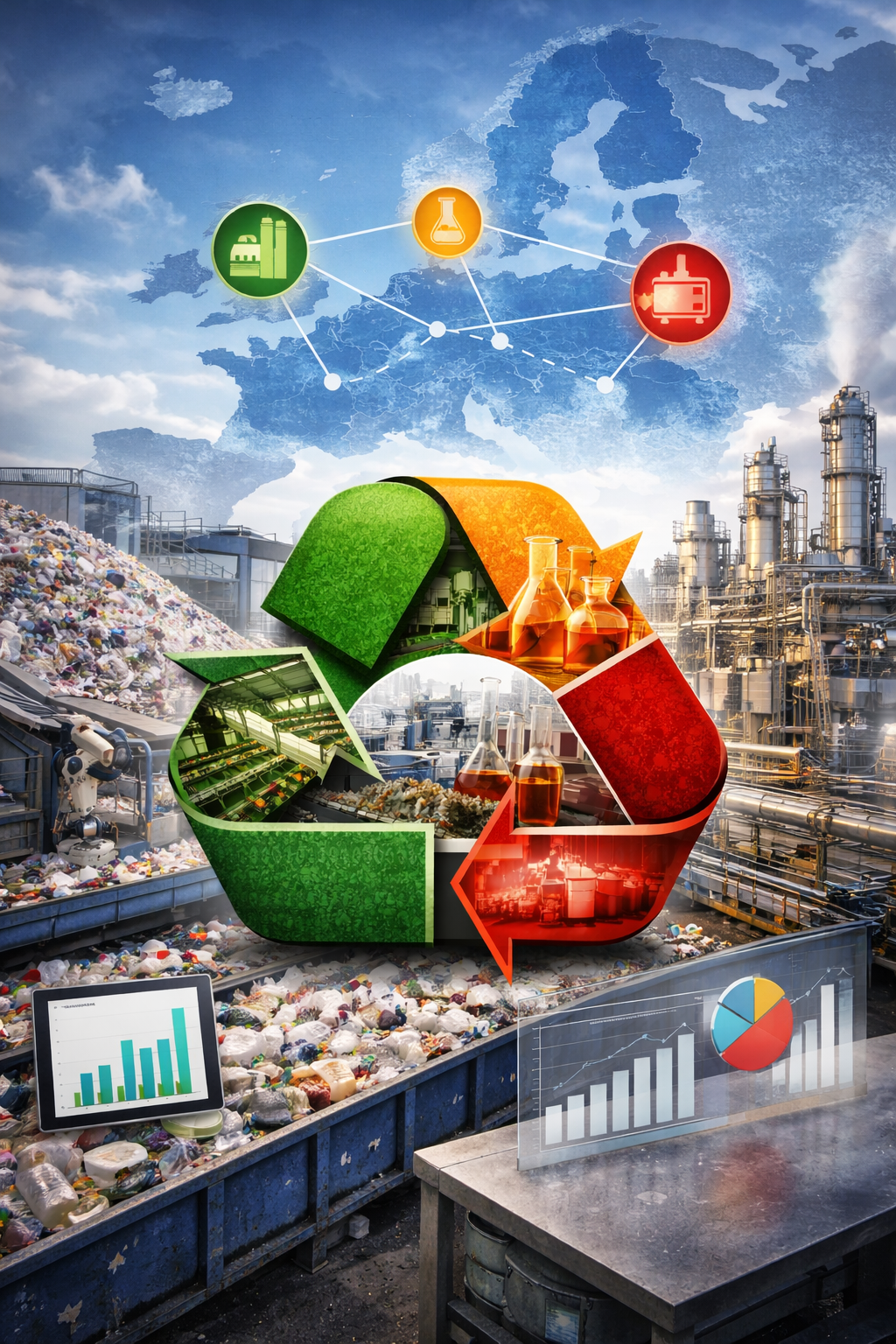
The publication analyses mechanical, dissolution and chemical recycling technologies across major plastic waste streams such as packaging, waste electrical and electronic equipment, end-of-life vehicles, and construction products. It follows plastic waste from collection and sorting through to recycling, offering a comprehensive view of process interdependencies. Recycling technologies are categorised using a traffic-light system that reflects their level of industrial maturity, ranging from early development to established large-scale application.
According to the analysis, mechanical recycling remains the most widely implemented recycling route for plastics in Europe. Dissolution-based processes are largely limited to pilot and early commercial projects, while chemical recycling technologies are gradually expanding beyond demonstration scale. The report identifies efficient sorting as a decisive factor for improving recycling rates and output quality across all recycling routes.
The mapping is based on interviews with industry stakeholders, data analysis, site visits and a review of technical literature and patent filings. It documents recent technological developments and illustrates how individual process steps influence overall system performance. The publication aims to support the optimisation of recyclability, infrastructure planning and the reduction of material losses in European plastics recycling.