
With the PAC2PAC project, the Swiss Bachmann Group, an established packaging manufacturer, initiated a feasibility study to develop a technically viable recycling loop for PET packaging in Switzerland. Project partners included Sesotec, Starlinger Viscotec, Krones and PET-MAN. The aim was to evaluate a system capable of processing mixed plastic packaging streams from household collection and returning food-grade PET into equivalent packaging applications.
A key focus of the project was the Swiss plastic collection bag, which contains a mixture of food-grade PET packaging and non-food-grade plastics. Conventional sorting methods such as near-infrared spectroscopy, colour detection and shape recognition reach technical limits when attempting to reliably distinguish between food and non-food PET in such mixed streams. The separation of these fractions is critical, as only food-grade PET can be used in closed-loop food contact applications.
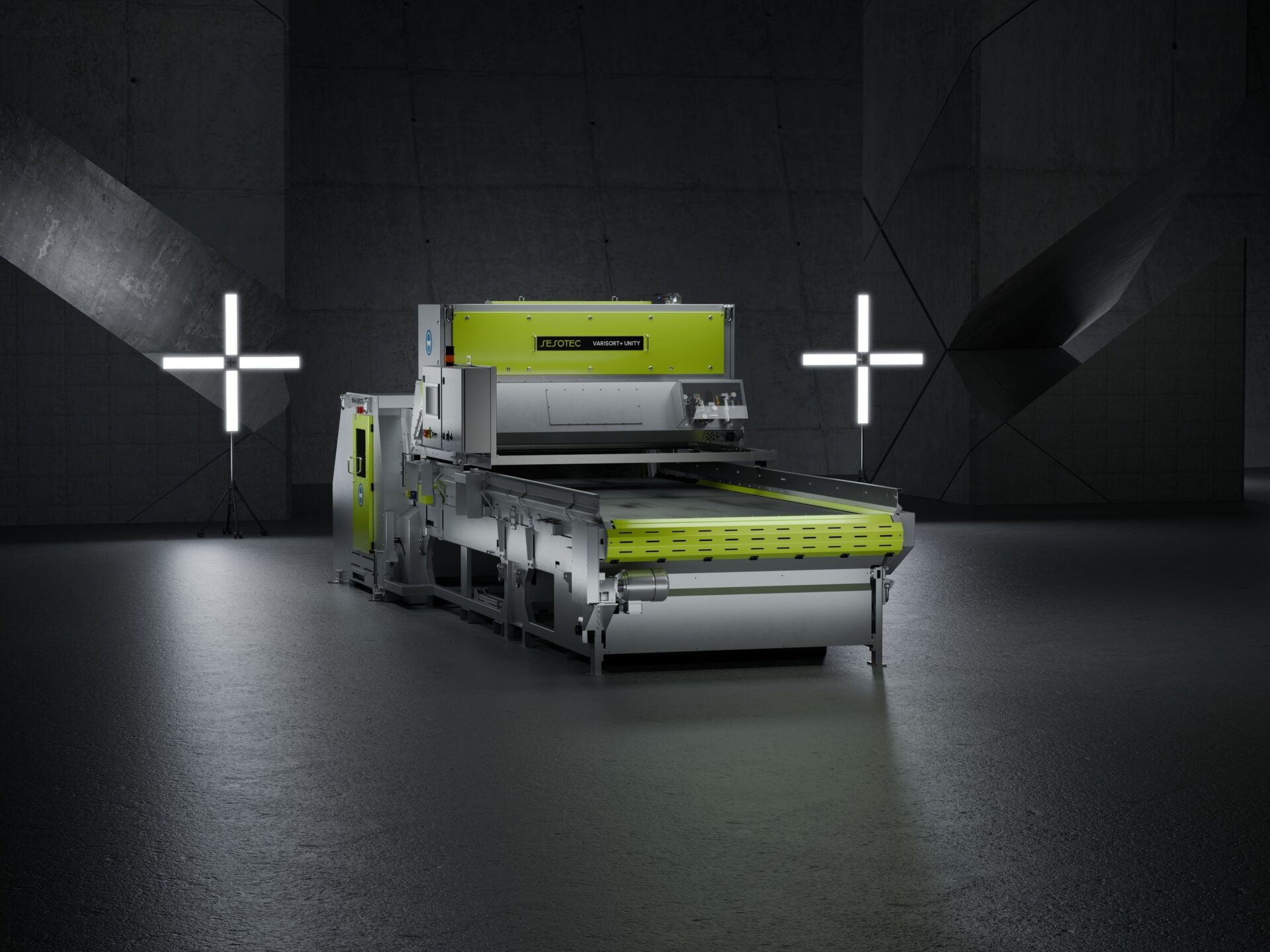
Within the PAC2PAC project, sensor-based sorting was combined with artificial intelligence to improve material differentiation. Sesotec was responsible for the development and implementation of the sorting and analysis technology. After bale opening, the plastic packaging entered the VARISORT+ UNITY sorting system. Using the AI-based OBJECT-AI evaluation method, the system analysed individual objects in addition to conventional sensor data. Object recognition incorporated parameters such as shape, surface features and print characteristics to support the classification of food-grade and non-food-grade PET.
The sorting process produced two target fractions consisting of clear food-grade PET and coloured food-grade PET. Throughout the project, analyses were carried out to verify compliance with defined thresholds for food and non-food content. The VARISORT+ FLEX and VARISORT+ UNITY systems were equipped with multi-sensor technology and high-performance evaluation units designed to support AI-based sorting applications.
Following sorting, the PET packaging was shredded into flakes, screened and washed. The flake fractions were further processed using the FLAKE PURIFIER+ system to remove remaining off-colours, metals and foreign plastics. Quality assurance was supported by the FLAKE SCAN material analysis system, which enabled rapid analysis of plastic types, colours and metallic contaminants. The system was used to monitor both input and output material streams and to support process stability and material assessment.
Based on the analysis results, the purified PET flakes were extruded into mono-material films and subsequently thermoformed into new PET packaging. The process demonstrated the technical feasibility of returning food-grade PET from mixed household collections into equivalent packaging applications. In addition, transparent non-food PET and coloured PET fractions were recovered for further recycling, increasing overall material recovery from the collection system.
According to the project results, the PAC2PAC approach enabled a significant increase in the recycling rate of PET packaging from the Swiss collection bag and demonstrated the potential of AI-supported sorting technologies for closed-loop PET recycling.