
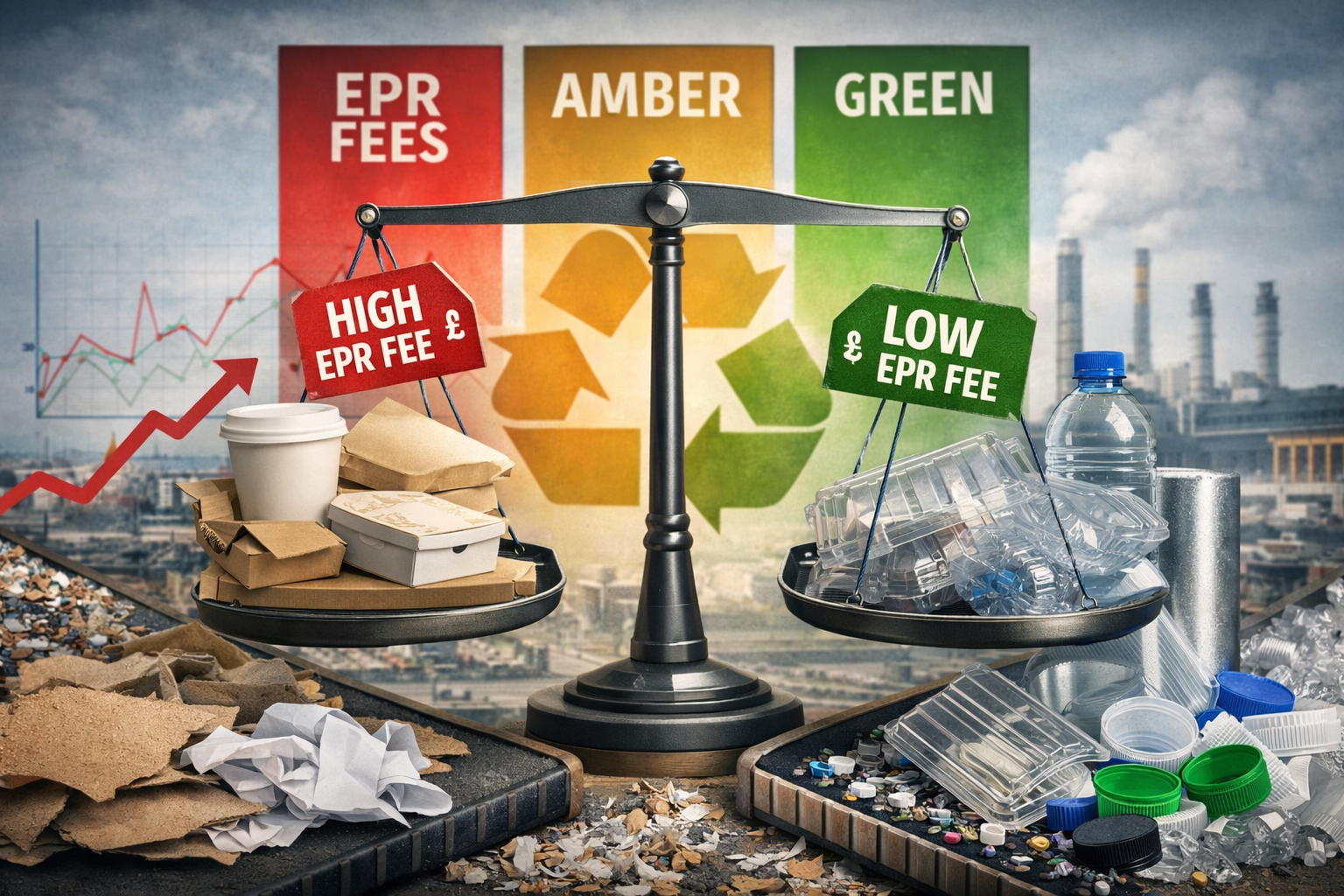
Analysis by Aquapak suggests that the current framework produces inconsistent outcomes, with some plastic packaging formats attracting lower EPR fees than paper-based fibre composites, despite the scheme’s objective of reducing plastic use.
Brand owners are required to report annually on the types and tonnages of packaging materials placed on the market, with fees applied per tonne according to material category. From 2026, fee modulation will be introduced through a red, amber and green classification under the Recyclability Assessment Methodology, with more recyclable packaging attracting lower fees and less recyclable formats incurring higher charges.
At the same time, the regulatory interpretation of recyclable paper-based packaging has become more restrictive. While paper-based alternatives have increasingly replaced plastic in recent years, the current definition of recyclability is based on material composition rather than recycling performance.
The Department for Environment, Food and Rural Affairs classifies paper-based packaging containing more than 15 per cent plastic as non-recyclable and unsuitable for widespread household collection. This threshold is also applied under the On-Pack Recycling Label scheme, preventing affected packaging from being labelled as widely recycled. In contrast, many European countries allow higher non-fibre content thresholds and assess recyclability through testing and fibre recovery performance.
Under EPR definitions, packaging qualifies as paper only if it contains at least 95 per cent fibre by weight. Packaging exceeding five per cent non-fibre content is classified as a fibre composite, capturing many modern paper-based formats that use thin coatings or functional layers for moisture, grease or sealing performance. Although many of these materials can be effectively repulped and recycled, they are treated as mixed-material packaging under EPR.
Aquapak’s review of EPR guidance indicates that fibre composites can attract higher fees than some plastic packaging formats, meaning paper-based packaging with minimal non-fibre content may face higher compliance costs than plastic alternatives. Evidence suggests that the recycling processes for fibre composites and standard paper grades are largely comparable, with similar infrastructure, energy inputs and recovery outcomes.
As a result, the current fee structure does not reflect the practical recycling performance of many fibre-based materials. In addition, packaging previously accepted as recyclable through industry testing may lose that status under revised definitions, despite unchanged performance in recycling systems.
According to Aquapak, the complexity of the EPR framework, combined with evolving guidance and provisional fees, creates uncertainty for packaging producers and material developers. The company argues that recyclability assessments based on fibre recovery and performance testing would provide clearer incentives and better alignment between EPR costs and actual recycling outcomes, supporting packaging innovation and supply chain confidence.