

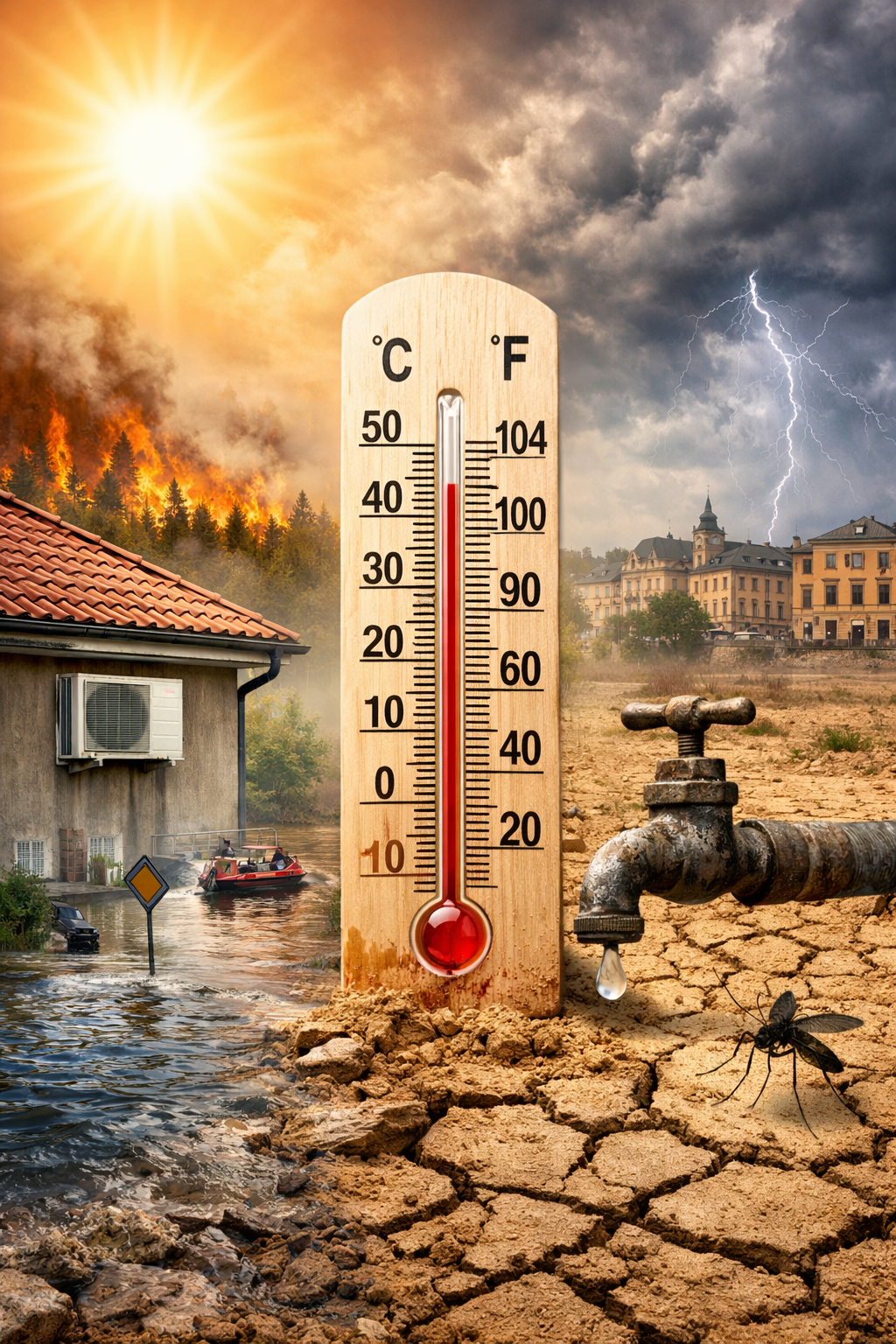
The survey results are examined in the report Overheated and underprepared, published by the European Environment Agency and the European Foundation for the Improvement of Living and Working Conditions. The analysis provides a comprehensive overview of perceived climate impacts across Europe and assesses the implementation of resilience measures at household level, as well as measures observed by respondents at local and regional authority level.
The report is based on an online survey conducted in 27 European countries, with more than 27,000 participants. Respondents were asked about their experiences with climate-related impacts, their concerns regarding future developments, and the adaptation measures they have implemented in their homes or observed in their communities.
According to the findings, around four out of five respondents have experienced at least one climate-related impact in the past five years. These impacts include heat, flooding, wildfires, water scarcity, strong winds and increased exposure to mosquitoes or ticks. More than half of those surveyed reported being very or quite concerned about future periods of extremely high temperatures, and a similar level of concern was expressed regarding wildfires.
Despite these experiences and concerns, preparedness at household level remains limited. One in five respondents reported having none of the protective measures listed in the survey, such as shading, ventilation or air conditioning, flood protection, rainwater collection systems or insurance coverage for extreme weather events. In addition, more than 38 percent stated that they were unable to afford adequate cooling of their homes during summer months.
Regional differences were also identified. Respondents from northern Europe reported the lowest combined levels of experienced climate impacts and implemented resilience measures. The survey further indicates social disparities in the effects of climate change. Participants with lower household incomes were more frequently affected by certain impacts, including reduced access to safe and clean water, which was reported four times more often among respondents with the lowest financial means.
Overall, the findings point to a gap between the growing awareness of climate risks and the practical implementation of adaptation measures, highlighting the need for targeted policy responses and support mechanisms at both household and local authority level.