
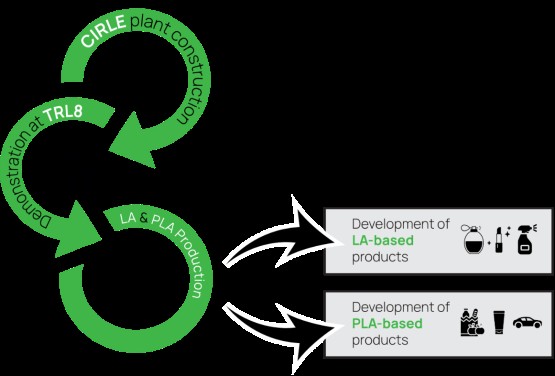
The four-year initiative, with a budget of €27 million, brings together 17 partners across the value chain to develop an industrial biorefinery for converting organic food waste into bio-based chemicals, including polylactic acid (PLA).
Focus on polymerisation and material grades
Within the project, Emirates Biotech is responsible for the polymerisation of lactic acid derived from food waste. The company will produce high-purity PLA for further evaluation and application development by consortium partners. The work includes the development of different PLA grades for use in sectors such as automotive, cosmetics and food packaging. The project also examines the integration of lactic acid and PLA production into waste management facilities. The aim is to reduce emissions associated with conventional material production.
Value chain collaboration
The CIRCLE consortium includes waste management companies, technology providers and consumer goods manufacturers. It is coordinated by TripleW and comprises partners such as Volkswagen, FrieslandCampina, Davines, Sulzer and Sulapac. The collaboration covers feedstock processing, chemical conversion and end-use validation.
From laboratory to industrial scale
In September 2025, project partners produced PLA from food waste at laboratory scale. The current phase focuses on scaling this process toward industrial application. Emirates Biotech’s involvement supports this transition, in line with the planned commissioning of its PLA production facility with a capacity of 80,000 tonnes per year in 2028.
Project framework
The CIRCLE project is supported by the Circular Bio-based Europe Joint Undertaking. It isfunded by the European Union under grant agreement No. 101157359.