

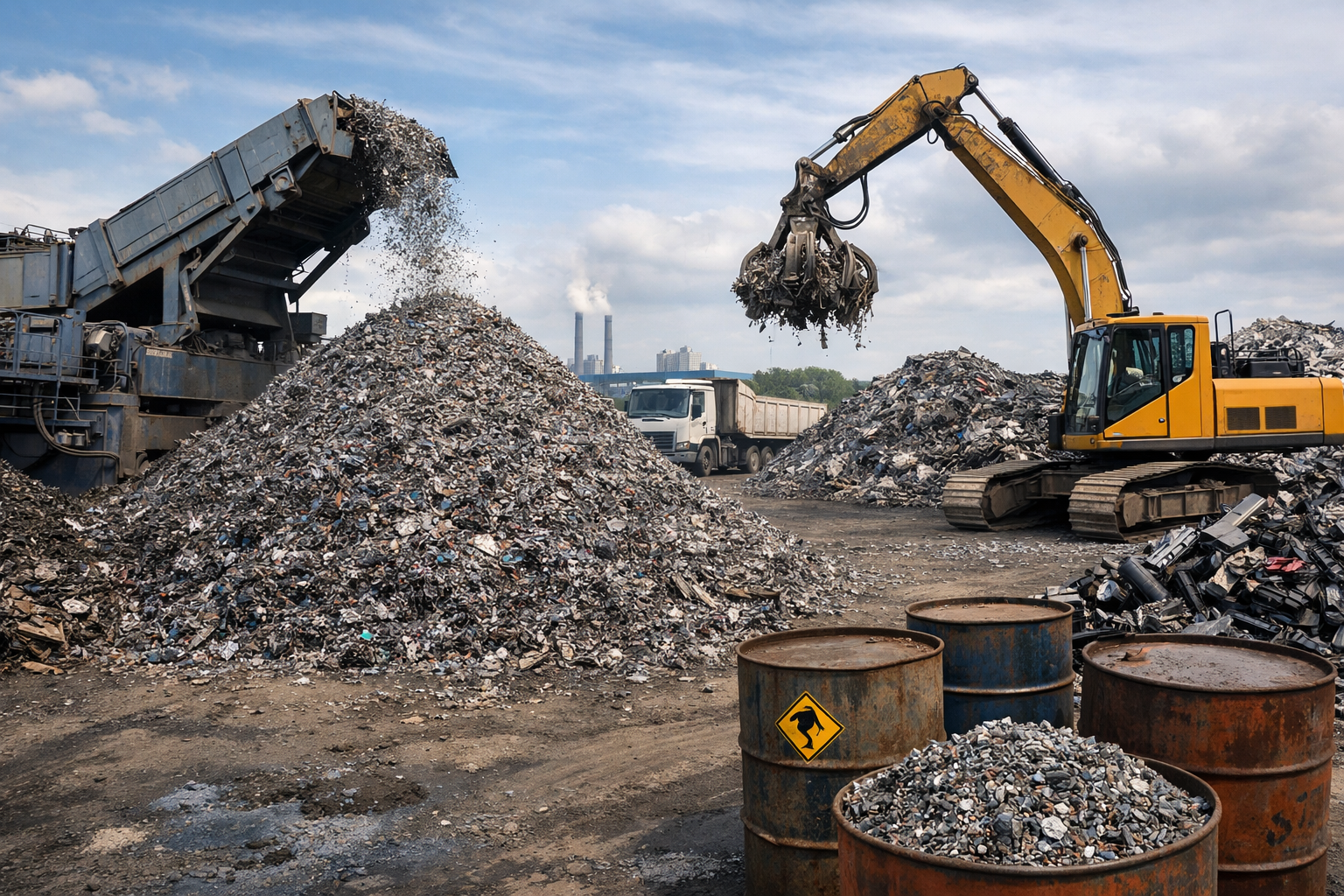
The extension applies to the management and downstream handling of shredder residues arising from complex waste streams. Those include end-of-life vehicles, waste electrical and electronic equipment, and mixed-metal scrap. It allows continued routing of these materials under defined regulatory conditions.
Sector-wide reliance on RPS framework
According to data collected by BMRA, operators across England currently depend on the RPS to manage shredder residues, fines and associated hazardous fractions. A significant proportion of shredder output, in some cases up to full volumes, is handled under the provisions of RPS 314. The total annual tonnage managed through this route exceeds 750,000 tonnes.
The association had previously submitted a proposal to the Environment Agency requesting a time-limited extension. This was supported by operational data and engagement with policy representatives.
Limited alternatives for shredder residues
Operators report that large-scale alternatives to non-hazardous landfill remain limited. Potential outlets such as hazardous landfill, energy recovery, cement kilns, further treatment or export are constrained by regulatory thresholds, capacity limitations and technical compatibility. Additional factors include permitting requirements, economic viability and restricted market demand.
These constraints continue to affect the development of alternative treatment and recovery pathways for shredder residues classified as hazardous.
Transition period for long-term solutions
BMRA describes the RPS 314 extension as a transitional measure. The association intends to continue technical discussions with the Environment Agency. The focus will be on evidence-based assessment and the identification of sustainable outlets for shredder residues.
Further regulatory review may be required if suitable large-scale alternatives are not established within the current extension period.
Waste classification and regulatory considerations
The association also points to ongoing challenges in waste classification. This is particularly the case where hazard-based assessment criteria result in complex residues being classified as hazardous. This classification can limit available treatment routes where materials do not meet technical or economic requirements for recovery processes such as energy-from-waste or co-processing in cement kilns.
In this context, BMRA continues to advocate for risk-based approaches that reflect both material characteristics and available infrastructure within the waste management system.