
Assessment of the sliding scale approach
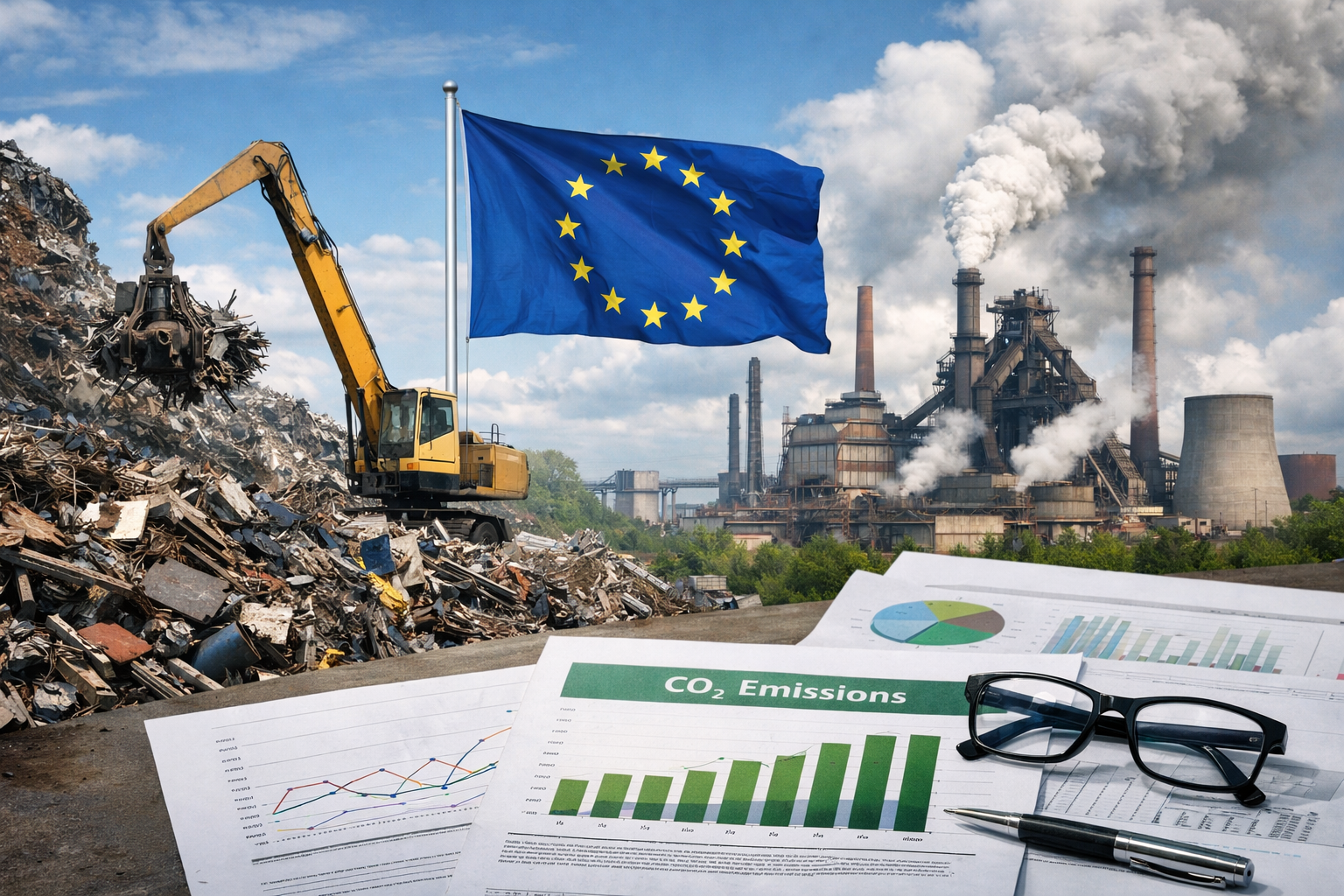
The sliding scale green steel methodology adjusts emissions thresholds depending on the share of recycled steel scrap used in production. Installations with lower scrap input are permitted higher CO₂ emissions while still qualifying under green steel criteria. According to Recycling Europe, this approach alters the relationship between actual emissions and sustainability classification.
Implications for emissions accounting
Recycling Europe states that the methodology affects how emissions performance is represented, as higher-emission production routes may remain eligible for green classification through adjustment factors. This, the organisation argues, may influence how emissions data are interpreted by policymakers, investors and end users, particularly in relation to circular production routes based on recycled materials.
Circularity and raw material supply
The discussion also relates to raw material sourcing. Primary steel production relies largely on iron ore, which is predominantly imported into the European Union. In contrast, recycled steel scrap is widely available within the EU. Recycling Europe notes that increased use of secondary raw materials is linked to circular economy objectives as well as considerations of supply security and industrial policy.
Requirements for a green steel framework
Recycling Europe emphasises the need for a green steel framework that distinguishes between primary and secondary production routes. Such a framework should ensure comparability of emissions data and reflect the specific characteristics of each route without applying uniform adjustment mechanisms. The organisation highlights that circularity indicators, including scrap use, should be assessed independently of absolute emissions.
Industry dialogue and policy development
The European recycling industry signals its intention to contribute to the development of a policy framework for green steel that supports both decarbonisation and industrial competitiveness. Recycling Europe indicates that continued dialogue with stakeholders and policymakers is required to establish criteria aligned with environmental objectives and regulatory transparency.