
The report concludes that further reductions in greenhouse gas and air pollutant emissions will require structural industrial transformation and consistent implementation of existing EU environmental and climate legislation.
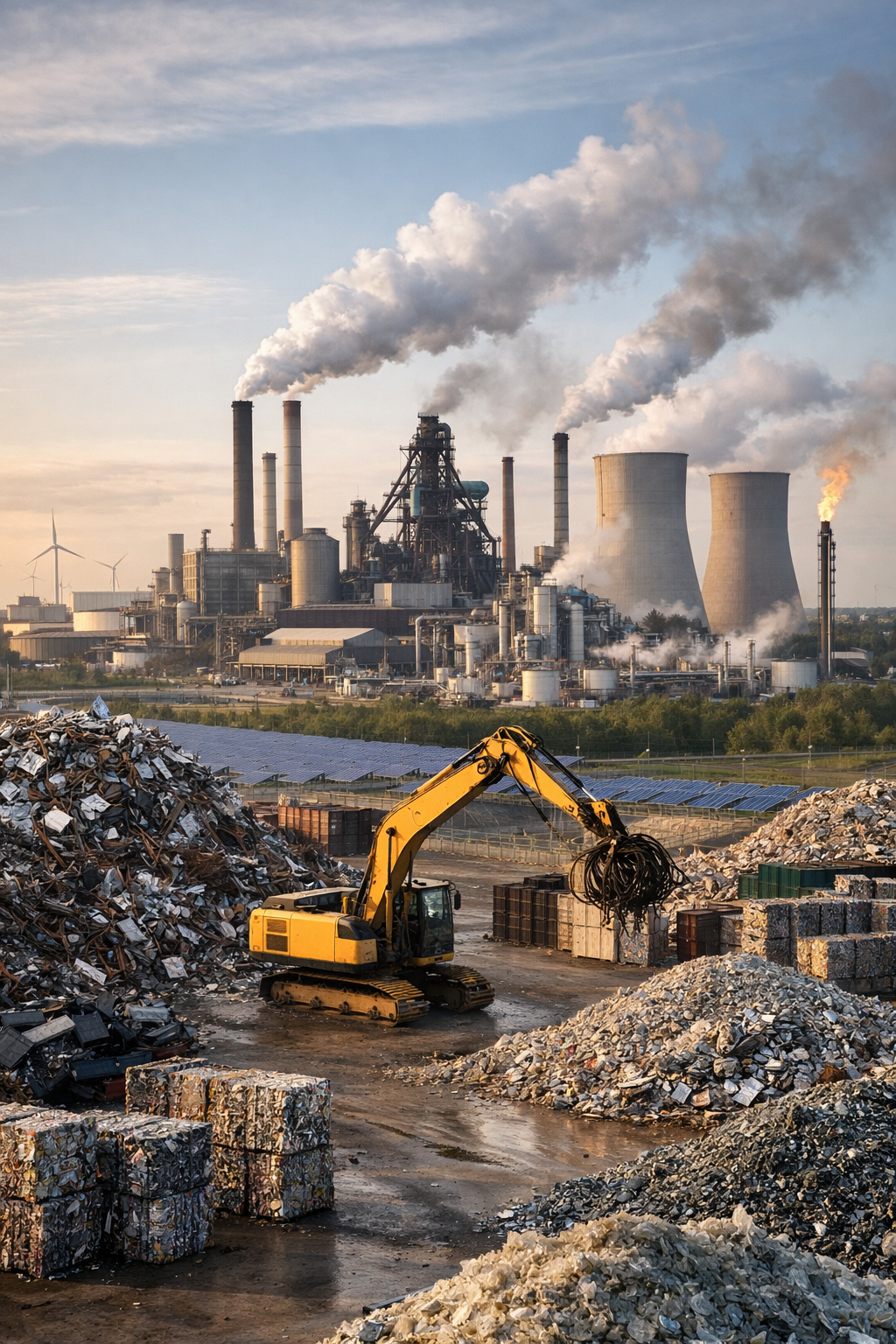
The analysis examines long-term trends in greenhouse gas emissions and air pollutants, as well as projected reductions and potential transformation pathways. Energy-intensive industries account for approximately 27 per cent of industrial greenhouse gas emissions in the European Union and contribute significantly to emissions of sulphur oxides (SOx), nitrogen oxides (NOx) and other pollutants. The external costs associated with pollution from these sectors are estimated at around €73 billion annually.
Between 2000 and 2022, greenhouse gas emissions from energy-intensive industries declined by around 42 per cent. Over the same period, emissions of dioxins decreased by 63 per cent, nickel by 64 per cent and NOx by 55 per cent. Gross value added remained broadly stable overall, although more pronounced emission reductions observed after 2020 coincided with a decline in economic output. This indicates that structural economic developments, in addition to technological improvements, have contributed to recent emission trends.
The briefing focuses on the iron and steel, cement and lime, aluminium, pulp and paper, glass and clay, and chemicals sectors. Together, these industries account for more than 60 per cent of total energy consumption in EU manufacturing. High energy prices, particularly during the recent energy crisis, have added pressure to competitiveness. Electricity prices in the EU remain two to four times higher than in several major trading partner countries. In parallel, weak demand and global overcapacity, notably in steel production, continue to affect market conditions.
According to the report, achieving further emission reductions depends on full implementation of existing EU legislation and fundamental changes in emission-intensive production processes. The analysis is set within the framework of the EU Clean Industrial Deal, which aims to accelerate industrial decarbonisation while maintaining competitiveness.
Identified transformation pathways include electrification, the use of alternative feedstocks and materials, and increased deployment of secondary raw materials. These approaches can contribute to climate mitigation, pollution prevention and reduced resource dependency. At the same time, the briefing notes potential trade-offs between environmental objectives, highlighting the need for sector-specific strategies and integrated policy design.
An integrated assessment of environmental, economic and health impacts is considered essential for guiding investment decisions, designing funding instruments and developing regulatory frameworks, including permitting procedures and sustainability criteria for products such as low-emission steel.