

Its pellet-based extrusion technology enables the production of full-scale components made from fiber-reinforced thermoplastics, including molds, prototypes and boat structures.
The pellet extrusion process allows the direct processing of reinforced plastic granulates and supports flexible component design and short development cycles. At the same time, iterative product development generates production waste in the form of rejected prints, prototypes and structural components. In particular, glass- and carbon-fiber reinforced thermoplastics accumulate in significant volumes during testing and validation phases.
At CEAD’s Maritime Application Center, large boat sections are produced using industrial-format 3D printing systems. Individual rejected components can weigh several hundred kilograms. Conventional disposal routes proved inefficient for these materials, both economically and in terms of resource efficiency. As a result, CEAD implemented an internal shredding process to recover production waste for further use.
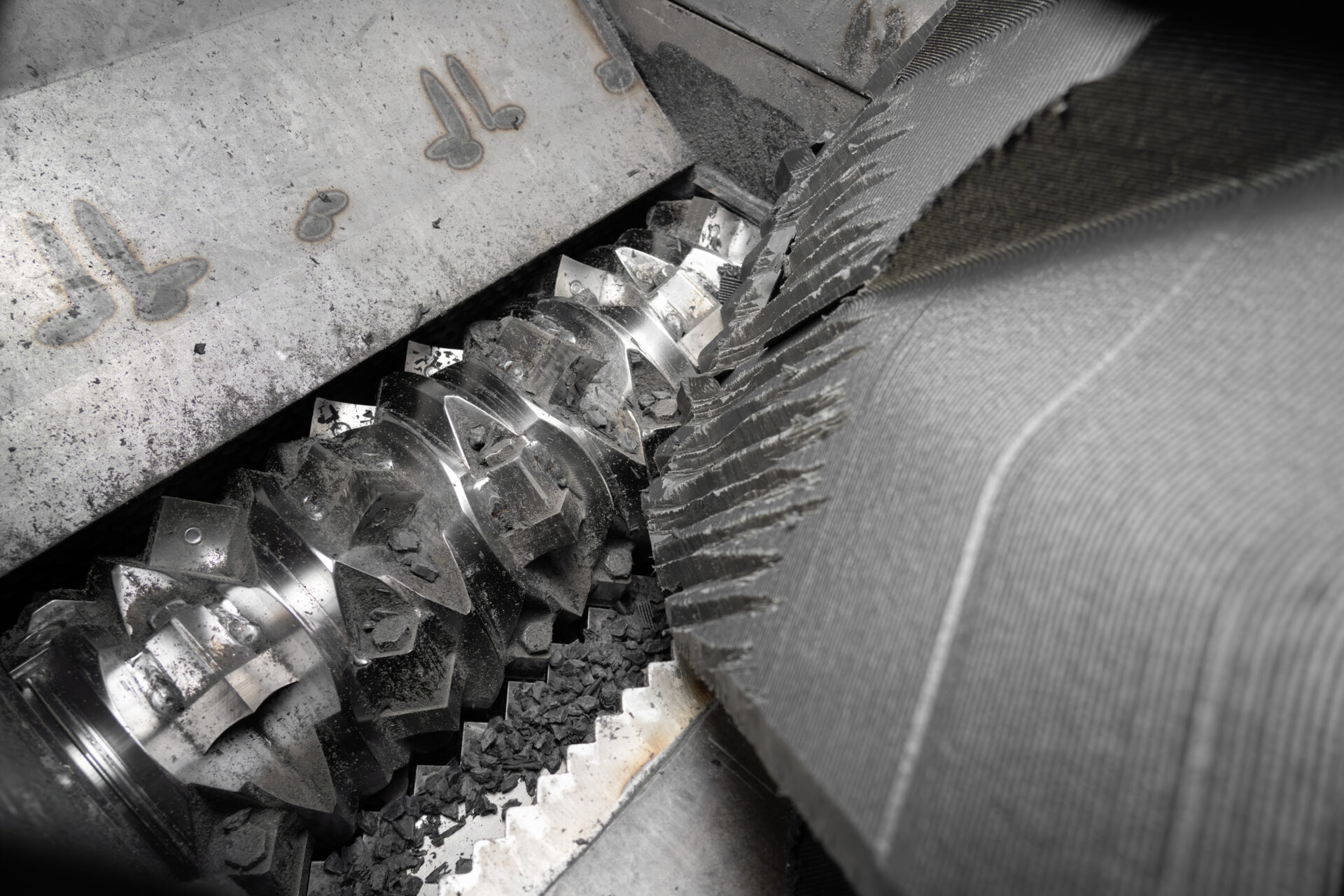
The company installed a WLK 4 single-shaft shredder from Weima. Equipped with a 10 mm screen, the system processes reinforced thermoplastic components into homogeneous flakes of approximately 10 mm particle size. The shredder is designed for high-torque operation and is suitable for fiber-reinforced polymers, which place increased mechanical demands on cutting systems and drive components.
The resulting flakes serve as intermediate material for further processing steps, including repelletizing. In cooperation with Dutch research and development partners, CEAD is testing the regranulation of shredded short-fiber reinforced composites for reuse in pellet extrusion 3D printing systems. Initial trials indicate that mechanically recycled material can be processed into new feedstock suitable for additive manufacturing applications.
By integrating shredding and material reprocessing into its production environment, CEAD is advancing a closed-loop material workflow within large-format additive manufacturing. The approach addresses material efficiency in the processing of reinforced thermoplastics and supports the development of circular manufacturing strategies in industrial 3D printing.