

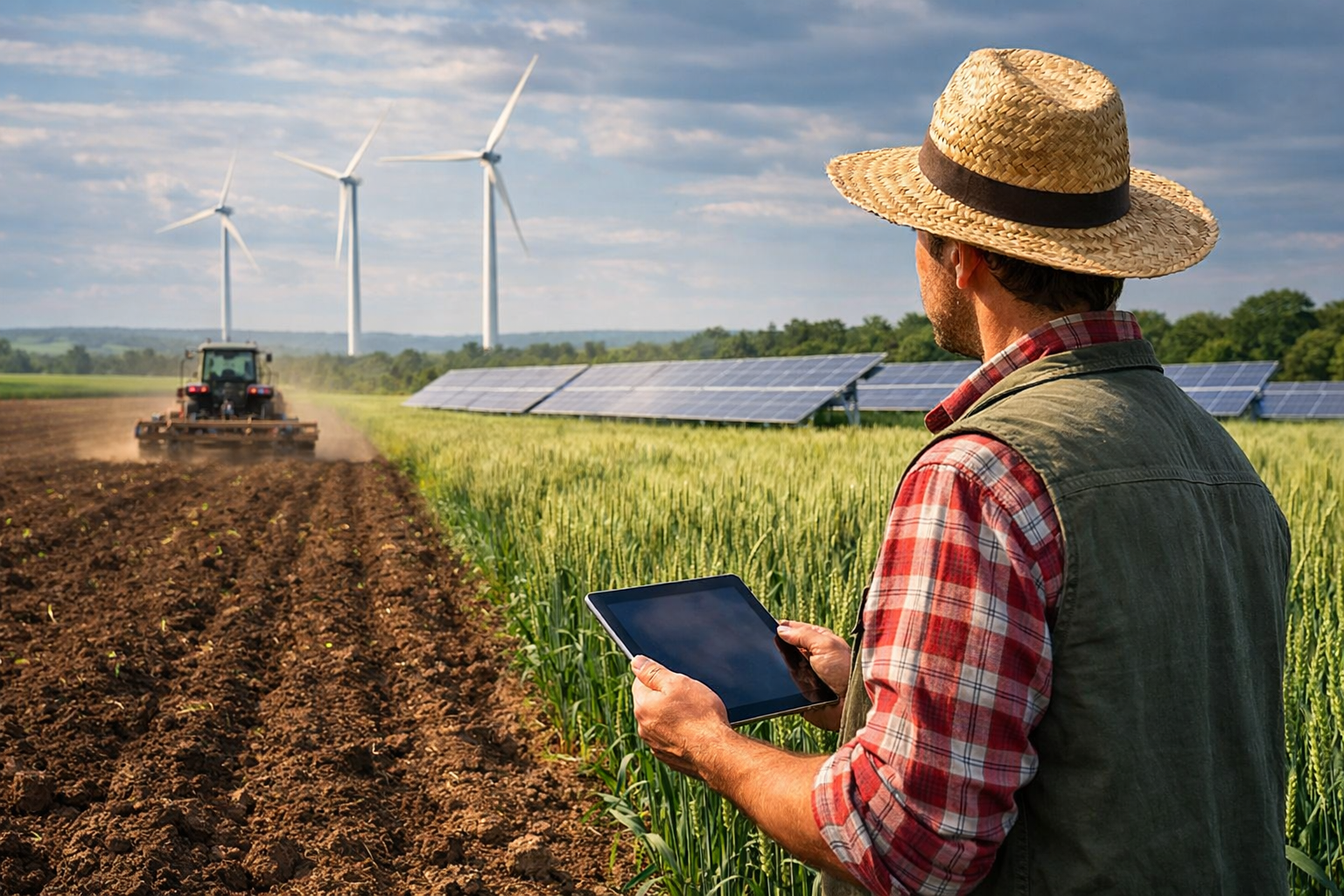
European agriculture is facing increasing pressure from climate change, soil degradation and rising costs for external inputs such as fertilisers, pesticides, irrigation, imported feed and energy. Against this backdrop, climate-resilient agriculture is gaining relevance as an approach to reduce economic and environmental risks.
Analysis of farm-level case studies
The EEA briefing “Building climate-resilient agriculture in Europe: an economic perspective” evaluates 51 farm-level case studies across Europe, ranging geographically from the United Kingdom to Ukraine. The analysis shows that climate-resilient agriculture can support income stability while also contributing to ecosystem services and food production.
The practices assessed are grouped into four areas: soil and water management, crop system diversification, landscape-level measures and livestock system redesign. These approaches aim to reduce exposure to climate-related risks while maintaining long-term economic viability.
Reduced input dependence as key factor
A central finding across the case studies is the reduction of input dependency. One example is reduced tillage, which improves soil structure and water retention. This practice can increase resilience to drought and heavy rainfall events.
According to the case studies, reduced tillage led to a reduction in diesel use of around 50%. Production costs decreased by approximately 40%, while labour requirements declined by 25 to 30%, depending on local conditions.
Economic risks during transition
The analysis indicates that farms are often most economically vulnerable during the transition to climate-resilient agriculture. Many measures generate public benefits, including improved ecosystem services and landscape functions, but provide limited short-term financial returns for individual farms.
This highlights the importance of targeted financial instruments and policy frameworks to support the transition phase and address investment risks.
Regional differences in implementation
The effects of climate-resilient agriculture vary by region. In regions already experiencing climate stress, particularly in southern Europe, adaptation measures can deliver immediate economic benefits by reducing losses and input costs.
Elsewhere, economic advantages may only become evident over a longer period. In these contexts, system redesign and public co-investment are required to manage upfront costs and ensure economic feasibility.
Policy implications for European agriculture
The EEA briefing identifies climate-resilient agriculture as a key economic factor for securing food systems and rural economies in Europe. Strengthened governance, targeted investment and improved monitoring of climate risks are necessary to support implementation.
A shift from reactive crisis management towards a more preventive approach is considered essential to stabilise farm incomes and maintain long-term agricultural productivity.