

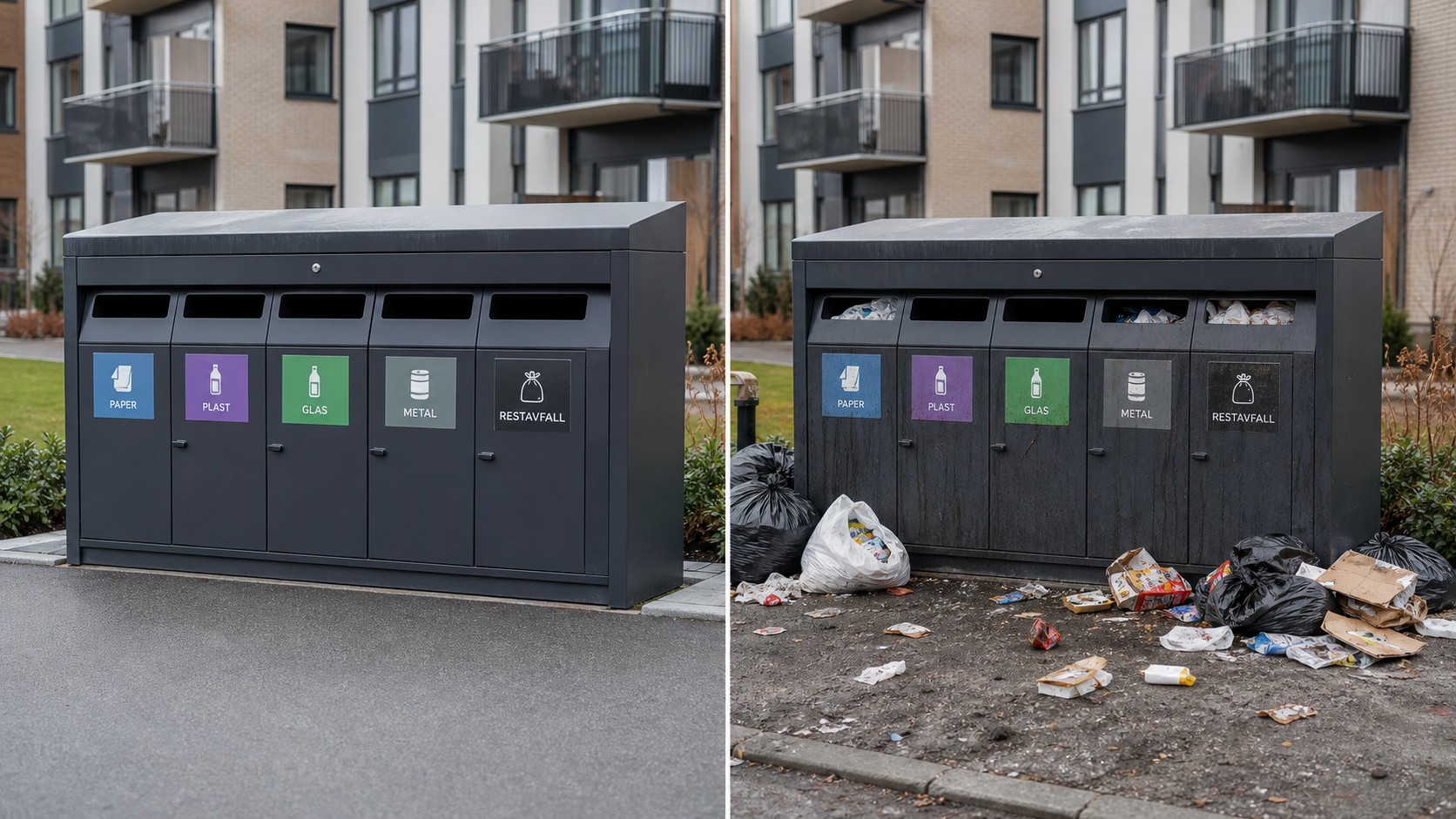
Researchers at the University of Gothenburg have found a link between the cleanliness of waste disposal areas and residents’ recycling behaviour. Political scientist Jacob Sohlberg and Senior Professor Peter Esaiasson conducted three studies in socioeconomically disadvantaged residential areas across Sweden, Finland and Denmark, and found consistent evidence that dirty environments increase the risk of improper waste disposal.
In one field experiment, two waste stations in Gothenburg were cleaned thoroughly every day over a three-week period, while eight stations served as a control group. Littering clearly decreased at the cleaned stations, while the control stations showed no notable change . Two additional survey-based experiments confirmed the pattern: participants shown images of dirty waste stations were significantly less likely to say they would use the facilities correctly – particularly those with a high sensitivity to disgust.
The findings suggest a practical lever for municipalities and housing companies: keeping waste disposal areas clean and well maintained may reduce littering and improve recycling compliance. According to Sohlberg, this matters beyond waste management – a cleaner environment can also contribute to a broader sense of order in residential areas.