
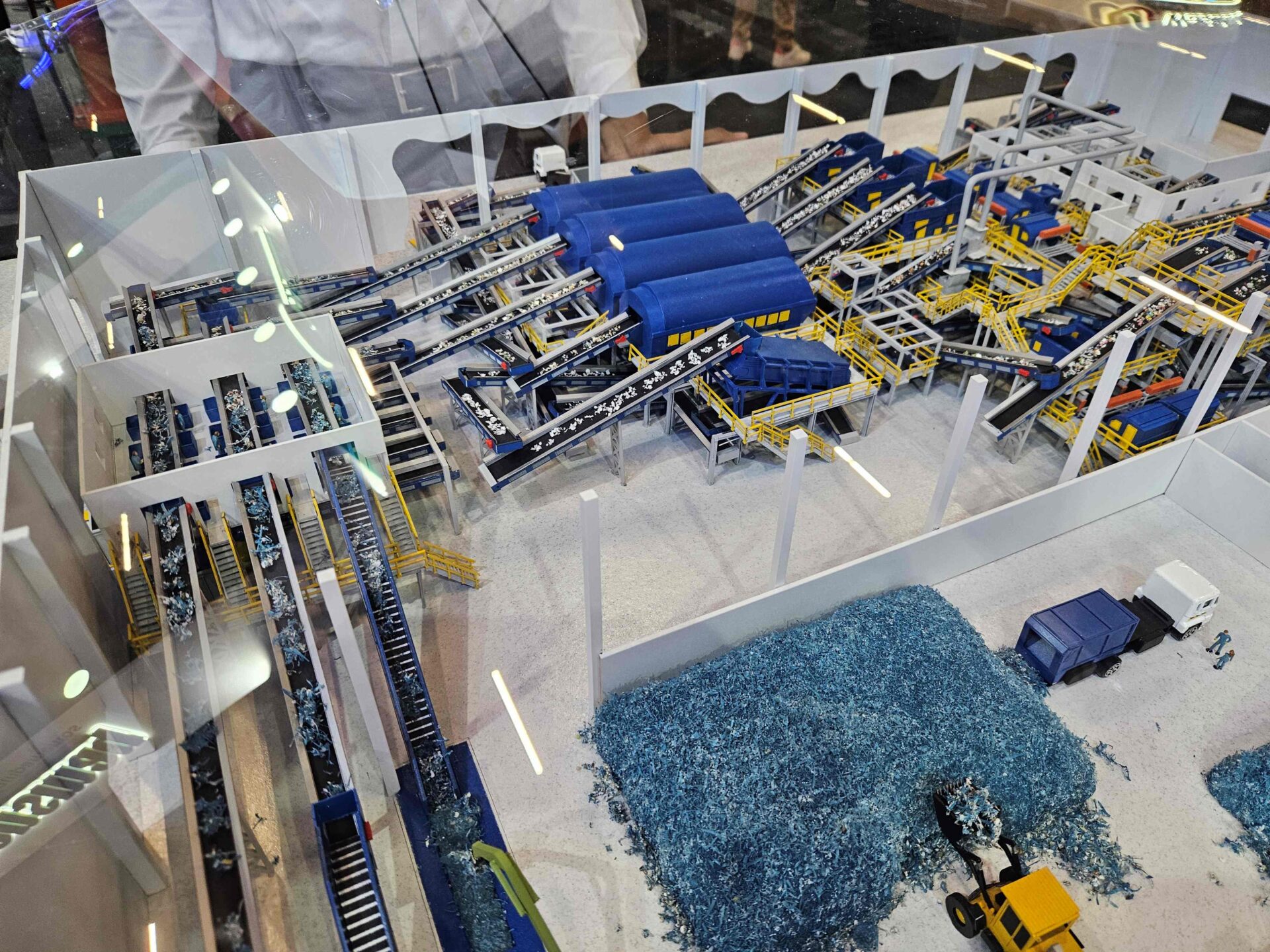
Scheduled for commissioning in August 2027, the plant will be the most advanced MSW treatment facility in Latin America, setting a new standard for technological excellence and circular resource recovery.
With a processing capacity of 135 tons per hour (550,000 tons per year), UTM Leste will recover 48,000 tons of recyclables, produce 260,000 tons of Refuse-Derived Fuel (RDF), and generate 170,000 tons of organics for biogas, diverting over 308,000 tons annually from landfill disposal.
The collaboration between Stadler and Ecourbis Ambiental marks a turning point in São Paulo’s waste management strategy. Combining Stadler’s global engineering know-how and local operational insight with a shared dedication to innovation and sustainability, the project will enhance resource recovery, increase process efficiency, and reduce landfill dependency.
At the heart of the project lies Stadlers’s ability to tailor its proven European waste treatment model to local realities, including Brazil’s waste composition, climate and regulatory environment. Drawing on extensive experience across Latin America and backed by technical expertise from its German headquarters, the company ensures that each system delivers optimal performance under local conditions.
The advanced UTM Leste plant is unique for the application of Artificial Intelligence through Stadlerconnect to support predictive maintenance, blockage detection, and real-time process optimization – marking the platform’s first deployment in Latin America.
A key innovation at UTM Leste is the integration of a drying line for organic fractions, transforming traditionally considered residual materials into high-calorific green RDF and contributing directly to São Paulo’s clean energy transition.
For São Paulo, the benefits of UTM Leste will also have a strong social impact. The plant’s automation and modernization will create hundreds of direct and indirect jobs, improve working conditions for operators, and support the development of a local circular economy market for secondary raw materials and renewable fuels.
At the heart of the process lies a focus on circularity: “The plant transforms residual waste into inputs for new production chains – plastics, metals and paper – and into renewable energy through RDF, closing material loops and reducing the need for natural resource extraction,” explained Rodrigues. “In addition, it is directly aligned with the guidelines of the latest update of Brazil’s National Solid Waste Plan, establishing São Paulo as a living laboratory of the circular economy in Latin America and as a technological replicability platform for other Brazilian cities.”