
Several tens of tonnes of polyester-rich textile waste sourced from European post-consumer streams were sorted and prepared in France before being treated at a semi-industrial unit in Japan. The process produced BHET, the base monomer used to manufacture recycled polyester. It is intended for conversion into yarns, fabrics and garments.
Industrial-scale validation of PET textile recycling
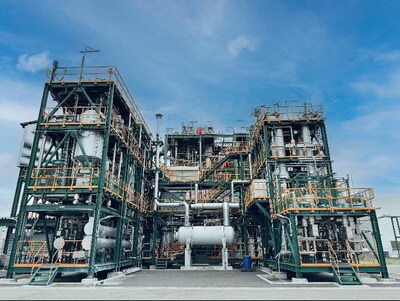
The demonstration was carried out using the Rewind PET technology at a facility operated by JEPLAN with a capacity of 1,000 tonnes per year. The input materials were supplied through French collection systems and prepared by Nouvelles Fibres Textile and Mapea.
The partners report that several tens of tonnes of BHET were generated. This confirms the technical feasibility of processing post-consumer polyester textiles under representative industrial conditions. The project is positioned as an early example of textile-to-textile chemical recycling at this scale.
Integration into existing polyester production
The process is designed for deployment at existing polyester production sites. It enables substitution of fossil-based feedstocks with recycled intermediates derived from textile waste streams.
The technology has previously been commercialised for PET packaging, including food-contact applications. Its extension to textile recycling has now been validated. Axens holds a worldwide license for industrial deployment under agreements with IFPEN and JEPLAN.
Applications across textile segments
Recycled polyester derived from this process is intended for use across multiple sectors. They include sportswear, home furnishings and selected luxury applications. These segments represent significant demand for polyester-based materials and are potential early adopters of textile-to-textile recycling.
Contribution to circular textile systems
Polyester and other synthetic fibres account for approximately 60% of global textile production. However, less than 1% of fibres are currently recycled back into textiles. Against this backdrop, the demonstrated process provides a pathway for scaling circular polyester production from post-consumer waste.
The technology supports shorter recycling loops by directly converting textile waste into reusable monomers. This approach is expected to reduce reliance on virgin raw materials while contributing to lower carbon emissions and improved resource efficiency across the textile value chain.