
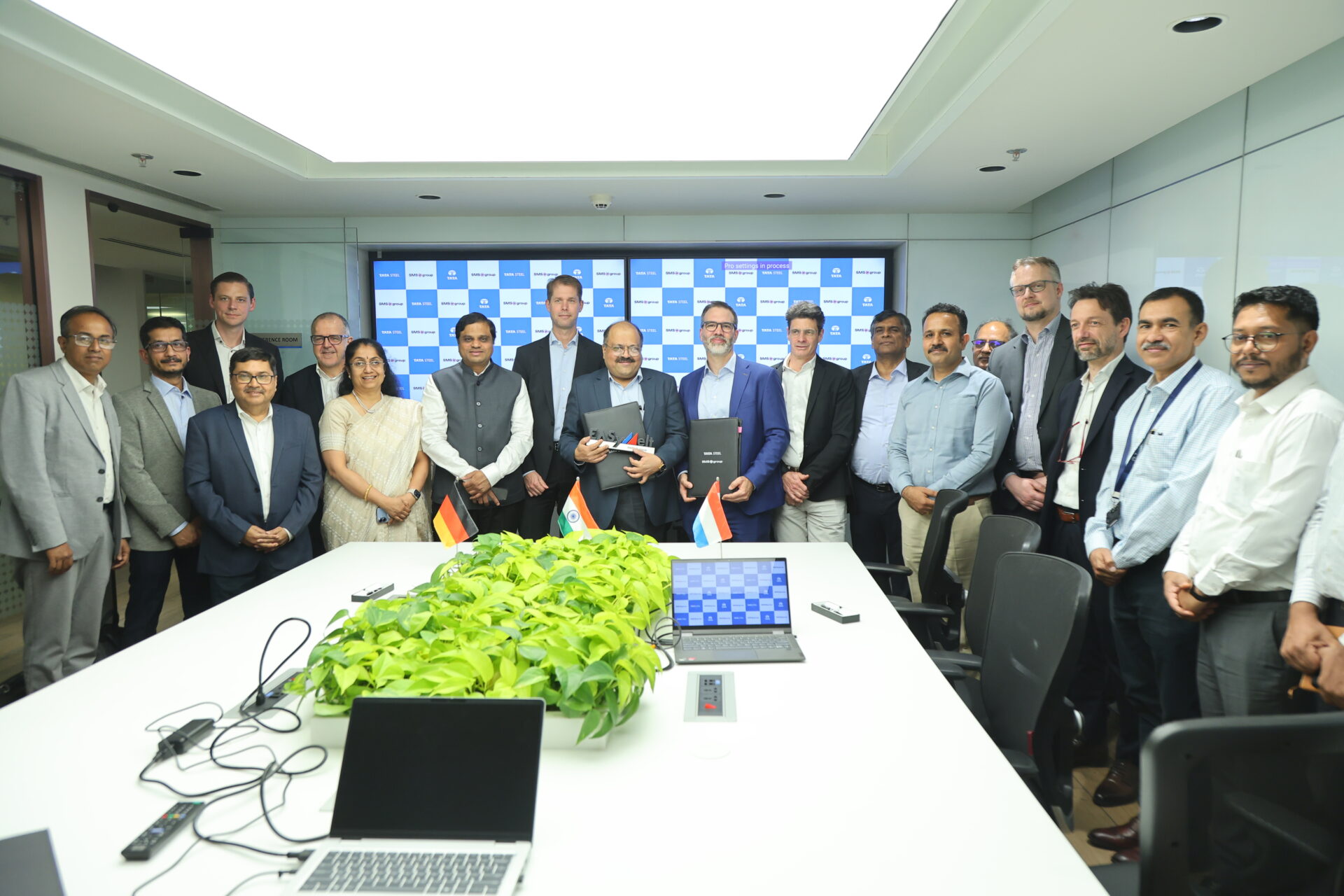
The installation will be executed in phases, with the objective of reducing CO₂ emissions by more than 50 percent compared to baseline blast furnace operations. Upon completion, the facility is expected to become the first blast furnace worldwide converted to EASyMelt.
Transition pathway for existing assets
The agreement builds on a memorandum of understanding signed in June 2023 and follows a completed front-end engineering study. The project forms part of Tata Steel’s broader strategy to reach net-zero emissions by 2045.
EASyMelt is designed as a retrofit solution for existing blast furnaces, enabling continued use of established infrastructure while lowering carbon intensity. The approach targets brownfield decarbonization, addressing constraints related to scrap availability, iron ore quality, and access to renewable energy.
Process integration and emissions reduction
The EASyMelt blast furnace decarbonization concept replaces a significant share of coke with syngas as a reducing agent. Syngas is produced through top gas recycling and reforming of hydrocarbon-rich gases such as coke oven gas. The gas is injected at both shaft and tuyere levels.
Plasma torches are used to superheat the injected syngas, enabling partial electrification of the process. This configuration allows for flexible energy input, including natural gas, hydrogen, ammonia, and electricity, depending on local availability.
Raw material flexibility and market relevance
Unlike direct reduction processes, EASyMelt can operate with conventional sinter feed, avoiding dependence on high-grade iron ore. This increases adaptability in regions where premium ore supply is limited.
The technology is positioned as a transitional solution for steel producers seeking to reduce emissions without fully replacing blast furnace operations. It provides an intermediate pathway between conventional ironmaking and fully green steel production systems.