
However, many of these treatments are based on PFAS compounds (perfluoroalkyl and polyfluoroalkyl substances), which are currently in the process of being regulated and banned in the European Union due to their environmental persistence, toxicity, and ability to accumulate in living organisms.
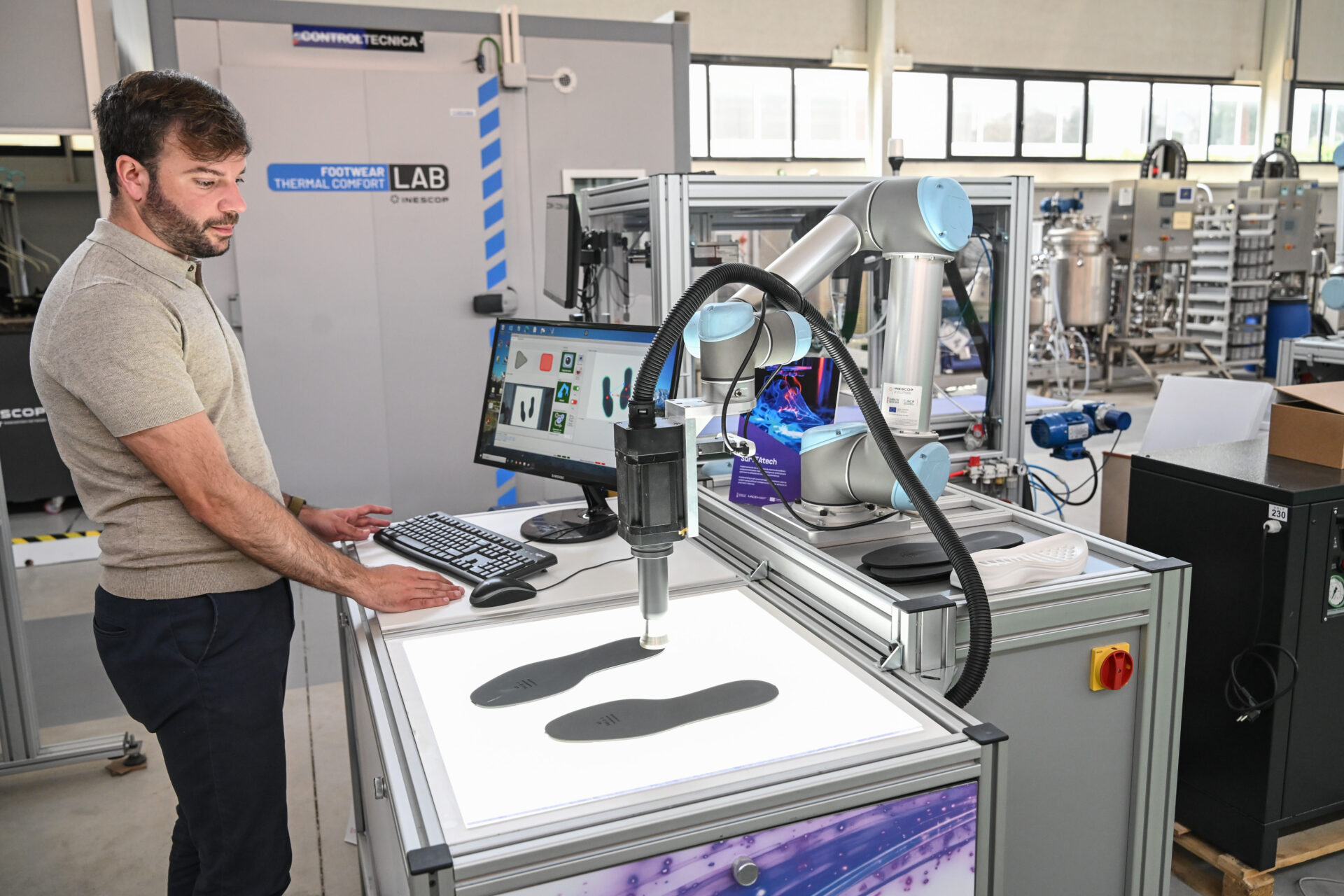
In response to this situation, the Plasreco project has been launched, proposing the development of PFAS-free, silicon-based functional coatings applied using atmospheric plasma technology. This technique allows the deposition of nanometric layers, significantly reducing the use of chemicals and improving the sustainability of the process. In addition, it is compatible with a wide variety of materials, including porous and flexible surfaces such as leather, textiles, and paper.
The project is being carried out in collaboration with Inescop Centre and Aimplas, both of which have extensive experience in surface treatment and the formulation of functional coatings, respectively. Their joint work will enable this technology to be transferred to the industrial sector, offering a viable and scalable alternative to conventional PFAS treatments in these productive sectors.
The main objective of Plasreco is to obtain a system of advanced coatings that maintains the desired technical properties without compromising safety or the environment. To this end, work is being done on the development of new organosilicon monomers specifically designed for application using atmospheric plasma, guaranteeing the durability, stability, and reproducibility of the treatment even under demanding conditions such as abrasion, humidity, or thermal changes.