
Materials and circular design approaches
The CO₂-reduced offshore wind turbine uses towers manufactured with lower-emission steel. According to the manufacturer, the production process reduces CO₂ emissions by at least 63 percent compared with conventional steel, partly through the use of scrap material and renewable energy in steelmaking.
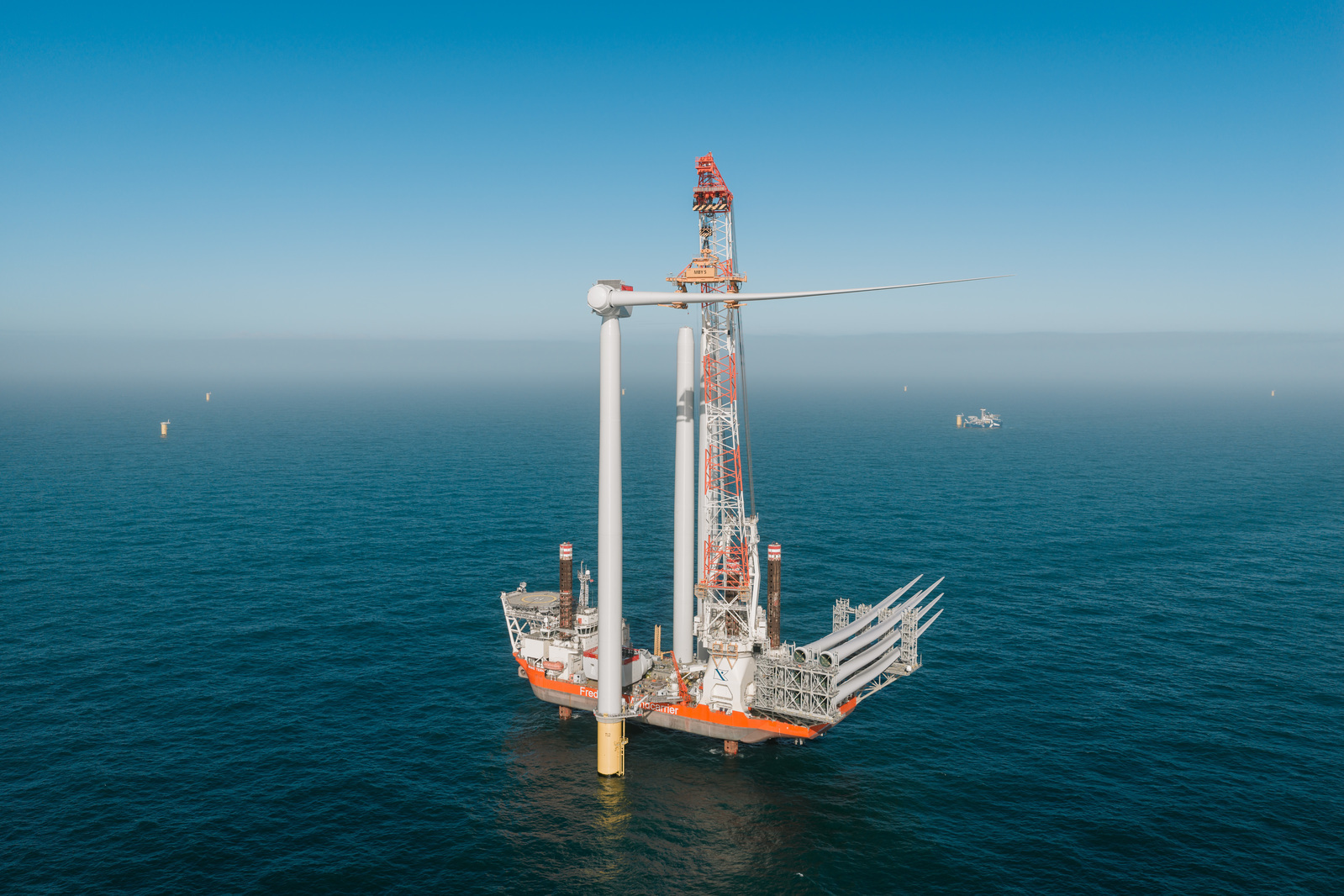
In addition, 40 turbines at Thor will be equipped with 120 recyclable rotor blades supplied by Siemens Gamesa. These blades use a resin system that allows composite materials to be separated and reused at end of life, for example in industrial casting applications. RWE has previously deployed similar blades at the Kaskasi wind farm in Germany and the Sofia project in the United Kingdom.
Project status and grid integration
Construction of the Thor offshore wind farm is progressing according to plan. Foundations and the offshore substation were installed in 2025, and turbine installation is ongoing. The project has already begun supplying electricity to the Danish grid.
Once operational in 2027, Thor is expected to generate electricity equivalent to the consumption of more than one million Danish households. Operations and maintenance activities are planned from a service facility at the Port of Thorsminde, with an estimated 50 to 60 local jobs.
Project structure and ownership
The Thor offshore wind farm is developed jointly by RWE (51 percent) and Norges Bank Investment Management (49 percent). RWE is responsible for construction and long-term operations.