
Regulatory framework constrains disposal
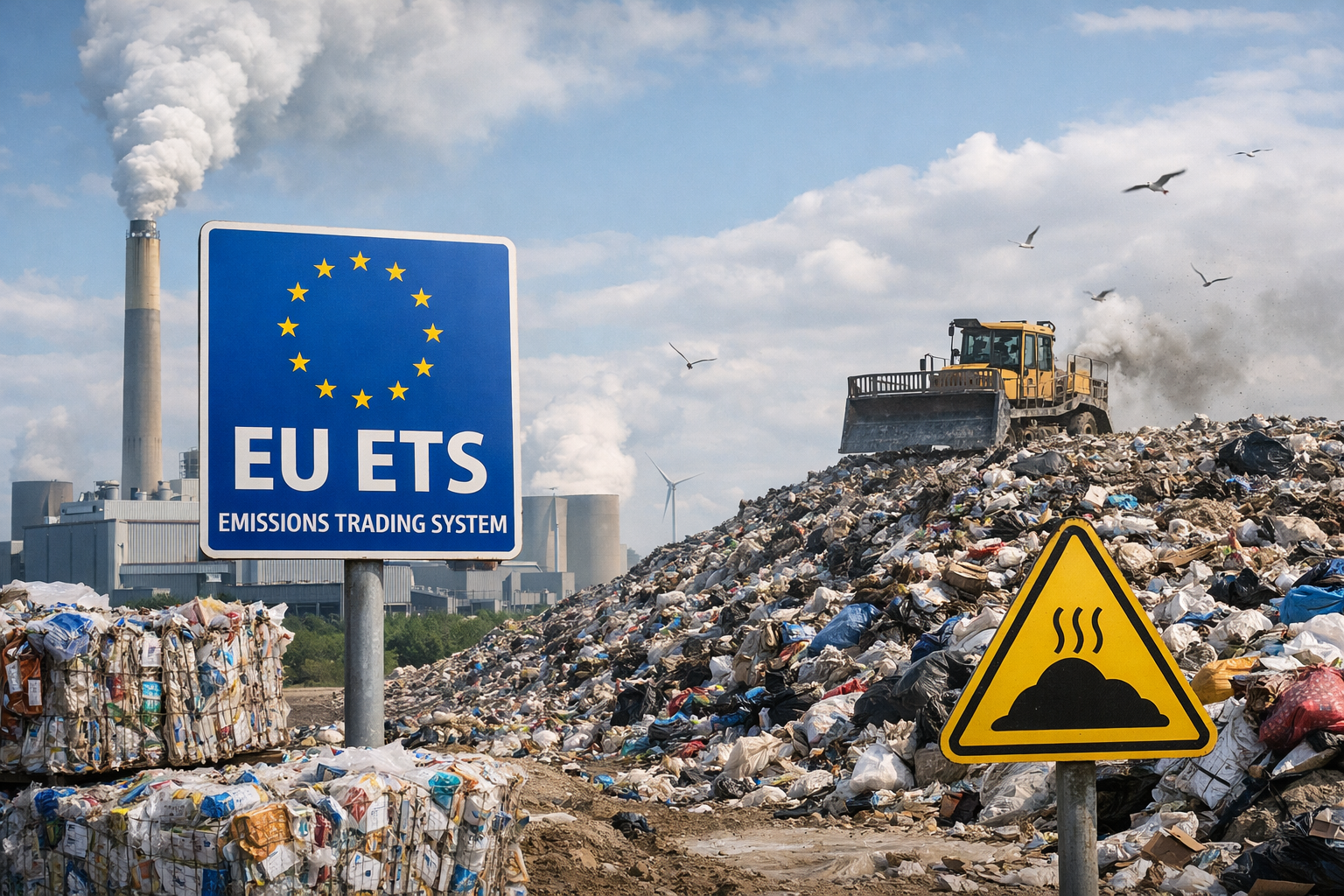
The study finds that existing EU legislation, national landfill bans and long-term contractual structures restrict the ability to divert waste from incineration to landfill. In several Member States, including Belgium, Germany and Sweden, landfill rates for municipal waste remain below five per cent. This leaves limited capacity for additional disposal.
Economic signals support treatment hierarchy
According to the report, landfill taxation and mandatory pre-treatment requirements generally result in higher disposal costs compared with incineration, even when carbon pricing is applied. These cost structures reduce the likelihood of a shift towards landfill and reinforce the existing waste hierarchy.
Incentives for recycling increase
Higher costs for fossil-based waste streams, particularly plastics, are expected to strengthen incentives for improved sorting and recycling. The analysis indicates that pricing mechanisms within the EU ETS may contribute to increased material recovery rather than disposal.
Localised risks remain
The report identifies limited risks in a small number of countries with comparatively low landfill costs and weaker enforcement of waste legislation. However, these risks are considered marginal within the broader European context.
Structural factors outweigh price effects
Prepared by Equanimator Ltd., the study emphasises that waste management decisions are primarily determined by infrastructure availability, legal requirements and contractual obligations rather than short-term price signals.
Climate relevance of landfill reduction
The analysis highlights the continued relevance of landfill diversion for climate protection. Landfill sites remain a significant source of methane emissions. Effective implementation of EU waste legislation is therefore identified as a key factor in maintaining current disposal trends.
Policy implications for circular economy
The report concludes that integrating incineration into the EU ETS is compatible with the European waste hierarchy, provided existing rules are enforced. To address remaining EU ETS incineration landfill risk, the authors point to the need for consistent enforcement of landfill regulations, the continuation of landfill taxation and further measures to reduce residual waste and increase recycling rates.