

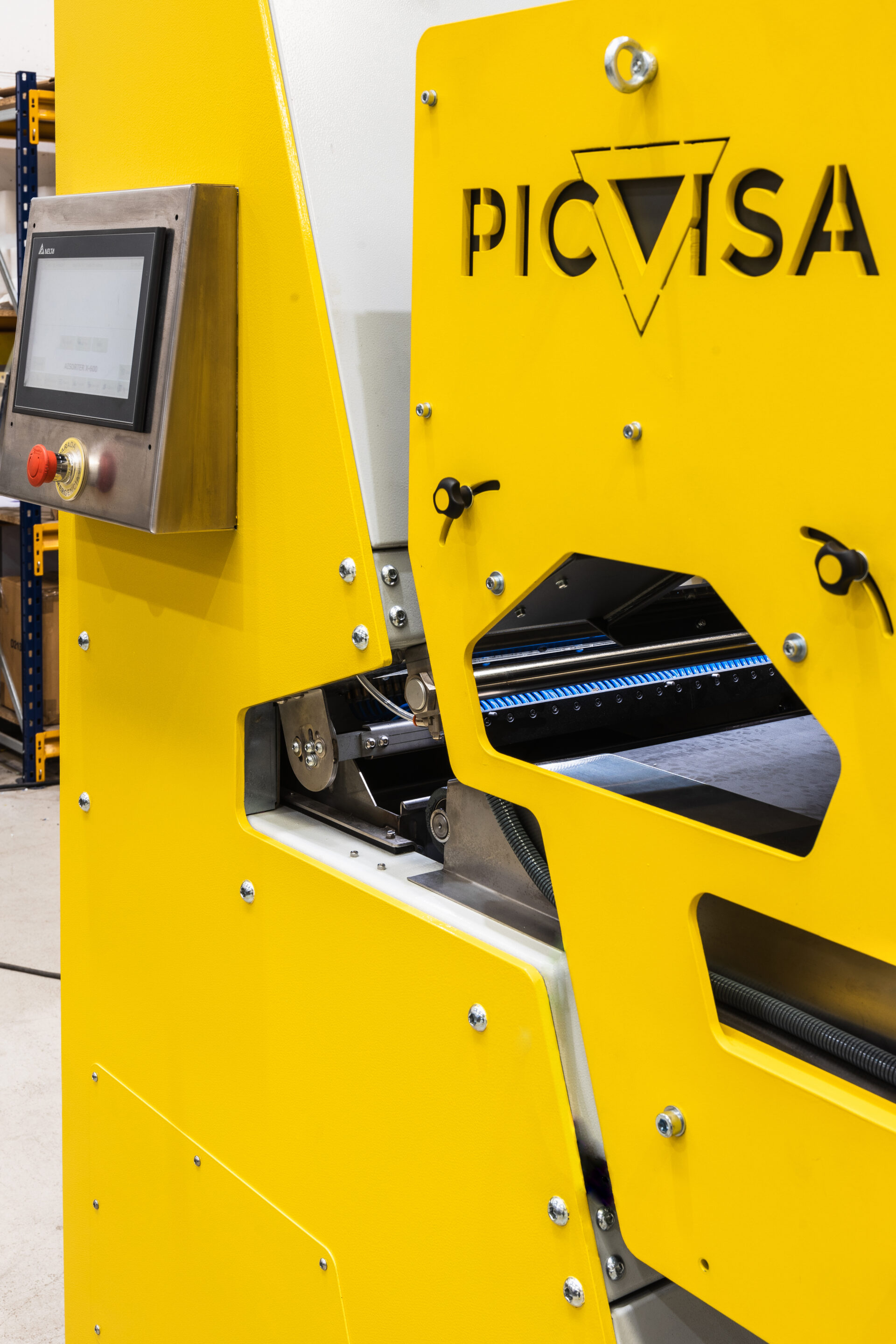
Black plastics sorting with MWIR technology
Conventional near-infrared systems do not detect black plastics due to the absorption of infrared light by carbon black pigments. PICVISA applies mid-wave infrared hyperspectral imaging combined with artificial intelligence and sensor fusion to enable identification of polymers such as polyethylene, polypropylene, polystyrene and polycarbonate, including engineering plastics. Integration with X-ray fluorescence allows detection of brominated flame retardants, supporting compliance requirements in waste electrical and electronic equipment processing.
Glass sorting system reduces energy demand
The ECOGLASS system incorporates pulsed lighting technology designed to reduce energy consumption while increasing light intensity. The system supports AI-based detection of contaminants including ceramics, stones, porcelain and dark glass fractions, improving material purity in glass recycling processes.
Automated textile sorting implementation
In cooperation with Girbau, PICVISA has implemented a post-consumer textile sorting line in Northern Europe. The installation integrates automated feeding with optical sorting in a continuous process. The company reports ten installations of its ECOSORT technology across Europe.
PICVISA metals vertical integrates three technologies
The PICVISA metals vertical combines three process lines within a single offering. Optical sorting systems for cable granulates and non-ferrous metals are developed in collaboration with Eldan Recycling. Magnetic separation technologies for ferrous and non-ferrous recovery are provided through Regulator Cetrisa following its acquisition. Real-time alloy identification is enabled by laser-induced breakdown spectroscopy systems from Austin AI, distributed by PICVISA in selected markets.