
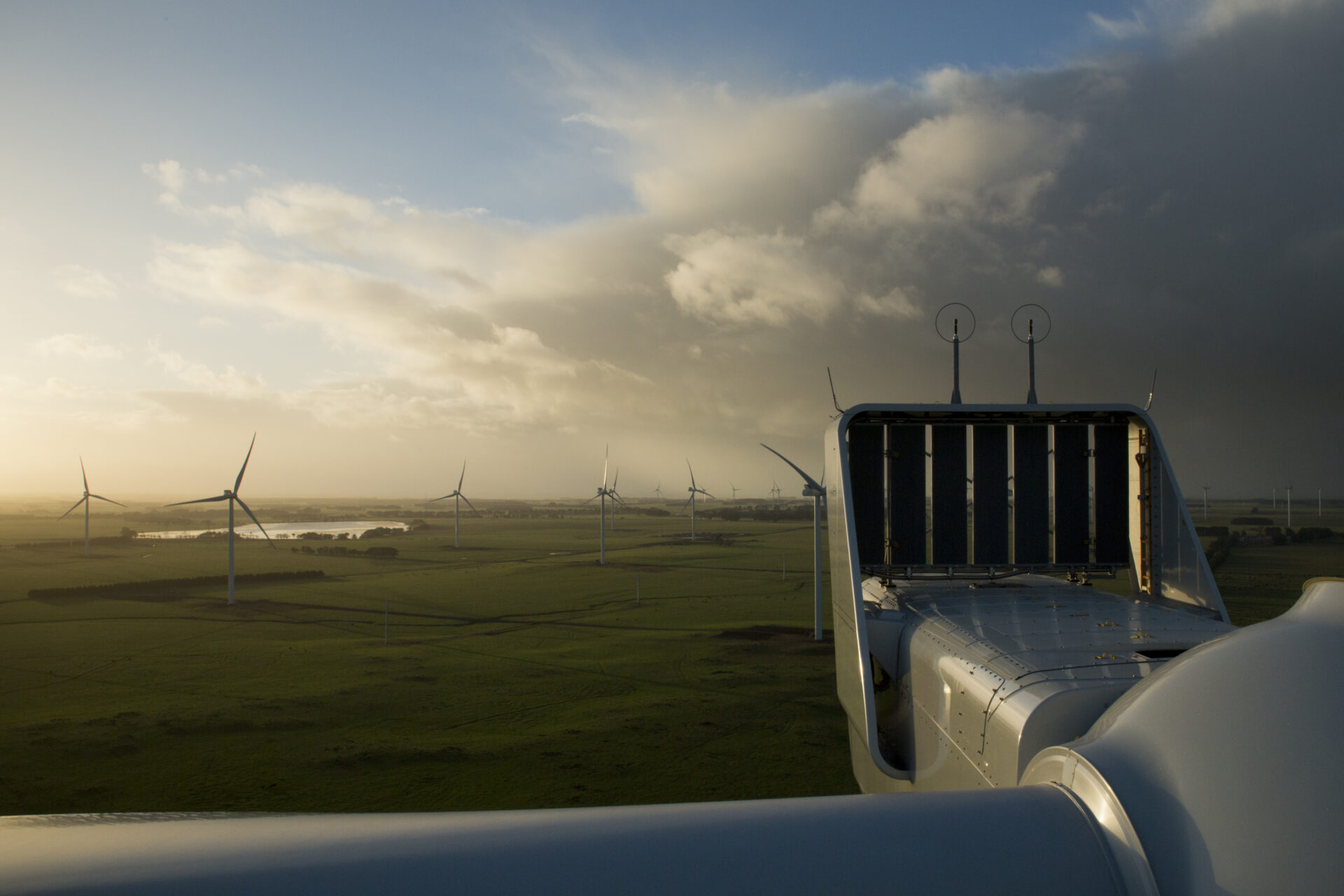
A growing number of wind turbines are approaching the end of their operational life. While around 90 percent of a turbine can already be recycled, composite blade materials remain difficult to process. In many cases, discarded blades are still landfilled or incinerated. Industry association WindEurope is supporting efforts to introduce a Europe-wide landfill ban for decommissioned blades, building on restrictions already implemented in several countries.
CETEC project developed separation process
The recycling breakthrough originated from the CETEC project, short for Circular Economy for Thermosets Epoxy Composites, which started in 2021. The initiative brought together industrial and academic partners to develop a chemical separation technology for epoxy-based composite materials used in wind turbine blades.
The process enables the separation of key materials contained in blades, including epoxy, carbon fibre, polyethylene terephthalate foam, aluminium and glass fibre. The technology aims to preserve material quality and support closed-loop recycling of composite components.
Key contributions to the development of the separation process came from the Danish Technological Institute, Olin, Aarhus University and Vestas.
Testbed moves process beyond laboratory scale
To scale the process for industrial use, Stena Recycling and Vestas launched the “Blade Circularity Solution” project. The collaboration focuses on adapting the chemical recycling system for larger processing volumes and commercial deployment.
Stena Recycling’s Research & Development division and its Danish operations have now transferred the process from laboratory conditions to a dedicated testbed facility in Halmstad. The facility can process larger quantities of wind turbine blades, and multiple test batches have already been completed.
According to Stena Recycling, the tests confirm that the recycling system can operate beyond laboratory scale and support industrial implementation.
Commercial deployment targeted within years
Wind turbines typically have an operational lifespan of around 25 years. The companies involved expect blade recycling volumes to increase significantly over the coming decades as older installations are dismantled.
Vestas has stated that recyclable composite materials are essential for achieving its target of producing zero-waste wind turbines by 2040. The company says the new process could improve circularity in the wind sector and strengthen the long-term value of wind energy projects. The development of the Halmstad testbed received co-funding from the Swedish Energy Agency