
Remain competitive
According to Plastics Recyclers Europe, the European plastics industry, including recyclers, is in a massive crisis. In the paper "Securing a future for circular plastics in Europe", the association proposes a series of measures.

According to Plastics Recyclers Europe, the European plastics industry, including recyclers, is in a massive crisis. In the paper "Securing a future for circular plastics in Europe", the association proposes a series of measures.

With the "Action Plan for the European Chemical Industry", the European Commission is now taking on another sector. The aim of the plan is to strengthen the competitiveness and resilience of the chemical industry in the EU.
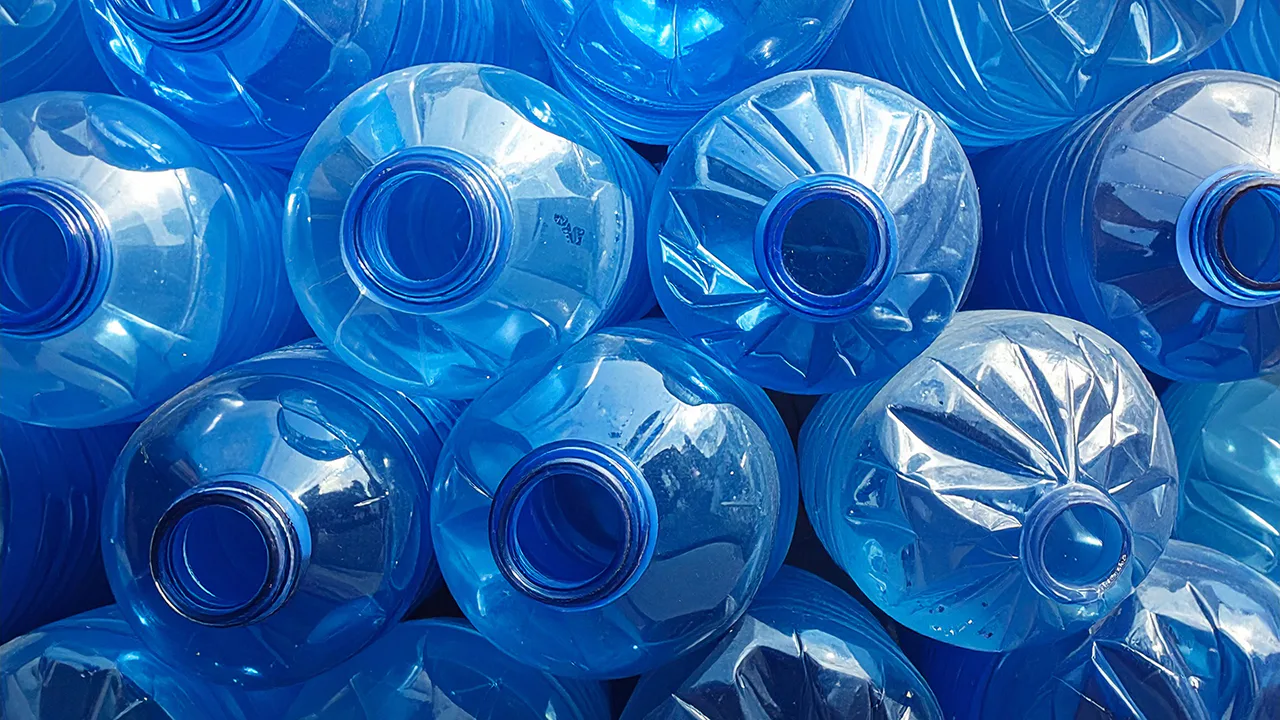
Global plastic consumption exceeded 400 million tons for the first time in 2022. In the EU, it is around 100 kilograms per capita and could double by 2060. Production and processing contribute significantly to greenhouse gas emissions, while mismanagement and losses release millions of tons of macro and microplastics into the environment. The EU has set an important course with the Green Deal, the Plastics Strategy and the Single-Use Plastics Directive. Nevertheless, the recycling rate remains low at around 20 percent, and chemical recycling or bio-based plastics have so far only played a minor role. Against this background, the Joint Research Centre's study "Plastics materials flows in the EU-27 and their environmental impacts" examines plastic flows in the EU-27 for 2022. The aim is to identify fields of action for a circular plastics economy.

Many sectors of European industry rely on the availability of permanent magnets con-taining rare earths. However, these are not available in Europe, but come to a very large extent from China. Therefore, a new strategy is needed. Circular Republic has explained what this could look like in the report "Closing the loop on rare earth mag-nets".
It is true that Germany has been obliged to collect organic waste separately since 2015. However, the quantities have hardly increased in recent years, as a large part of the waste still ends up in the residual waste. Therefore, the question arises as to how both the quality and quantity of the collection quantities can be improved. The report "Investigation of the effectiveness of waste advice, control and sanction mechanisms and other measures to increase the quantity, proportion and purity of separately collected biowaste in different settlement structures" by Infa and L-Q-M on behalf of the Federal Environment Agency attempts to answer this question.

The Multiannual Financial Framework and the EU recovery programme should substantially contribute to the environment and climate goals of the EU.
Products from food waste present profitable innovation opportunities to food processors, says a new report from Future Market Insights. The use of patented technologies in manufacturing of products from food waste could be prompting high price points.

Tomra Sorting Recycling extends its offering of high-precision flake sorting solutions with the innovative Innosort Flake sensor-based solution that combines color and material sorting, reliably removing PVC, metals and opaque flakes.
A new research report published today by Eunomia Research & Consulting Ltd outlines policy options for Member States to move the carpet industry towards a circular economy.

Recycling specialist Ragg GmbH has invested in a new mobile shredder from Untha, as the waste management firm seeks to boost material throughput across its Austrian sites.