
The project seeks to recover nutrients, proteins and natural compounds while reducing emissions associated with urban waste treatment.
Wastewater treatment plants and facilities for managing organic waste contribute significantly to greenhouse gas emissions and energy consumption in Europe. At the same time, large quantities of organic material remain unused. The POST-PURPLE project addresses this challenge by developing circular technologies that transform waste streams into secondary resources. The approach is intended to support urban waste management systems while enabling new value chains for recovered materials.
Project Launch and Consortium Cooperation
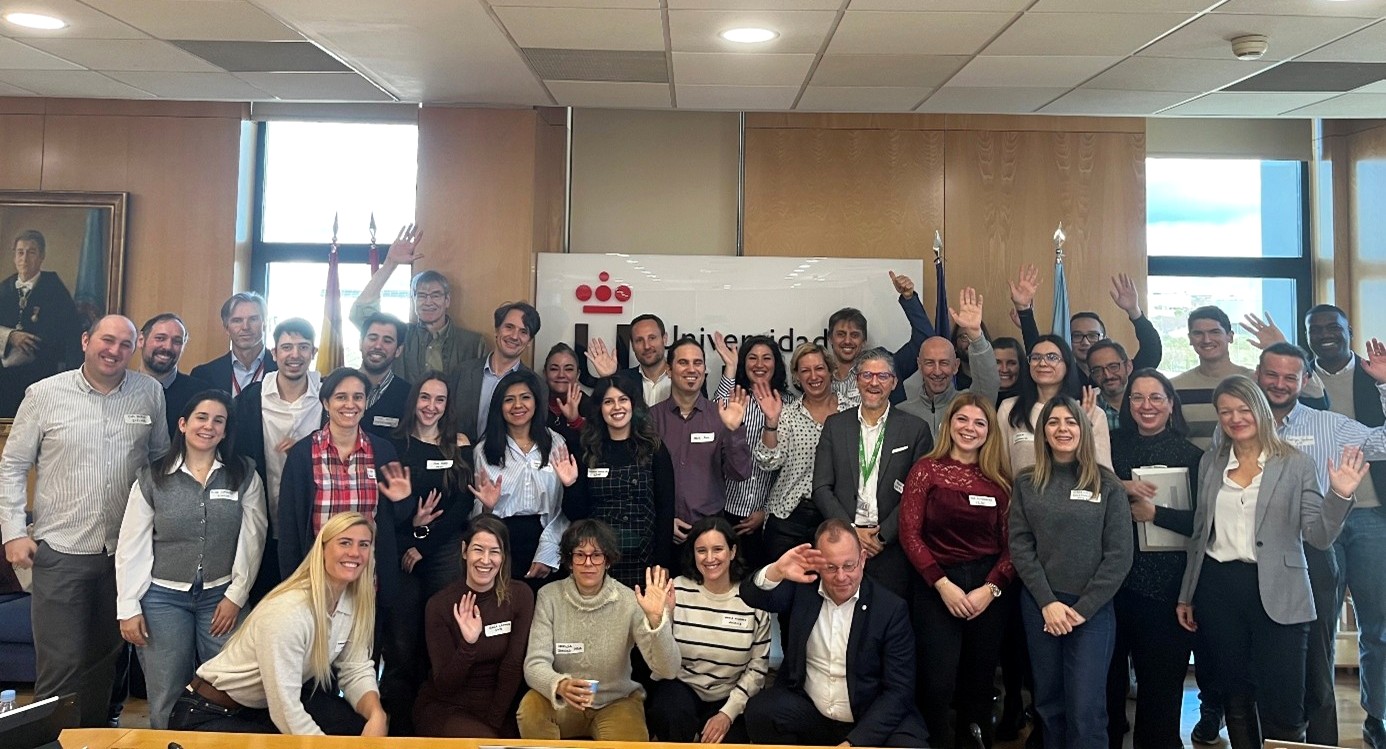
The POST-PURPLE project was launched on 21 and 22 January 2026 at the campus of Rey Juan Carlos University in Móstoles, Madrid. Representatives of the European project consortium met to define technical work plans, project objectives and cooperation structures. The initiative brings together partners from several European countries with expertise in biotechnology, environmental engineering and waste management.
A central element of the project is the integrated consideration of solid waste, wastewater and gas emissions within urban treatment systems. Pilot activities at demonstration sites will test technologies designed to recover resources from these streams. The project therefore examines ways to convert emissions and residual materials into usable products within zero-waste urban biorefineries.
Aimplas Develops Technologies for Emission Reduction
Within the POST-PURPLE project, Aimplas contributes to several technological developments aimed at reducing emissions and improving process efficiency in urban biorefineries.
One research activity focuses on the development and validation of photocatalysts capable of converting carbon dioxide from anaerobic digestion processes into methanol using low-energy conversion methods. A second work area investigates porous materials that can act as nitrogen oxide adsorbents. These materials are intended to reduce NOx emissions that may arise as by-products in certain photobioreactor systems.
AIMPLAS is also developing advanced coatings designed to control thermal conductivity and electrical conduction in process equipment. These coatings aim to improve energy efficiency in installations that require high energy input during operation.
Technology Development and Demonstration Phase
During the initial project phase, consortium partners presented their technical approaches and outlined the planned pilot activities. The forthcoming work will focus on developing and validating integrated technological solutions that support the implementation of zero-waste urban biorefineries.
The project also includes activities addressing communication and public engagement in order to increase awareness of circular bioeconomy solutions. In the next stages, POST-PURPLE will test its technology portfolio under practical conditions and evaluate its potential to reduce diffuse emissions to air and water while improving resource recovery in urban waste treatment systems.