
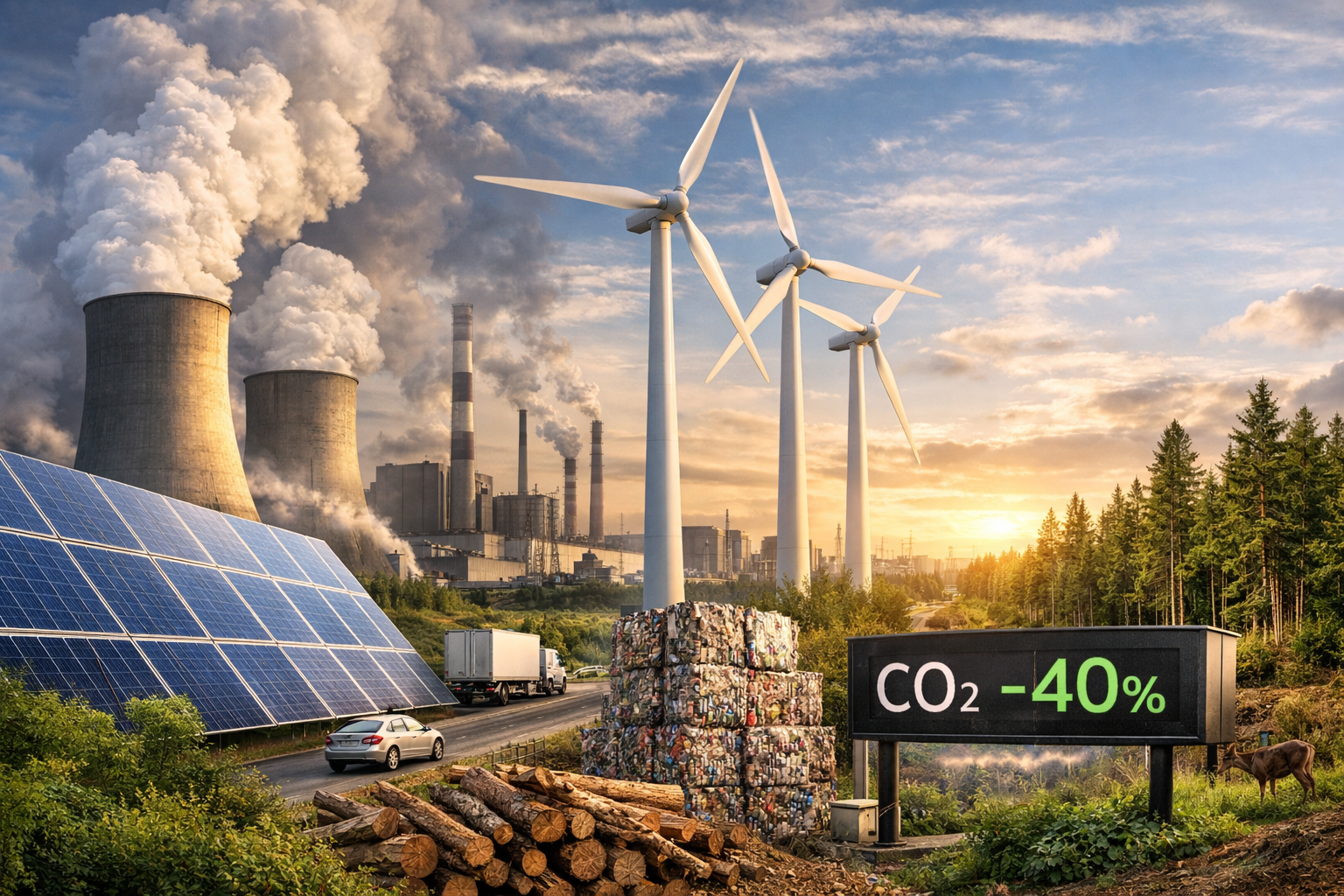
Over the past 34 years, the reduction in EU greenhouse gas emissions has been driven by the expansion of renewable energy, the shift to less carbon-intensive fuels, improvements in energy efficiency and structural economic changes. Most Member States contributed to the overall decline.
Sectoral developments
The largest absolute reductions were recorded in electricity and heat production, manufacturing and construction, residential combustion, and iron and steel, including energy-related emissions. In contrast, emissions from road transport increased in both passenger and freight segments, as rising transport demand offset efficiency improvements and the uptake of electric vehicles.
Emissions of hydrofluorocarbons from refrigeration and air conditioning increased between 1990 and 2014 but have declined over the past decade. This trend is linked to the EU’s phased reduction and phase-out measures for fluorinated gases. At the same time, net carbon removals from forests have decreased, mainly due to ageing forest stocks, increased harvesting and climate-related impacts.
Energy sector as main driver
The energy sector remains the primary driver of emission reductions. Electricity and heat production, as well as residential and industrial energy use, accounted for the largest decreases.
Emissions from electricity and heat generation fell by 58% compared with 1990. This development reflects efficiency gains and a shift in the fuel mix. The use of solid and liquid fuels in thermal power generation declined by 68% and 86% respectively, while natural gas consumption increased. Despite this, emissions from gas have fallen in recent years. Coal consumption in 1990 was more than three times higher than in 2024.
The share of renewable energy in electricity and heat generation has increased, contributing to lower carbon intensity. In the residential sector, improved building insulation, higher energy efficiency and milder winters have reduced demand for space heating.
Policy framework
EU and national policies have played a central role in reducing EU greenhouse gas emissions. Measures introduced since the 1990s in agriculture and environmental protection, along with climate and energy policies implemented from 2005 onwards, have supported this trend. Key instruments include the EU Emissions Trading System and national policies targeting sectors outside its scope.