
Cusiana operates a secondary aluminum production facility with a capacity of 100,000 tonnes per year, running 24 hours a day, five days a week. In recent years, the company has expanded its activities from conventional ingot production to include scrap processing and sensor-based sorting. The scrap recovery segment now accounts for approximately half of total revenue. This strategic shift reflects increasing demand from the automotive, construction and aerospace industries for aluminum materials with defined elemental specifications, including strict limits for silicon and iron.
To meet these requirements, Cusiana installed a multi-stage sorting configuration designed to enable precise alloy separation prior to melting. The process begins with mechanical pre-processing of mixed aluminum scrap, including shredding and hammer milling. Magnetic separation and screening remove ferrous components and classify the material into defined size fractions.
In the second stage, X-ray transmission technology is used to remove heavy metals and other contaminants. Several X-TRACT units separate copper, brass and aluminum fractions containing elevated levels of heavy elements, including alloys from the 2000 and 7000 series.
The final stage consists of two AUTOSORT PULSE units equipped with Dynamic LIBS technology. Laser-induced breakdown spectroscopy enables real-time elemental analysis and alloy-specific sorting. Elements such as silicon, iron and manganese can be selectively reduced to achieve tight compositional tolerances required for high-quality remelting or direct reuse. Each unit processes an input throughput of approximately seven tonnes per hour under stable operating conditions. A FINDER unit additionally recovers fine metal fractions from the residual material stream, increasing overall metal yield.
Operational stability is supported by a service agreement that focuses on system availability and process optimization. Consistent sorting accuracy is essential for producing defined output qualities and maintaining continuous production.
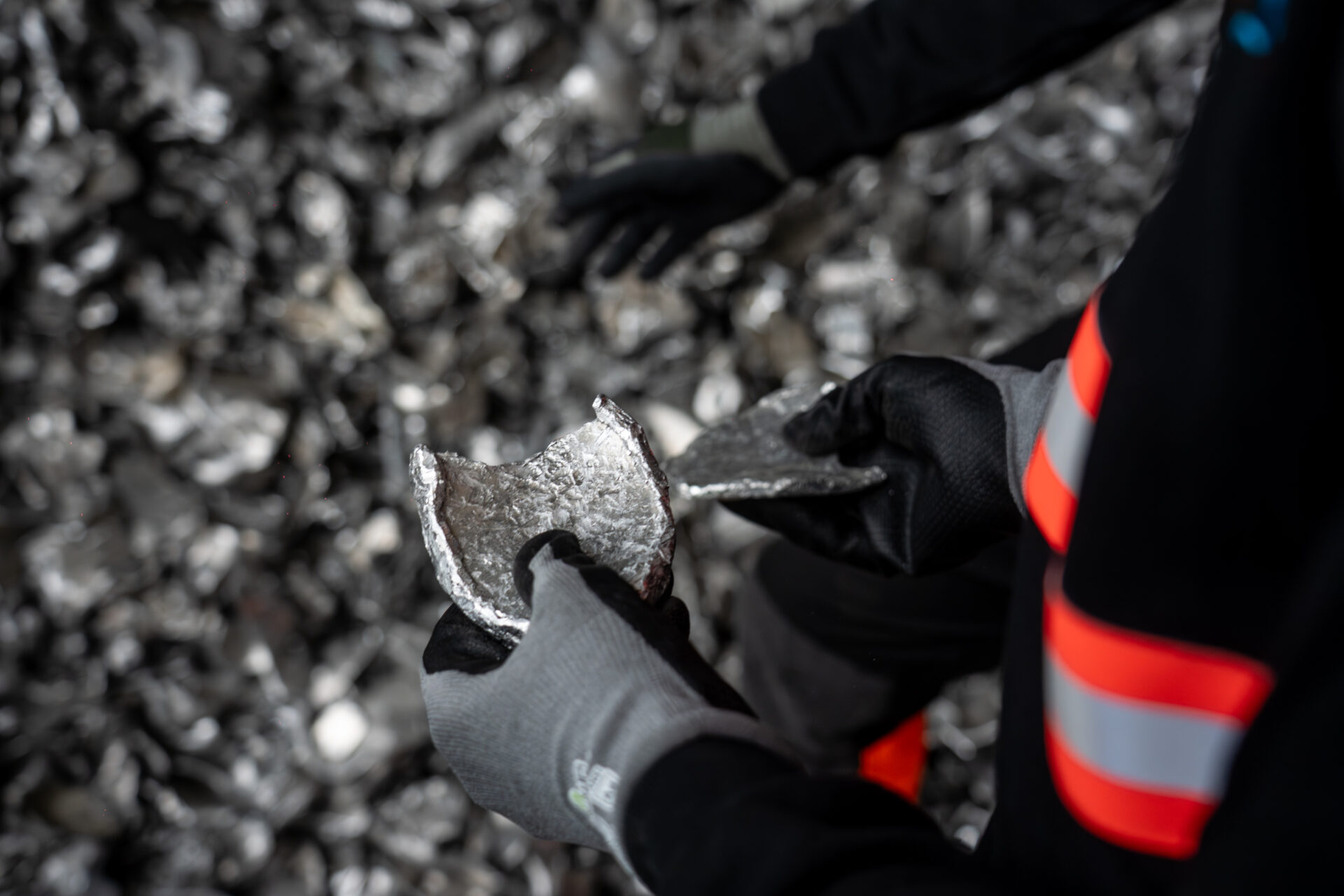
The implementation of sensor-based sorting has enabled Cusiana to establish two distinct output streams. One stream consists of aluminum ingots with 100 percent recycled content, marketed under the Recall brand and produced using renewable energy sources. The second stream comprises alloy-specific, high-purity aluminum scrap that can be supplied directly to manufacturers. By delivering pre-sorted, specification-compliant scrap, the company reduces the need for remelting in selected applications and lowers energy consumption within the value chain.
The project illustrates how multi-sensor sorting and LIBS-based alloy identification can support higher material recovery rates, improved aluminum purity and new business models in secondary aluminum recycling.