

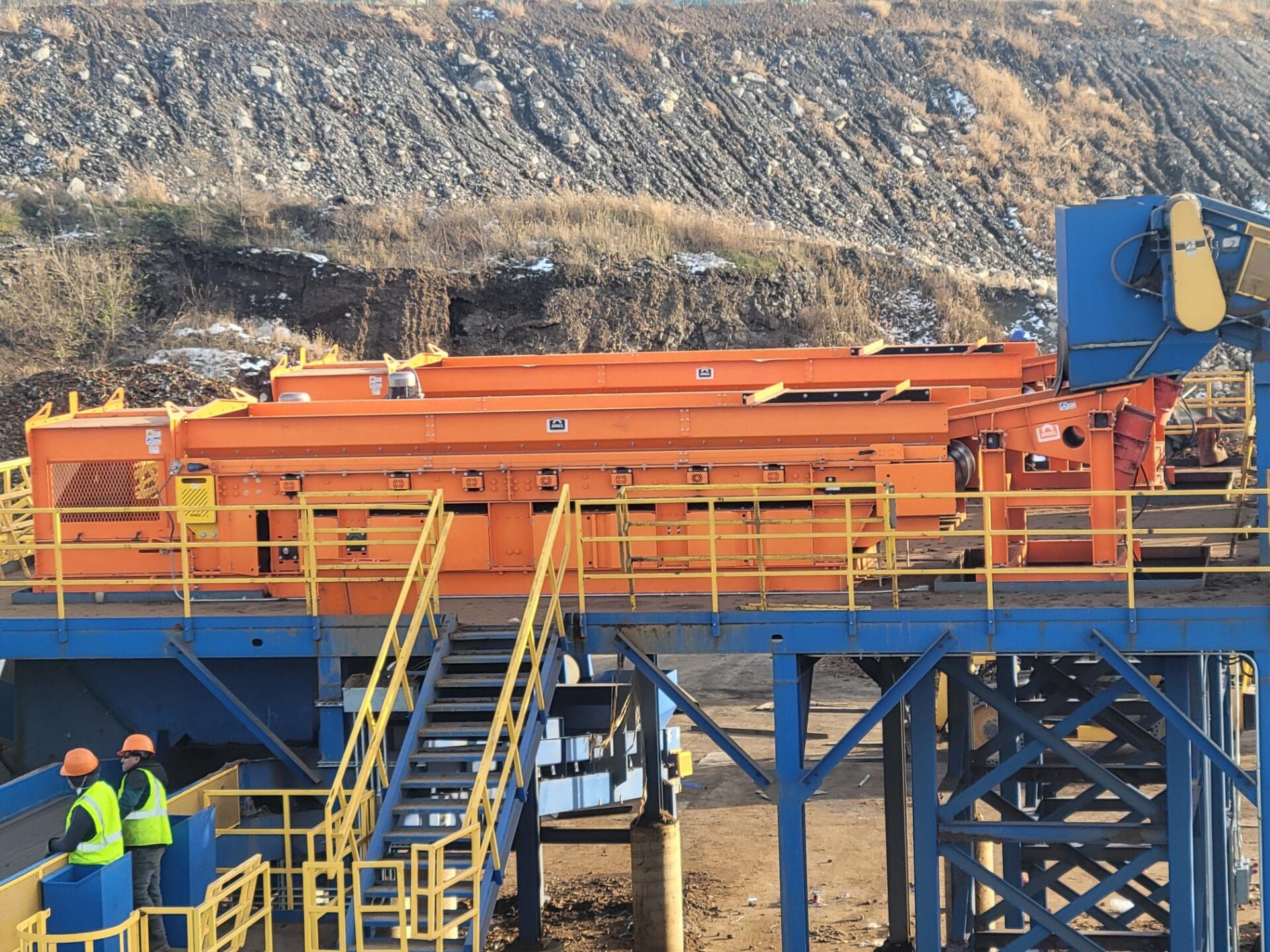
The results are based on full-scale installations in North America and Europe and address key parameters relevant to scrap recyclers, including throughput, copper content and melt yield.
Copper contamination in shredded scrap remains a central challenge for steel producers and recycling companies, as elevated copper levels can require melt chemistry corrections or restrict the use of certain feedstock grades. According to the report, the Shred1 provides a mechanical separation process that enables copper reduction without limiting processing capacity.
Operational data from multiple installations indicate stable operation above 90 tonnes per hour (100 tons per hour), with several US facilities reporting throughputs above 140 tons per hour per unit. The processed material achieved copper concentrations between 0.13 and 0.16 percent, meeting specifications for premium #1 shred. Melt trials show yield improvements from approximately 88 percent to up to 94 percent when the Shred1 is integrated with downstream magnetic polishing technology.
At a US scrap processing plant, the system produced shredded scrap with copper levels as low as 0.13 percent. This enabled the operator to incorporate higher-copper input material while maintaining the chemical specifications required by steel mills. As a result, output could be marketed as premium-grade shred rather than downgraded material.
Comparable results were recorded at a European recycling facility during a 76-heat melt trial. The low-copper shred averaged 0.145 percent copper. Reported melt chemistry values corresponded closely with calculated targets, reducing the need for dilution scrap and supporting furnace process control.
The Shred1 is installed downstream of primary scrap drum magnets and applies a combination of magnetic force and ballistic trajectory to separate ferrous scrap by mass and density. During operation, liberated shred is conveyed at high speed toward a head pulley. Material more strongly influenced by the magnetic field follows the pulley arc and is discharged behind a splitter as low-copper product, while higher-residual fractions continue forward for additional separation. The system operates without air, optical or X-ray-based sorting technologies and is designed to maintain throughput while improving scrap quality and melt performance.