

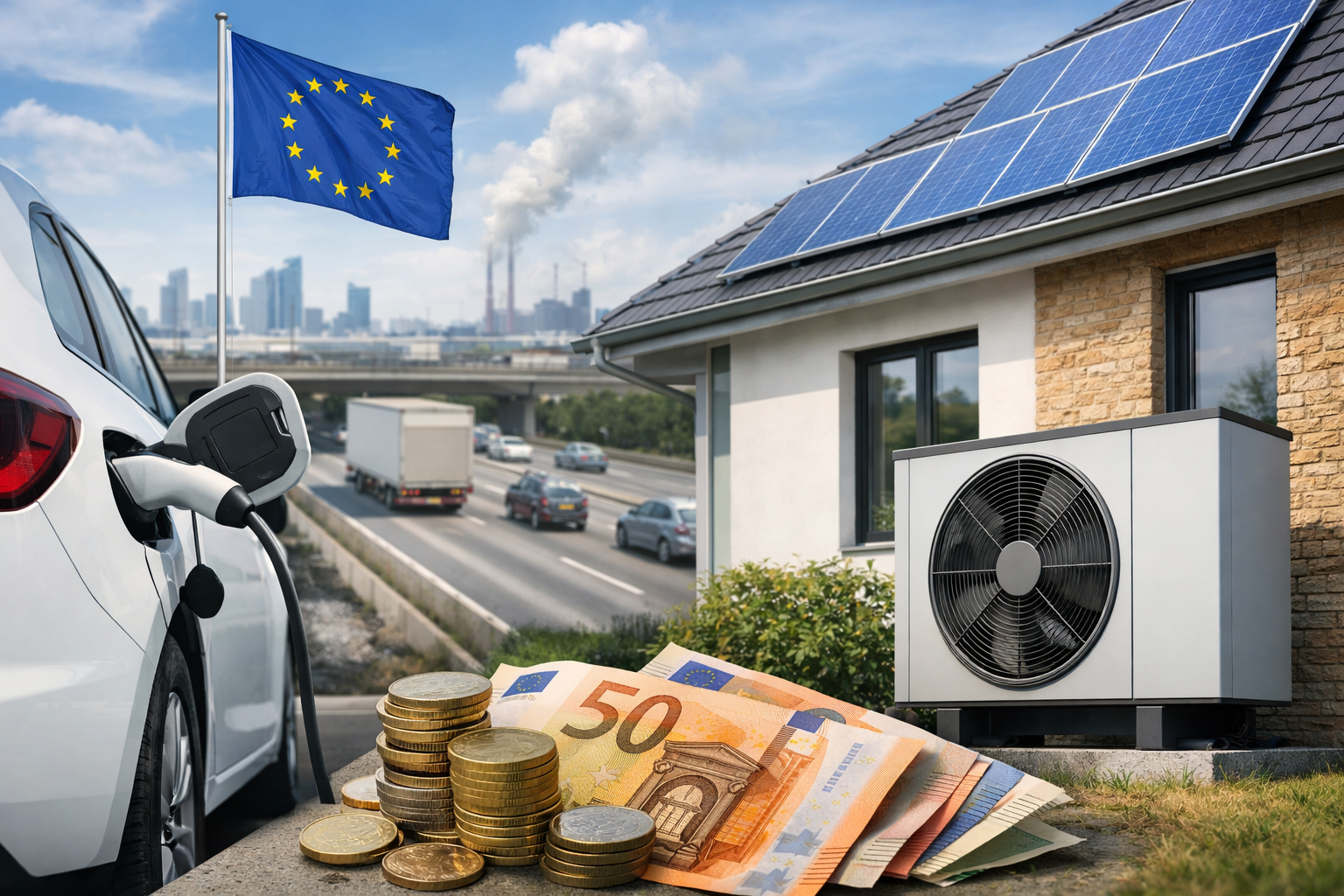
Two briefings published by the European Environment Agency examine the implications of the new system and identify the policy conditions required for its implementation.
ETS2 is intended to contribute to the reduction of carbon dioxide emissions by applying the cap-and-trade principle to sectors that have so far remained outside the EU carbon market. By introducing a price on carbon in fuels used for heating and mobility, the system is designed to create incentives for lower-emission technologies and improved energy efficiency.
According to the briefings, the implementation of ETS2 will require particular attention to social impacts. The expansion of emissions trading to transport fuels and heating will affect fuel prices and mobility costs, with direct financial implications for households and businesses. Regions with lower incomes and households with limited capacity to invest in energy efficiency measures may be disproportionately affected.
To mitigate these effects, the EU has established the Social Climate Fund, financed through revenues generated by ETS2. The fund is intended to support households and small businesses and to finance measures that reduce dependence on fossil fuels, including investments in energy efficiency and clean energy technologies.
In the transport sector, ETS2 will extend carbon pricing to road transport fuels. The mechanism is expected to complement existing policies such as emission standards, regulatory measures and information programmes. Together, these instruments aim to support the transition to lower-emission mobility solutions, including electric vehicles and alternative fuels.
Transport remains the largest source of greenhouse gas emissions in the European Union and one of the most challenging sectors to decarbonise. The sector continues to rely heavily on fossil fuels, which account for approximately 93 percent of its energy use. Between 2005 and 2023, emissions from road transport declined by only 4.4 percent, compared with a 48 percent reduction in sectors covered by ETS1. Efficiency improvements, increased biofuel use and the growth of electric vehicle sales have contributed to emission reductions, but these gains have been partly offset by rising passenger and freight demand.
In the buildings sector, greenhouse gas emissions from fossil fuel use declined by 37 percent between 2005 and 2023. Contributing factors include improved insulation, more efficient heating systems and milder winters. Nevertheless, residential buildings still account for around 75 percent of fossil fuel consumption for heating in the building sector.
Further emission reductions will depend on accelerated renovation rates and the wider deployment of renewable energy systems and heat pumps. By applying carbon pricing to fossil fuels used for heating, ETS2 is intended to provide additional incentives for energy-efficient renovation and low-emission heating technologies.
The briefings also note that the inclusion of buildings in ETS2 has raised concerns regarding heating costs and potential social impacts. Complementary EU and national measures, including building performance standards, fiscal incentives, targeted financial instruments and advisory services, will play an important role in supporting emission reductions while limiting adverse effects on vulnerable households.
Read the briefing on transport
Read the briefing on buildings