
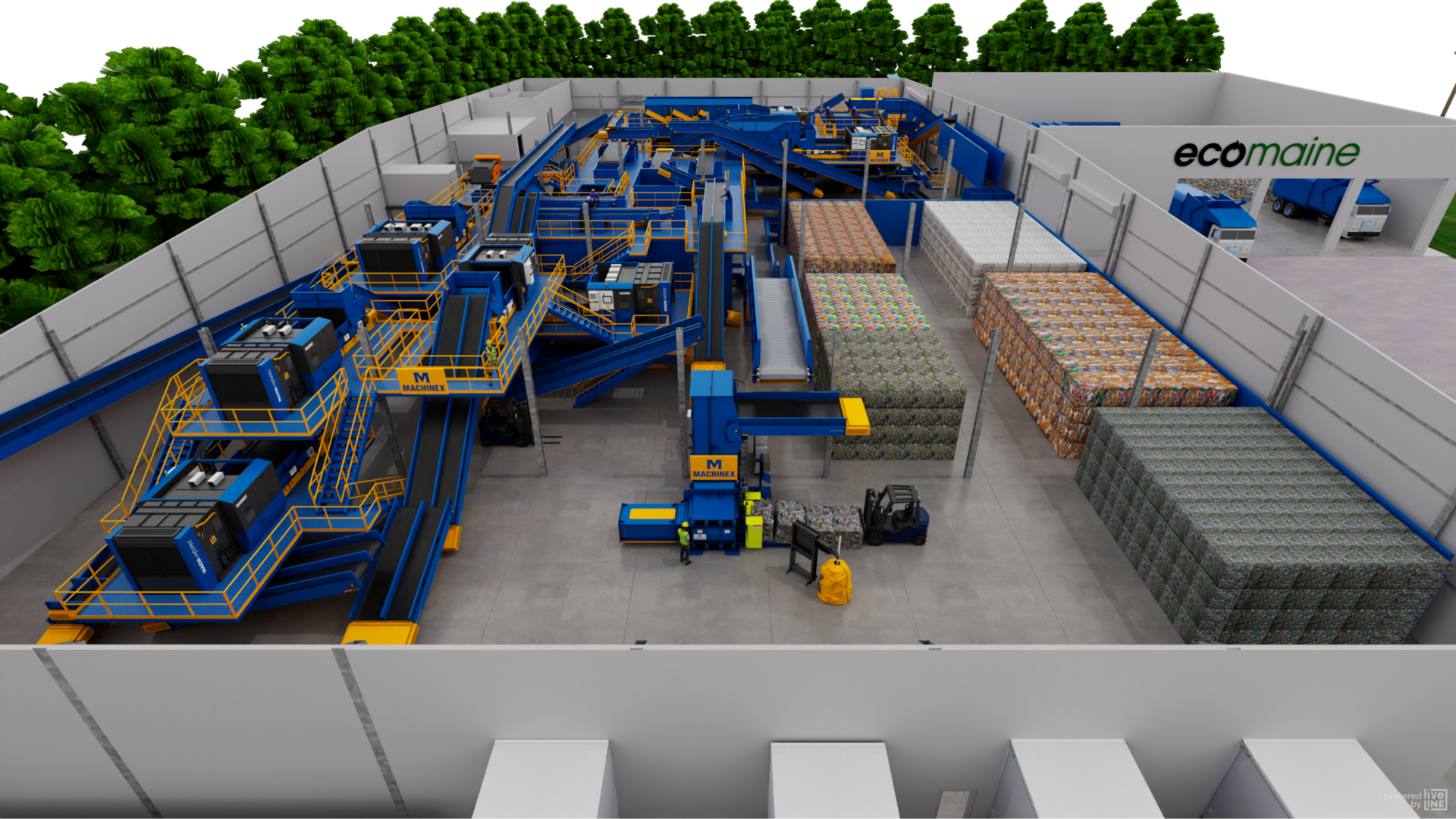
The facility will replace the current recycling plant, which entered operation in 2006. Construction is scheduled for completion in 2027. During the building phase, recycling operations at the existing site will continue without interruption.
Larger site and automated sorting technology
The new recycling facility in Portland will occupy a site more than 50 per cent larger than the current plant. The existing 55,000 square foot building will undergo refurbishment and receive an additional 11,000 square foot extension. The project also includes the installation of new sorting and recycling equipment.
According to the company, the plant will use ballistic separators and optical sorting systems capable of processing more than 1,000 items per minute. The upgraded technology aims to increase automation in sorting processes and reduce the need for manual intervention.
Once operational, the facility will process up to 25 tonnes of recyclable material per hour. This represents an increase of more than 66 per cent compared with the current capacity. Ecomaine expects the expansion to support higher recycling volumes and allow additional municipalities to use the facility.
Focus on material quality and worker safety
Ecomaine states that the new sorting systems will improve material quality and reduce contamination levels in recyclables. The company also expects the automation technology to improve workplace safety by limiting direct interaction with sorting equipment.
In addition to processing infrastructure, the project includes new office space and facilities for environmental education and community outreach activities.
Several partners involved in project delivery
Project partners include Sheridan Construction, St.Germain, RRT Design & Construction, CWS Architecture and Machinex. Machinex will supply the recycling equipment for the facility.
Ecomaine operates waste management and recycling infrastructure for municipalities in the state of Maine. The organisation introduced its current recycling facility in 2006 as part of its transition from Regional Waste Systems to Ecomaine.